OTA terms explained: a plain-language glossary for independent hotels
Commissionable rate, net rate, merchant model, narrow parity. The words in your OTA contract, explained in plain language, with what each one means for your money.
OTA contracts, extranets and invoices come with their own vocabulary. Most of it is simple once someone explains it, and some of it decides how much of each booking you keep.
This glossary covers the terms independent hoteliers ask about most, in plain language, grouped by what they affect. Bookmark it for the next time an invoice or a contract clause does not make sense.
Rates and prices
Sell rate. The price the guest sees and pays for a room, including any taxes that are shown in the price.
Net rate. What you receive from a booking after the OTA takes its share. On a €120 booking at 18% commission, the net rate is €98.40. In the merchant model, the net rate is also the price you give the OTA, which then adds its margin on top.
Best available rate (BAR). Your lowest publicly available rate for a given date, with no special conditions attached. Most other rates are set as a discount on or a supplement to BAR.
Rack rate. Your highest published price for a room. It rarely gets booked. It mainly serves as a reference point.
Rate plan. A room price combined with its conditions: what is included, the cancellation policy and how the guest pays. A flexible rate and a non-refundable rate for the same room are two rate plans.
Non-refundable rate. A cheaper rate the guest pays for in advance and cannot cancel for a refund. Good for cash flow. Note that OTAs usually charge commission on it even if the guest does not arrive.
Member rate. A lower price shown only to guests who are signed in or registered, such as Booking.com's Genius or Expedia's One Key member prices, or member rates on your own website.
Rate fence. A condition that justifies a different price for the same room: advance purchase, minimum stay, non-refundable, member only. Fences let you offer lower prices without simply cutting your public rate.
Commission and how it is calculated
Commission. The percentage of each booking the OTA keeps for selling it. For independent hotels it usually sits between 15 and 25%. Our guide to OTA commission rates compares the main platforms.
Commissionable amount. The part of a booking the commission is calculated on. Booking.com calculates it on the total value of each reservation, which can include VAT and extras if they are part of the price the guest pays. Your contract and your invoices show exactly what is included.
Non-commissionable. Charges the commission is not calculated on. Which items count depends on the platform and your contract. Check your invoices rather than assuming.
Effective commission rate. Everything you pay a channel in a year, including discounts, programme fees and payment costs, divided by the revenue it brought. It is usually higher than the headline rate. See the real cost of an OTA booking.
Visibility programmes. Optional schemes where you pay more commission or fund discounts for better placement, such as Booking.com's Preferred Partner, Visibility Booster and Genius, or Expedia's Accelerator. We break down their cost in Booking.com Genius and Preferred Partner: what they really cost.
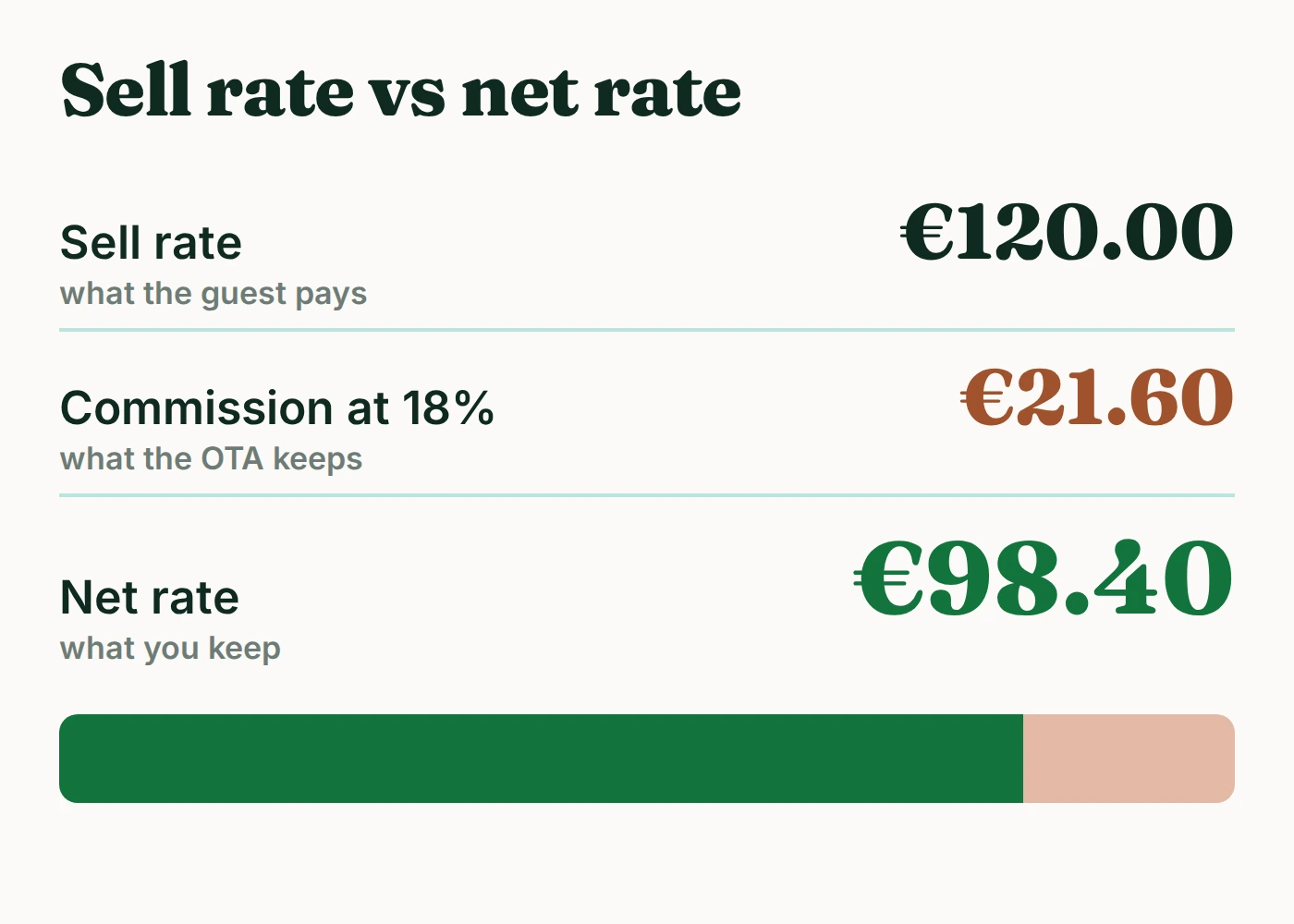
Sell rate, commission and net rate on one booking. Illustrative figures.
Payment models
Agency model. The guest pays you, usually at the property, and the OTA invoices you afterwards for its commission. This is how many Booking.com reservations work, and it is Expedia's Hotel Collect.
Merchant model. The OTA takes the guest's payment at booking and pays you the net amount later, often on a virtual credit card. Expedia Collect works this way, as does Payments by Booking.com. Our guide to Expedia commission explains both models in detail.
Virtual credit card (VCC). A single-use card number the OTA gives you to collect payment for a merchant model booking. You charge it like any card, and your payment provider's normal card fees apply.
Payout. The transfer of money from the OTA to you. In the merchant model it usually happens around or after the guest's stay, not when they book.
Contracts and rules
Rate parity. A rule requiring a hotel to offer the same price on the OTA as elsewhere. Wide parity covered every other channel, including other OTAs. Narrow parity covered only the hotel's own website. In the European Economic Area, Booking.com can no longer impose either. See our guide to rate parity in Europe.
Gatekeeper. A term from the EU's Digital Markets Act for a very large platform with special obligations. Booking.com is designated as one. Among other things, it may not impose parity or measures with the same effect.
Overbooking. Selling more rooms than you have, usually by accident when two channels sell the last room at the same time. OTAs can charge you for relocating the guest, and repeated overbookings can hurt your ranking.
No-show. A guest who does not arrive and does not cancel. If you cannot collect payment, report the no-show to the OTA in time, or you may still be charged commission.
Cancellation policy. The rules on whether and when a guest can cancel for free. Stricter policies usually go with lower prices.
Availability and inventory
Inventory. The rooms you make available to sell, on each channel and in total.
Allotment. A fixed number of rooms reserved for one channel or partner. Less common with modern OTAs, which usually sell from your shared inventory.
Stop sell. Closing a room type or date for sale on one channel or all of them.
Closed to arrival (CTA). A restriction that blocks new stays starting on a given date, while still allowing guests who arrive earlier to stay through it.
Minimum length of stay (MinLOS). The fewest nights a guest must book. Useful on busy weekends and event dates.
The tools
Extranet. The OTA's back office for your property, where you manage rates, availability, photos, programmes and invoices. Booking.com's is simply called the extranet. Expedia's is Partner Central.
Channel manager. Software that connects your rates and availability to several OTAs at once, so a room sold on one channel is closed on the others automatically. It is what prevents most overbookings. Our guide channel manager vs booking engine explains the difference.
Booking engine. The system on your own website that lets guests check availability, book and pay directly, with no OTA in between.
PMS. Property management system: the software where you run reservations, rooms, guests and invoices day to day. See what is a hotel PMS.
GDS. Global distribution system: the networks travel agents and corporate travel tools use to book hotels. Mostly relevant to business hotels and chains.
Terms about guests
Direct booking. A booking made on your own website, by phone or email, or at the desk, with no OTA commission.
Billboard effect. Guests who discover a hotel on an OTA and then book it directly, first described in a Cornell University study. It is why an easy-to-find, easy-to-book website matters even for hotels that rely on OTAs.
Guest data. The contact details and history of your guests. OTA bookings often come with limited or masked guest contact details, which makes it harder to welcome the guest back directly.
Where Tribii fits
Several of the terms above are about the same thing: how much of a booking reaches you, and how easily. Tribii's booking engine is free forever for up to 20 rooms and takes 0% commission, and the channel manager on the Max plan keeps your OTAs in sync from one calendar. For a quick sense of what commission costs you today, try our OTA commission calculator.
Common questions
What does commissionable rate mean for a hotel?
The rate, or part of a booking, that the OTA calculates its commission on. Depending on your contract it can include taxes and extras. Your commission invoices show exactly what was included.
What is the difference between a net rate and a sell rate?
The sell rate is what the guest pays. The net rate is what you receive after the OTA takes its commission or margin.
What is the difference between the merchant model and the agency model?
In the merchant model, the OTA collects the payment and pays you later. In the agency model, the guest pays you and the OTA invoices you for commission.
What is narrow rate parity?
A rule that stopped a hotel offering a lower price on its own website than on the OTA. It is no longer allowed for Booking.com in the European Economic Area, and several European countries ban it by law.
What is BAR in hotels?
Best available rate: your lowest public rate for a date with no special conditions. Other rates are usually set relative to it.
Terms reviewed September 2026. Definitions are general and simplified: platforms, contracts and national rules differ, so check your own agreements.

Tribii
The free booking engine for independent hoteliers. Editorial notes.
More for the kitchen table.

Booking.com Genius and Preferred Partner: what they really cost a small hotel
Genius and Preferred Partner are sold as growth tools. Both are also a price. Here is what each one costs an independent hotel, how to test whether it pays, and what to decide before 2027.
 Tribii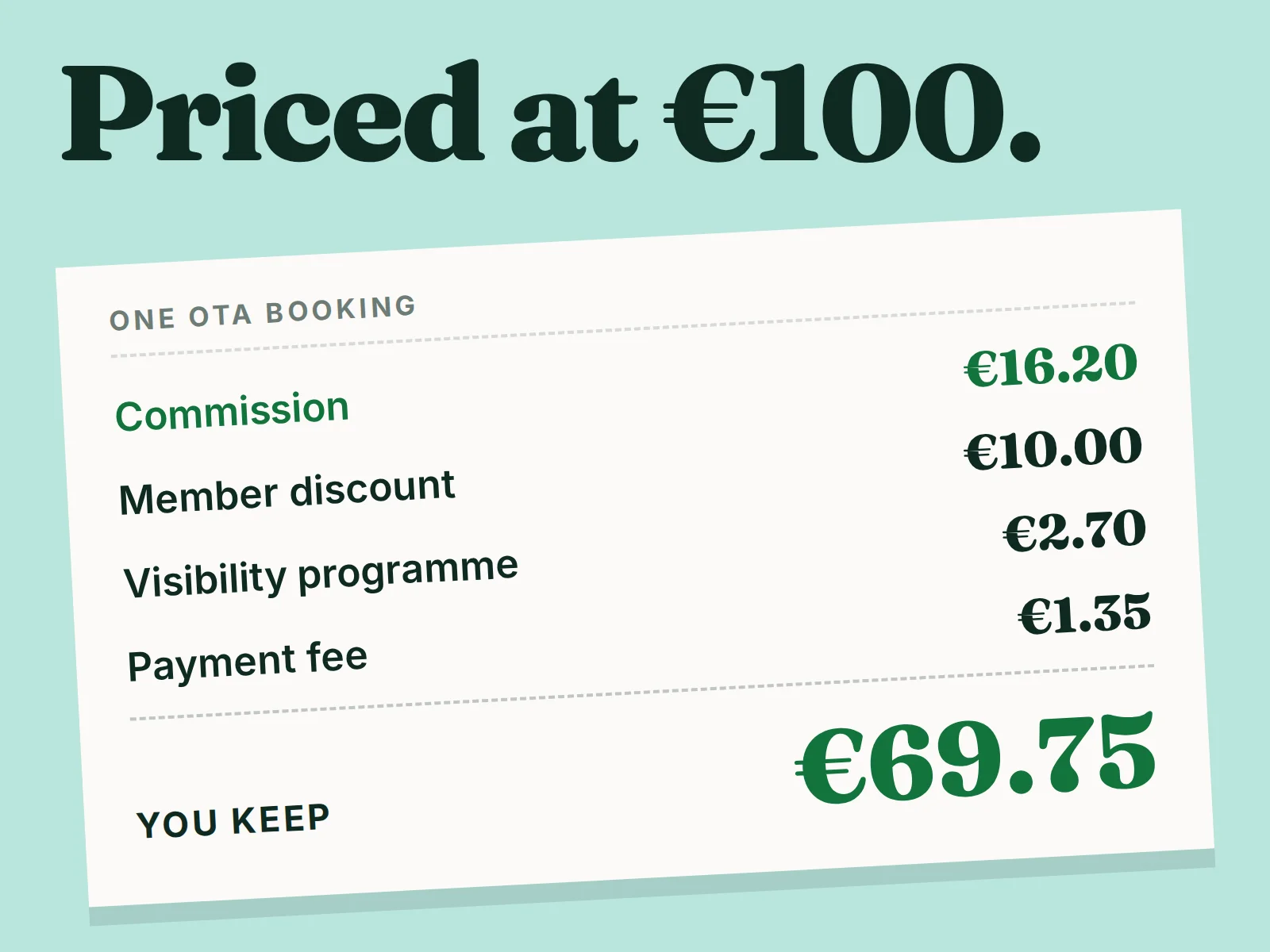
The real cost of an OTA booking: commission is only the first line
Most hoteliers know their commission rate. Few know their effective rate. Here are the other lines on every OTA booking, and how to work out what a room really costs you to sell in 2027.
Tribii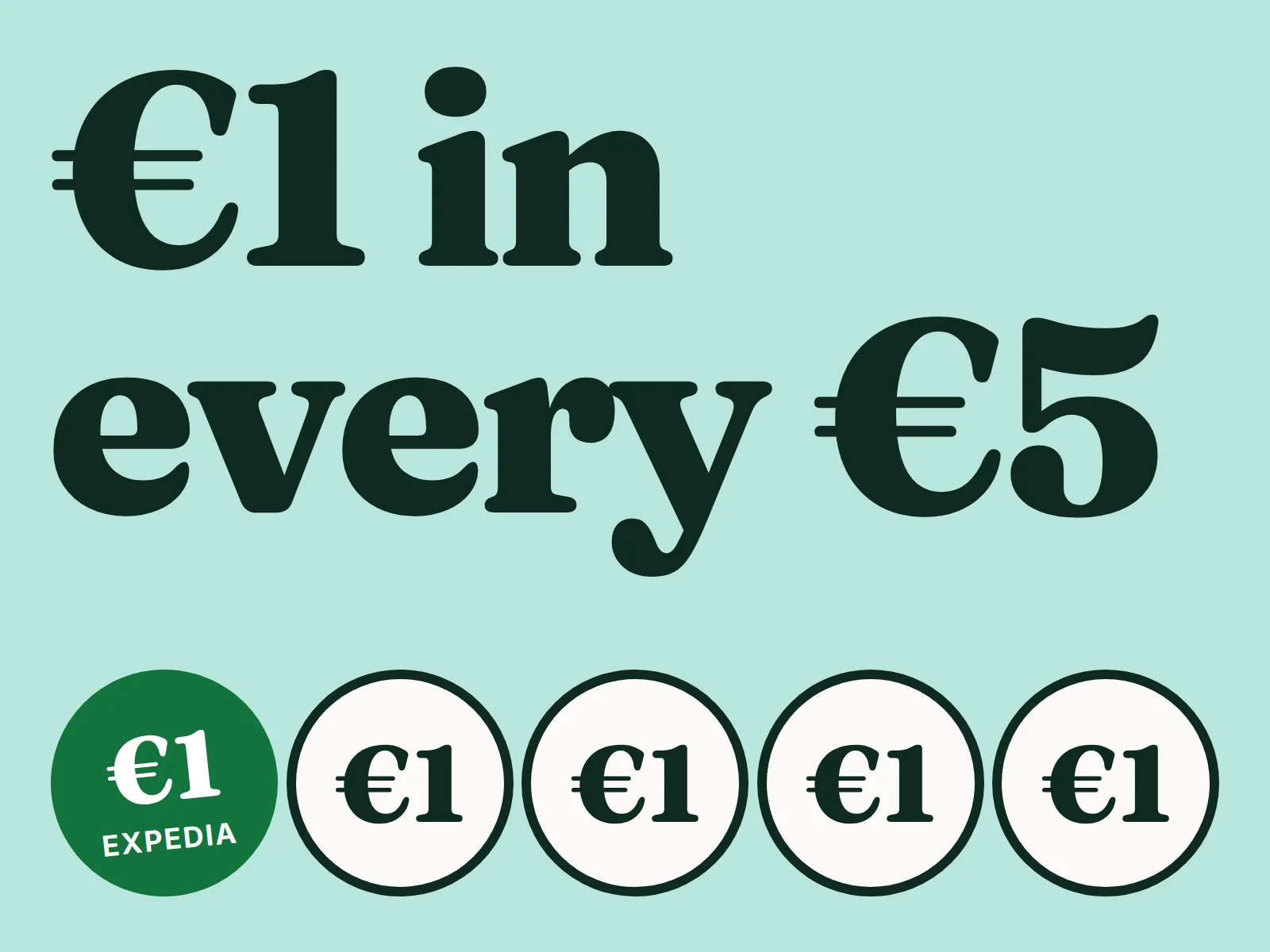
How much commission does Expedia take? The 2026 guide for independent hotels
Expedia's headline commission is only the start. Here is what a booking really costs once you add the payment model, the visibility tools and the card fees, and how to pay less in 2027.
Tribii