Booking.com Genius and Preferred Partner: what they really cost a small hotel
Genius and Preferred Partner are sold as growth tools. Both are also a price. Here is what each one costs an independent hotel, how to test whether it pays, and what to decide before 2027.
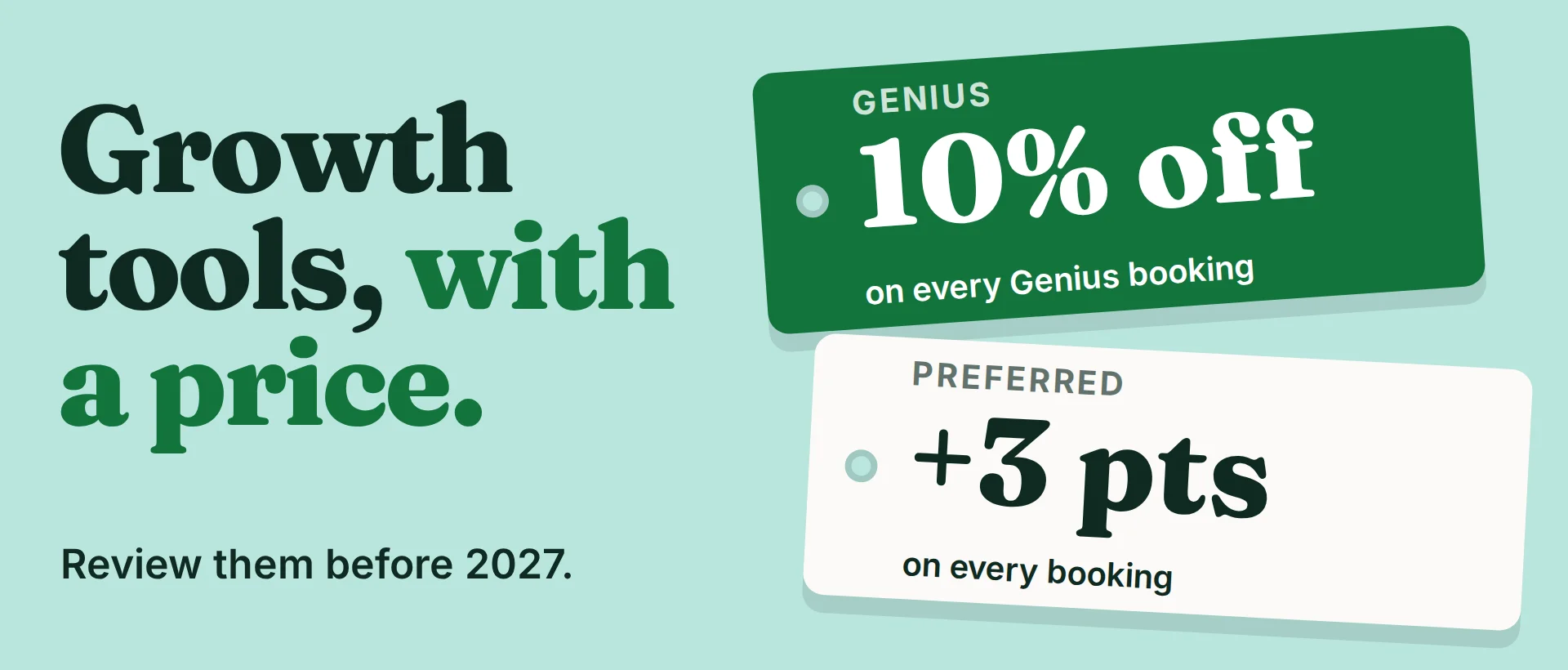
Every few weeks, a friendly email arrives from Booking.com. Join Genius and reach more travellers. You qualify for Preferred Partner. Boost your visibility for the busy weekend ahead.
Each of these is sold as a growth tool, and each can bring real bookings. Each is also a price. Genius is paid in discounts. Preferred Partner and Visibility Booster are paid in commission. Once switched on, most small hotels never look at them again.
With 2027 contracts and rates being set now, this is the moment to look.
The short answer
Genius costs you the discount on every Genius booking, starting at 10% of the room price, with deeper discounts and extra perks at higher levels if you choose to offer them.
Preferred Partner costs you extra commission on every Booking.com booking, not only the extra ones it brings. Booking.com describes it as a small increase in commission. Across the industry it is usually reported at around 3 points.
Visibility Booster costs extra commission only on the dates you choose.
All three can pay for themselves. None of them does automatically. The test is simple: do they bring bookings you would not otherwise have had, and are those bookings worth more than the programme costs across all the bookings you would have had anyway?
Genius: a discount you fund
Genius is Booking.com's loyalty programme for travellers. Guests who book often reach Genius levels, and properties in the programme show them discounted prices.
At the first level, the discount is 10%. Booking.com has added higher levels for its most frequent bookers, where partners can offer a deeper discount and optional perks such as free breakfast or room upgrades. Whatever you offer, you pay for it.
Genius has two costs. The obvious one is the discount itself: a €120 room sells for €108. The less obvious one is who gets it. Genius members are Booking.com's most loyal customers, which means many of them were going to book through Booking.com anyway, and some were going to book you anyway. For those guests, the discount buys nothing.
The benefit is real too. Genius properties get extra visibility to Genius members, and for a new or little-known property that can be exactly what is needed.
Preferred Partner: extra commission on everything
Preferred Partner is Booking.com's programme for what it calls the top 30% of its partners. In exchange for extra commission, your property gets better placement in search results and a thumbs-up badge. Booking.com says members can see up to 65% more page views and on average 20% more bookings.
To qualify, Booking.com looks at three things: a performance score of at least 70%, a guest review score of at least 7, and prices that are competitive with other websites. Eligibility is reviewed regularly, and there is a stricter Preferred Plus level for the very top properties.
The key point is where the cost falls. The extra commission applies to every booking that comes through Booking.com while you are in the programme, including the guests who would have found you without the badge. That is why the average uplift in bookings matters less than your own incremental bookings.
You can leave the programme at any time from your extranet, and the change takes effect immediately.
Visibility Booster: a short-term commission raise
Visibility Booster lets you choose specific dates and markets and raise your commission for those dates with a slider, in return for better ranking. It is designed for short bursts: a slow week, a late cancellation, a period you need to fill.
Used that way, it can be sensible. Left running across a whole season, it becomes a permanent commission increase with a friendlier name.
The price question for 2027
There is one detail worth reading twice. One of the Preferred Partner criteria is that your prices elsewhere are competitive.
In the European Economic Area, Booking.com can no longer require you to match its price on your own website, and the Digital Markets Act also forbids measures with the same effect as parity. In Italy, the competition authority accepted changes to the Preferred programmes in late 2024 so hotels could set different rates on other channels without being penalised. How this criterion is applied elsewhere in 2027 is something to watch.
The practical question for you: if you plan to offer a lower rate on your own website next year, as our guide to rate parity in Europe explains you are free to do, check how that interacts with your Preferred Partner status, and decide which matters more to you.
A simple test: does it pay?
Take a hotel with €100,000 a year in Booking.com revenue at an 18% standard commission.
Preferred Partner at 3 extra points costs about €3,000 a year. After commission, each extra euro of new bookings is worth about 79 cents to you. So Preferred Partner needs to bring roughly €3,800 of bookings a year that would not have come otherwise, just to break even. That is less than 4% of your Booking.com revenue, which many properties will clear. The question is whether yours does.
Genius, if 40% of your Booking.com revenue comes from Genius members, gives away €4,000 in discounts, partly offset by lower commission on the lower price. The net cost is about €3,300 a year. It pays when it brings guests who would not have booked you at full price.
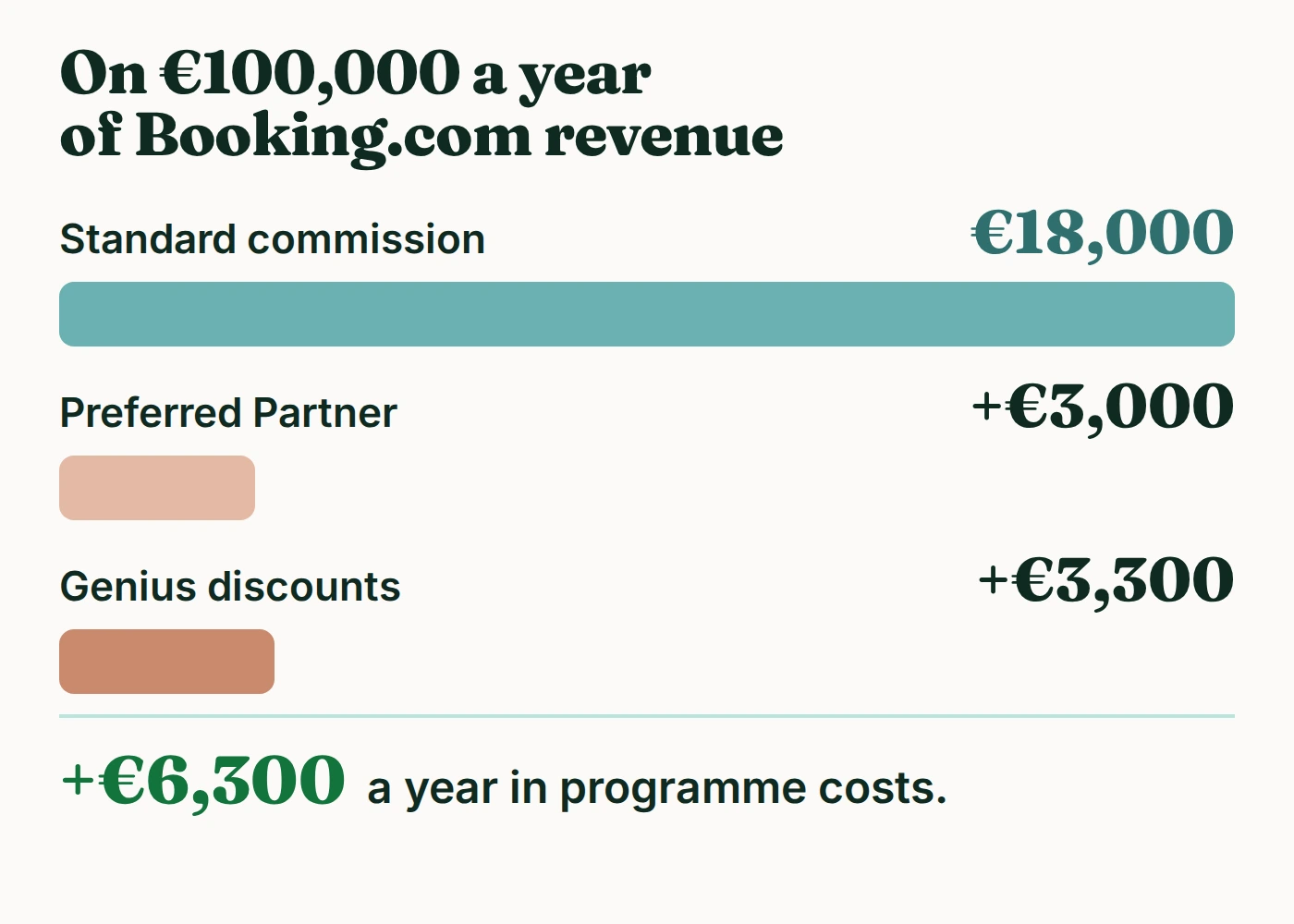
Together, the two programmes can add more than €6,000 a year to what Booking.com costs you on €100,000 of revenue. That is not a reason to leave them. It is a reason to measure them. For the full picture of what an OTA booking costs beyond commission, see the real cost of an OTA booking.
How to review your programmes before 2027
1. List what is switched on. In your extranet, check Genius, Preferred Partner or Preferred Plus, Visibility Booster, and any deals or campaigns. Write down the commission and discount for each.
2. Find your Genius share. Look at how many of last year's Booking.com bookings came from Genius members, and what the discount cost you in euros.
3. Compare periods. If you have ever switched a programme on or off, compare the months before and after: bookings, revenue and, just as important, your direct bookings. A programme that moves guests from your website to Booking.com is not growth.
4. Keep what earns its place. A programme that brings new guests in your slow months is worth its price. A programme that mostly rewards guests who already book you is not.
5. Put a date in your calendar. Review again in six months. These programmes are easy to join and easy to forget.
Run your own version on your website
The idea behind Genius is sound: reward the guests who come back. You do not need a platform to do it, and you do not need to pay commission on it.
Tribii's booking engine is free forever for up to 20 rooms and takes 0% commission. The Direct Booking Booster, a paid Pro tool, adds member rates and perks for direct and returning guests, so the loyalty discount you offer goes to your guests rather than to a platform's. Any direct booking setup that rewards returning guests does the same job. What matters is that the reward lives on your own website.
For the base rates behind all of this, see how much commission Booking.com takes, or estimate your yearly cost with our OTA commission calculator.
Common questions
How much does Booking.com Genius cost a hotel?
The discount you give Genius members on each Genius booking, starting at 10% of the room price. Higher levels can add deeper discounts or perks that you choose to offer.
How much extra commission is Preferred Partner?
Booking.com describes it as a small increase in commission. It is commonly reported at around 3 points on top of your standard rate, applied to all your Booking.com bookings while you are in the programme. Check the exact figure in your extranet.
Is Preferred Partner worth it for a small hotel?
It is worth it if it brings enough new bookings to cover the extra commission on all your existing ones. For a property doing €100,000 a year on Booking.com, that means roughly €3,800 of genuinely new bookings a year.
Can I leave Genius or Preferred Partner?
Yes. Both can be switched off from your extranet. For Preferred Partner, the change takes effect immediately.
Does Preferred Partner require rate parity?
One of its criteria is that your prices on other websites are competitive. In the EEA, parity clauses are no longer allowed, and in Italy the programme was changed so hotels can set different rates elsewhere without penalty. Check how the criterion applies in your market.
The honest summary
Genius is paid in discounts. Preferred Partner and Visibility Booster are paid in commission. All three can bring real guests, and all three charge you on bookings you would have had anyway.
Measure them before 2027. Keep what brings new guests. And build the loyalty programme that costs you nothing in commission: the one on your own website.
Programme details reviewed September 2026 from Booking.com partner materials and published industry sources. Terms, levels and commission vary by country, property and contract: check your extranet. The worked example is illustrative. This is not financial advice.

Tribii
The free booking engine for independent hoteliers. Editorial notes.
More for the kitchen table.
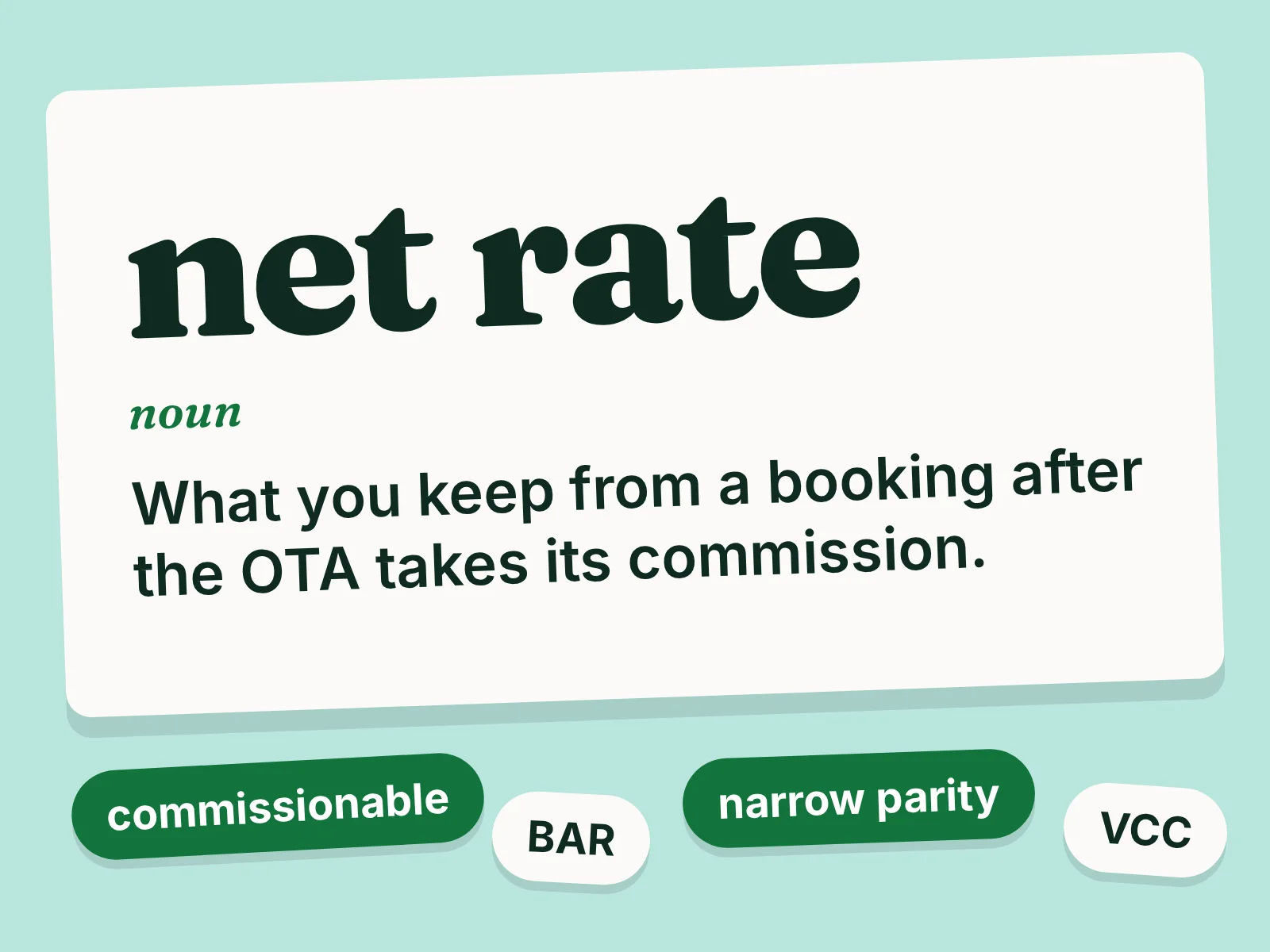
OTA terms explained: a plain-language glossary for independent hotels
Commissionable rate, net rate, merchant model, narrow parity. The words in your OTA contract, explained in plain language, with what each one means for your money.
 Tribii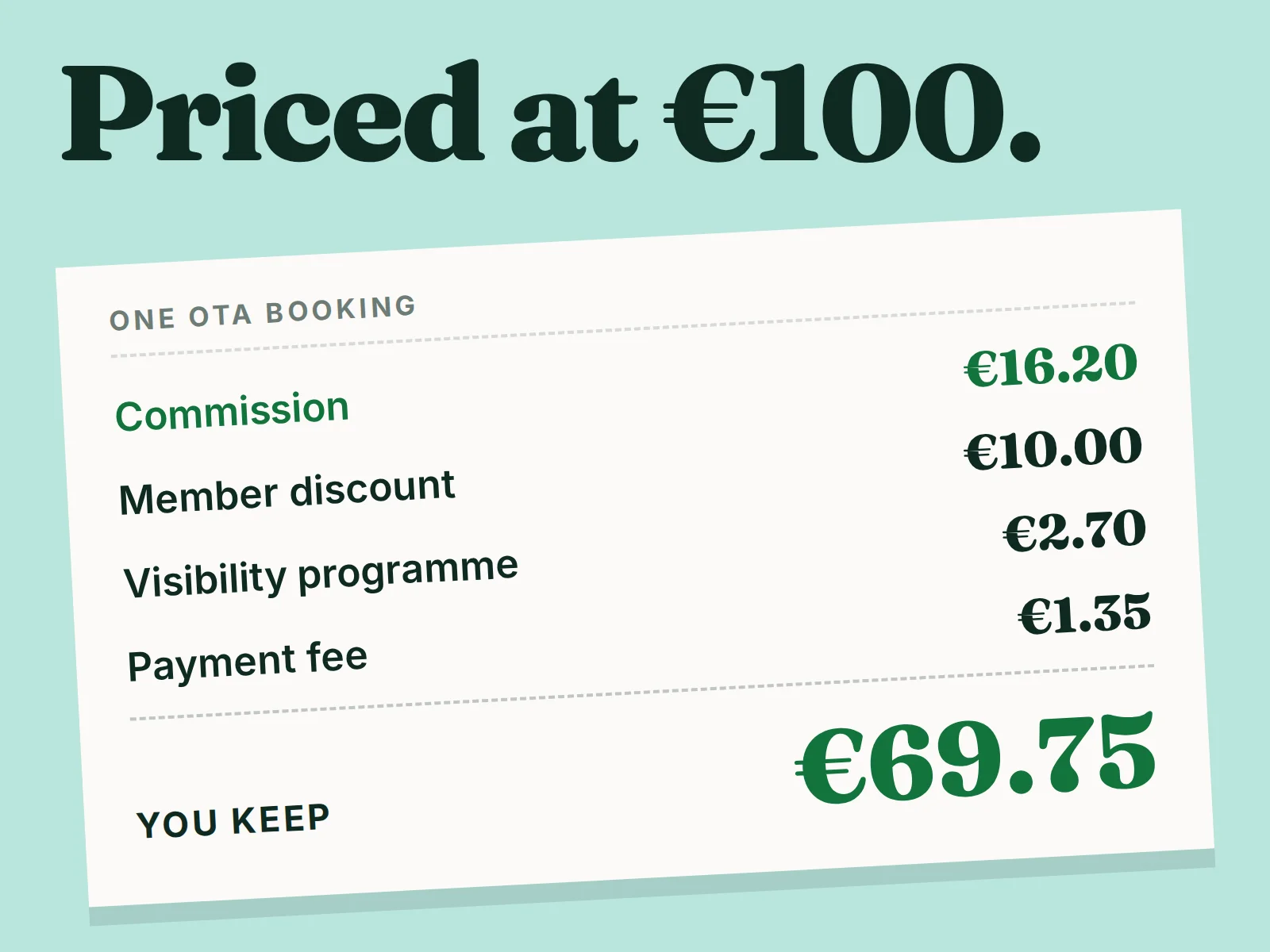
The real cost of an OTA booking: commission is only the first line
Most hoteliers know their commission rate. Few know their effective rate. Here are the other lines on every OTA booking, and how to work out what a room really costs you to sell in 2027.
Tribii
How much commission does Expedia take? The 2026 guide for independent hotels
Expedia's headline commission is only the start. Here is what a booking really costs once you add the payment model, the visibility tools and the card fees, and how to pay less in 2027.
Tribii