Rate parity is gone in Europe. How to price your direct rate for 2027
Booking.com can no longer make you match its price on your own website. Most small hotels still do. Here is what the law allows, what the algorithm might not, and how to set a direct rate for 2027 that pays.
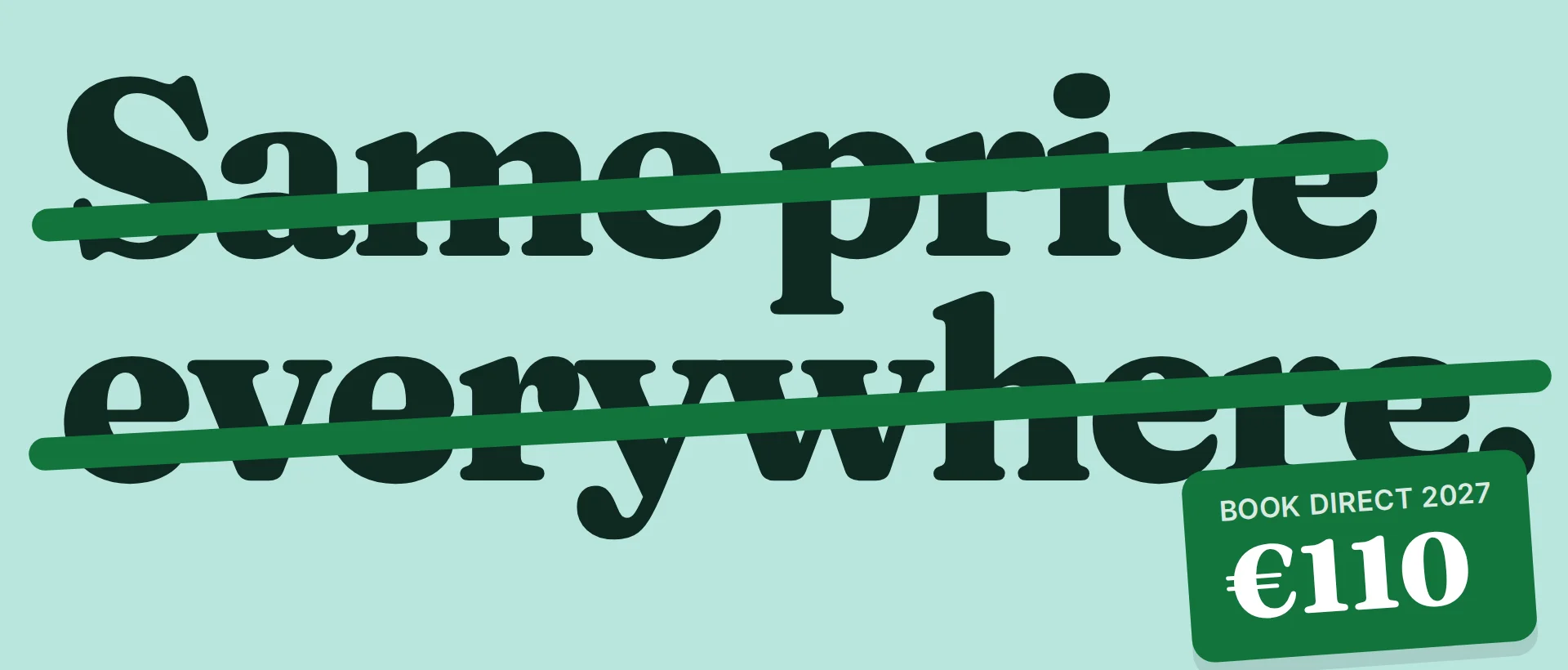
For twenty years, one sentence in a contract decided what a hotel room could cost on the hotel's own website. Charge no less there than you charge here.
In the European Economic Area (EEA), that sentence is gone. Booking.com removed it from its contracts at the end of 2024. Yet walk through the booking pages of small European hotels today and most of them still show exactly the same price as their Booking.com listing, to the cent.
This autumn, most independent properties will load their rates for 2027. It is the natural moment to stop pricing as if the old rule still applied.
The short answer
If your property is in the EEA, you can sell a room on your own website for less than you sell it on Booking.com. Booking.com no longer requires parity from its partners in the EEA, and it says so publicly.
There are two things to keep an eye on. Other booking platforms have their own contracts, and those are not covered by the same rule. And the contract is no longer the place where parity lives. The search ranking might be. Both are covered below.
How Europe got here
It took a decade and several courts.
2015. Germany's competition authority banned even Booking.com's narrow clause, the one that only covered a hotel's own website, a decision Germany's highest court upheld in 2021. France wrote a ban into law the same year. Austria, Italy and Belgium followed with their own rules.
May 2024. The European Commission designated Booking.com a gatekeeper under the Digital Markets Act. Among other things, that law forbids a gatekeeper from imposing parity on the businesses that sell through it.
September 2024. The Court of Justice of the European Union ruled that Booking.com's parity clauses, both the wide and the narrow kind, have to be judged under EU competition law rather than waved through as a necessary part of the service.
November 2024. Booking.com's deadline to comply with the Digital Markets Act. It removed or waived parity requirements for EEA properties across its standard and negotiated contracts.
2025 and 2026. The fight moved from the rules to the money. A Berlin court found Booking.com liable to compensate more than a thousand German hotels for losses caused by parity clauses, a ruling that is not yet final. In January 2026 a Dutch foundation, the Stichting Hotel Claims Alliance, backed by the European hospitality association HOTREC, filed a collective damages claim at the Amsterdam District Court covering 2004 to 2024. By the summer more than 10,000 hotels had joined, with a final expansion planned for this autumn that the foundation expects to bring the total to about 18,000.
The case is being heard in Amsterdam because Booking.com's terms send disputes with hotels to Dutch courts. Booking.com disputes that hotels suffered any loss, and a claim of this size will take years to resolve.
What actually changes in 2027
Do not plan around a payout. Registration for the collective claim was open until 11 September 2026. If you joined, good. Either way, treat any compensation as a pleasant surprise in a future year, not a line in the 2027 budget.
The contract no longer enforces parity. The algorithm might. This is the part most guides skip. Hoteliers and analysts widely report that OTA rankings still reward prices that look competitive, so a cheaper price elsewhere can be a signal the platform notices. The Digital Markets Act also forbids "measures with equivalent effect" to parity, and gives higher commission and delisting as examples. Whether a ranking penalty counts has not been tested by any regulator. Until it is, the honest position is that you are legally free to price lower, and commercially wise to watch what happens when you do.
The freedom only works if you use it. A lower direct rate that nobody sees saves nothing. The hotels that benefit in 2027 will be the ones whose own website is easy to find, easy to book and clear about the price.
Which platforms does this cover?
Booking.com, properties in the EEA. You may publish a lower rate on your own website, and on other platforms.
Expedia and other OTAs. The Digital Markets Act rule applies to Booking.com because it is a designated gatekeeper. Other platforms are covered by general competition law and, in France, Austria, Italy and Belgium, by national laws that ban parity clauses. In other countries, Germany included, where the rulings concerned Booking.com, read your contract. Some agreements still contain a narrow parity clause covering your own website.
Outside the EEA. In the UK, Switzerland and beyond, different rules apply. Check what your contracts say and what local law allows.
How to set your direct rate for 2027
1. Check your paperwork. Find the contract change Booking.com sent in late 2024, in your extranet or partner emails, and keep a copy. Then read your Expedia agreement and any other OTA contract for anything that still ties your website price to theirs.
2. Do the arithmetic once. Take a room you sell for €120 on Booking.com at 18% commission. You keep about €98. Sell the same room for €110 on your own website, pay a card fee of roughly €2, and you keep about €108. The guest saves ten euros and you earn ten more. That is the whole case in one booking. Our OTA commission calculator runs the same sum across a year of bookings.
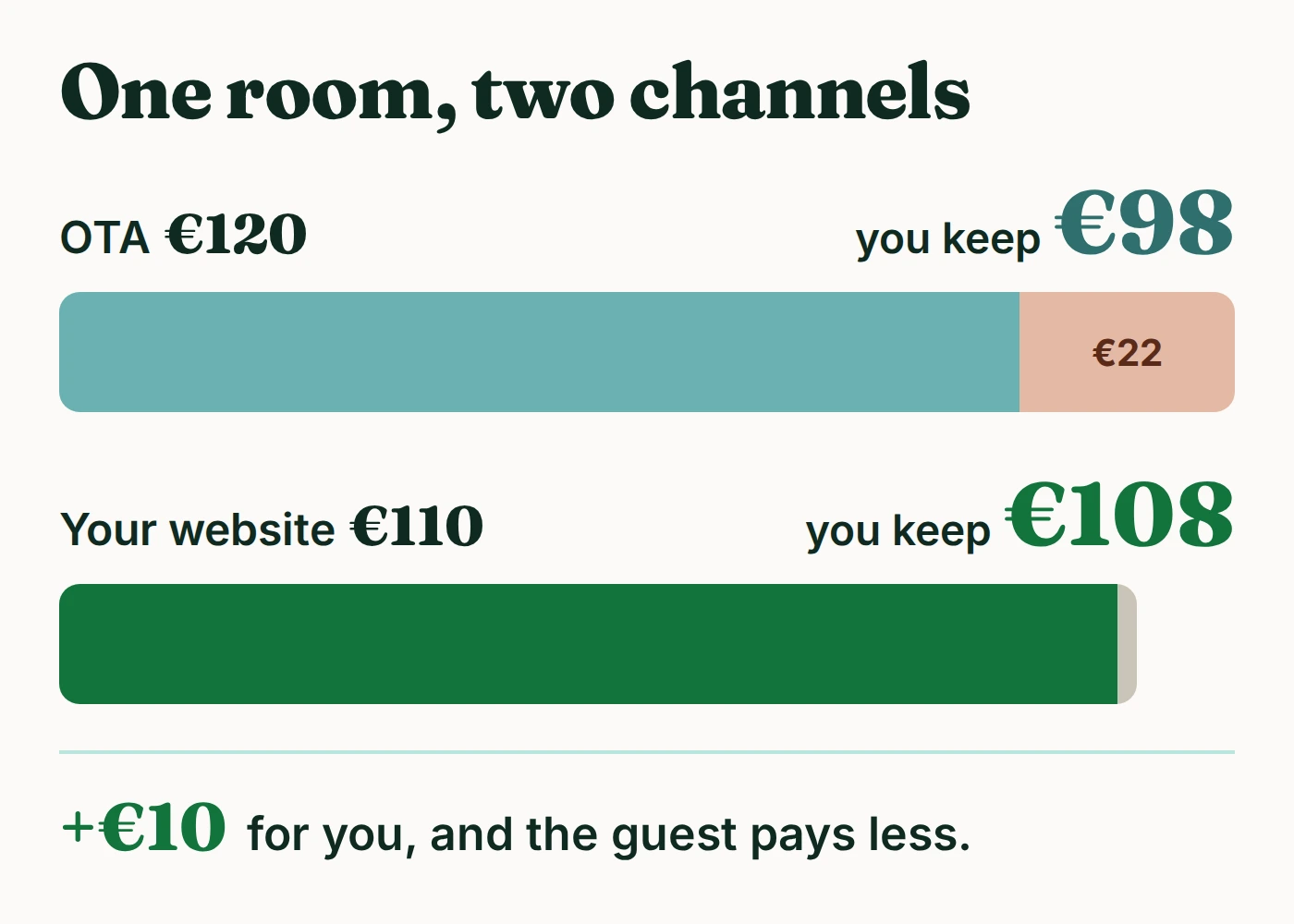
Cheaper for the guest, better for you. Illustrative figures.
3. Undercut a little, not a lot. A gap of 5 to 10% is enough to give a guest a reason to book with you, and it still leaves you well ahead of the commission. A deep undercut is more likely to be noticed by the ranking, and it teaches guests that your OTA price is inflated.
4. Mix price with value. A slightly lower rate plus breakfast, late checkout or free parking is a stronger offer than a larger discount alone. Value costs you less than a point of commission, and it is harder for a platform to compare.
5. Keep member rates in the mix. Rates for returning guests or people who sign up on your website were never the problem, and they give you a second lever alongside the public rate.
6. Say it on your website. Guests who find you on Booking.com often look up your website before they book. If your booking page quietly shows a better price and nothing else, many will not notice. One plain line does the work: book here for the best rate.
7. Watch your numbers for three months. After you change your direct rate, track your Booking.com bookings, your page views in the extranet and your direct share every month. If Booking.com volume drops more than the direct gain, narrow the gap. Keep dated notes. If the question of ranking penalties is ever tested, evidence will matter.
8. Do not leave the platforms. For most independent properties the OTAs still bring guests who would never find you otherwise. The goal for 2027 is not to leave Booking.com. It is to stop paying commission on the guests who were already looking for you.
Where Tribii fits
A lower direct rate only pays if the booking itself carries no commission. That means a booking engine on your own website that takes no cut and sends the guest's payment straight to you.
Any commission-free booking engine can do that job. Tribii's is ours. The booking engine is free forever for up to 20 rooms, charges 0% commission and takes payment through your own Stripe account, so you set your direct rate in one place and keep all of it. If you want to go further, the Direct Booking Booster adds member rates for returning guests and recovers bookings that guests start on your website and do not finish. It is a paid Pro tool.
If you are still working out what your OTAs cost you today, start with how much commission Booking.com takes and our comparison of OTA commission rates.
Common questions
Can I offer a lower price on my own website than on Booking.com?
Yes, if your property is in the EEA. Booking.com removed parity requirements for EEA properties in 2024 to comply with the Digital Markets Act.
Will Booking.com lower my ranking if my website is cheaper?
It may take price competitiveness into account in its ranking. The law forbids measures with the same effect as parity, but no regulator has yet ruled on ranking. Start with a small gap and watch your numbers.
Does this apply to Expedia?
Not automatically. Expedia is not covered by the same Digital Markets Act obligation. National law bans parity in several countries, but elsewhere it depends on your contract.
Can I still join the collective claim against Booking.com?
Registration was open until 11 September 2026, so for most hotels the window has passed. Check mybookingclaim.com for any update. The case continues at the Amsterdam District Court.
Does this apply in the UK or Switzerland?
No. The Digital Markets Act covers the EEA. Other countries have their own rules, so check locally.
The honest summary
In the EEA, you are free to sell your rooms for less on your own website than on Booking.com. Most small hotels have not used that freedom yet. The contract no longer stops you, the ranking might react, and the only way to find out is carefully.
Set a modest direct discount for 2027, add some value, make it visible, and measure. The commission you keep is yours.
Legal position reviewed September 2026 from court rulings, Booking.com's own statements and reporting on the collective claim. This is not legal advice: check your own contracts, and speak to your hotel association if you are unsure.

Tribii
The free booking engine for independent hoteliers. Editorial notes.
More for the kitchen table.
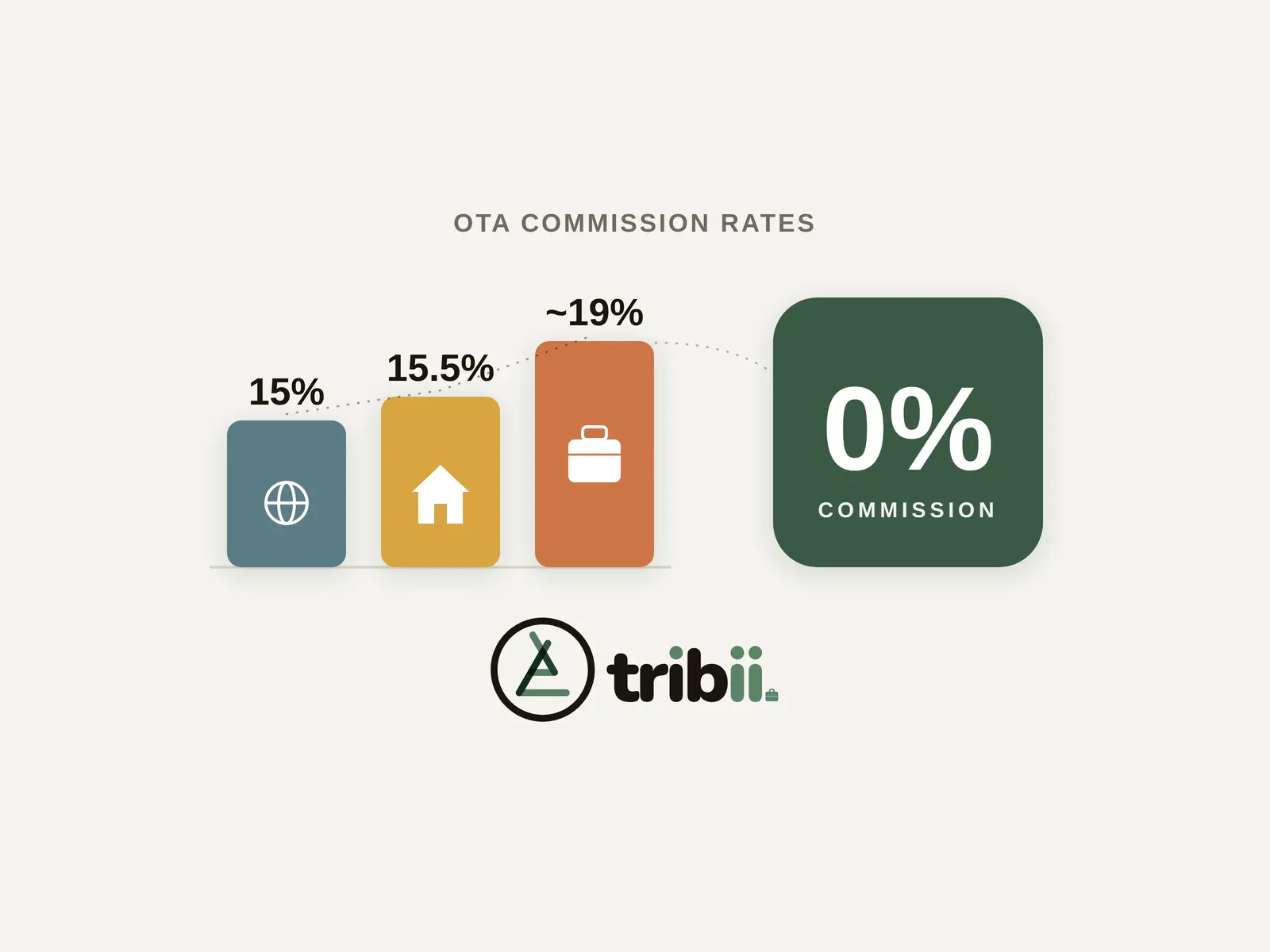
OTA Commission Rates: What Booking.com, Expedia and Airbnb Really Charge
A plain-English breakdown of what the big booking sites really take, the fees they do not advertise, and how much a year of OTA bookings actually costs you.
 Tribii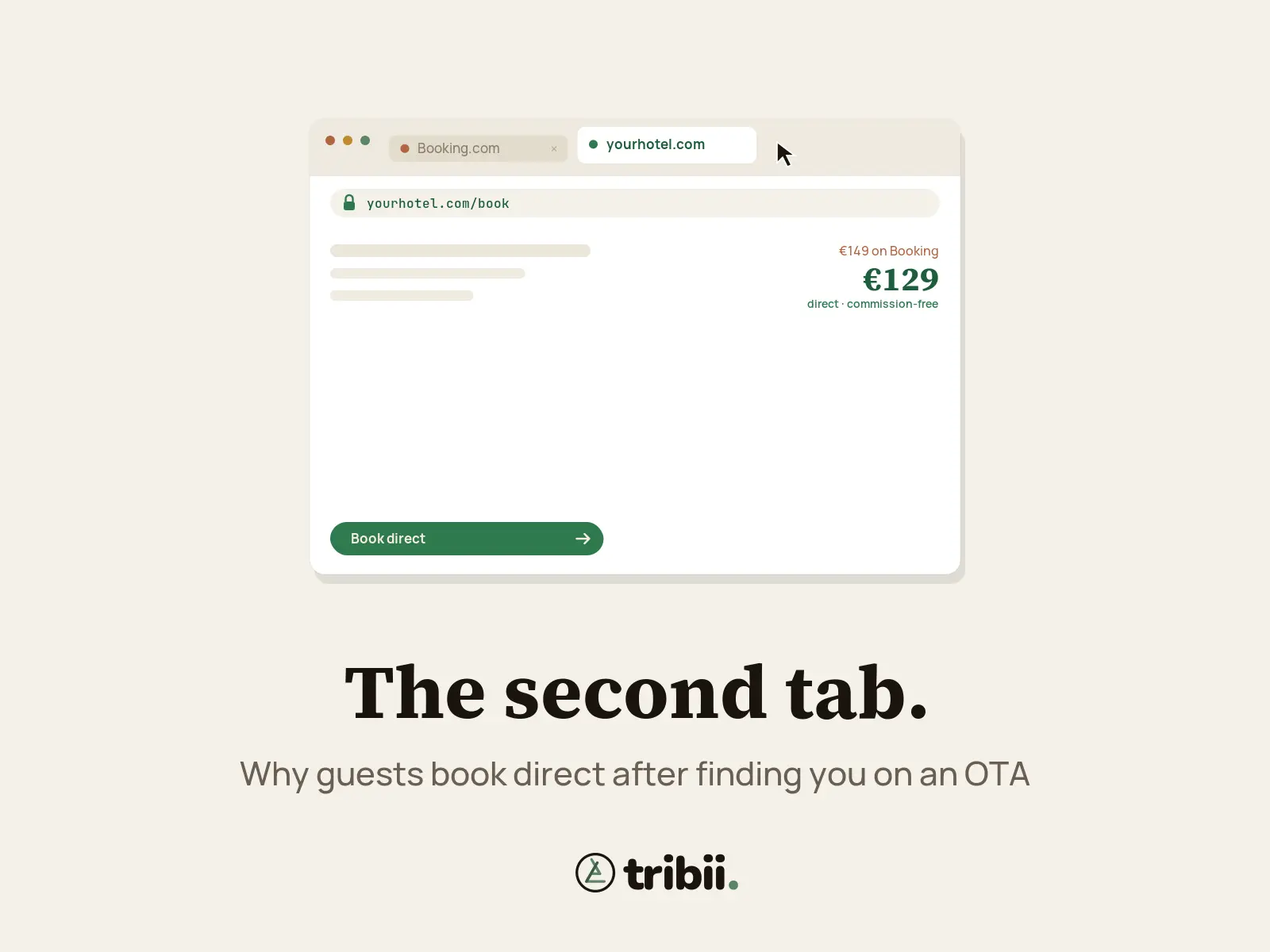
The Second Tab: Why Guests Find You on Booking.com and Book Somewhere Else
Most guests who book you directly found you on an OTA first. Here is what that second tab is worth, and why, after the EU killed rate parity, independent hotels can finally win it.
 Daniel Vidal
One system, not twenty: the case for running your hotel on a single screen
How independent hotels ended up juggling a dozen disconnected tools, and what it looks like to put the whole house, guests included, on one.
Daniel Vidal