Channel manager vs booking engine: what a small hotel actually needs
The two tools get sold together and confused constantly. One sells rooms on other people's websites. The other sells rooms on yours.
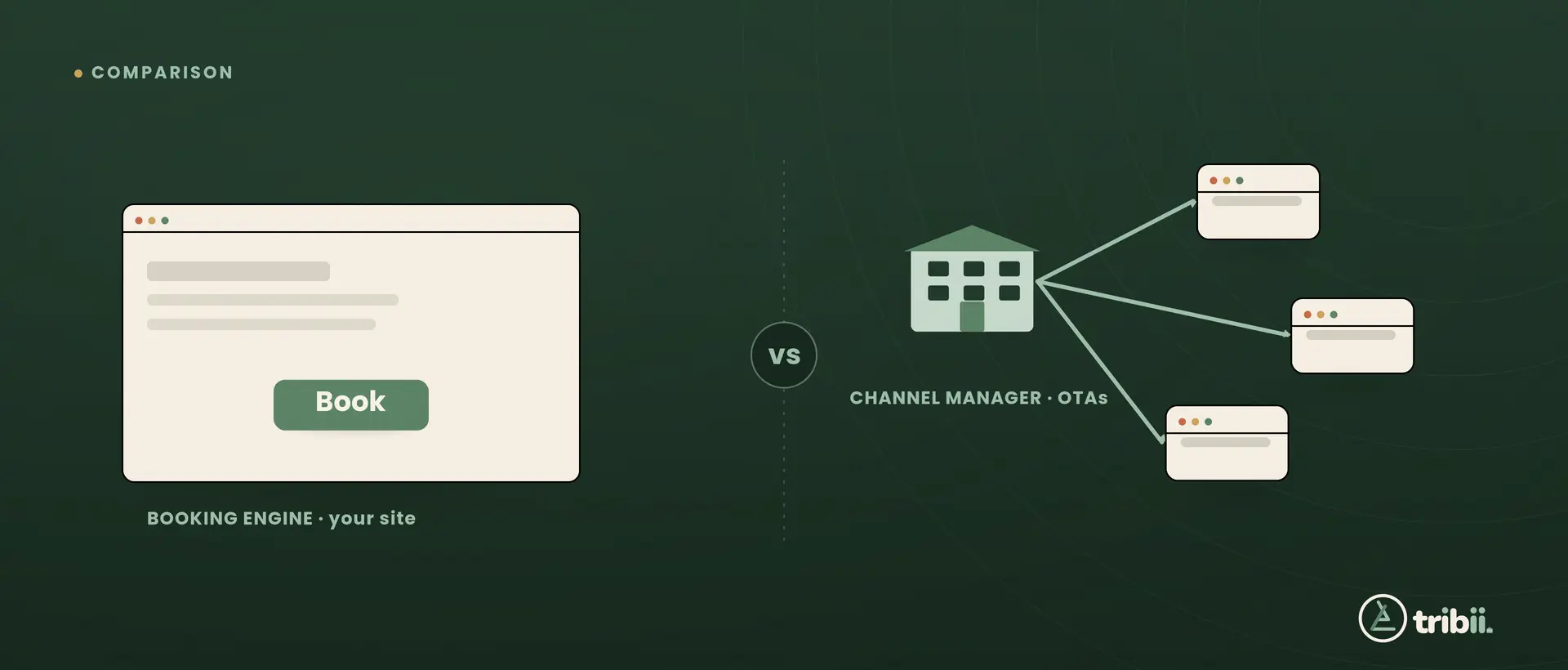
Ask five vendors what you need and four will quote you a bundle. Somewhere in that bundle sit two products with similar names and completely different jobs, and if you do not know which is which, you will pay for the wrong one first.
Here is the short version. A booking engine takes reservations on your own website. A channel manager keeps your availability in sync across other people's websites. One of them earns you commission-free revenue. The other one manages the cost of revenue you are already paying for.
What a booking engine actually does
A booking engine is the part of your website where a guest picks dates, sees a real price for a real room, and pays. That is it. It reads your availability, shows what is genuinely bookable, and captures the reservation and the money.
The important detail is where the money goes. In a well-built setup, the guest pays into your own payment account, and the software takes nothing per reservation. That is what "commission-free" is supposed to mean, and it is the whole reason the direct channel exists. A booking made on your site at your rate, with no cut taken out, is the most profitable reservation your property can sell.
Without a booking engine, your website is a brochure. Guests read it, decide they like you, and then go book on Booking.com because that is where the button is. You paid for the brand impression and someone else charged you 15 to 25% to close it.
What a channel manager actually does
A channel manager sits between your property and the OTAs. When a room sells on Booking.com, it tells Expedia and Airbnb that the room is gone. When you close out a date, it closes it everywhere.
It solves exactly one problem: the overbooking and manual-entry misery of selling the same room on several sites at once. If you list on three or more channels, that problem is real and expensive, and a channel manager pays for itself in avoided disasters.
Note what it does not do. A channel manager does not win you a single booking. It does not reduce your commission by one cent. It makes the OTA relationship survivable at scale. That is valuable, but it is a cost-control tool, not a revenue tool.
The order most small hotels get wrong
The standard vendor pitch is channel manager first, everything else later. It is a comfortable sale, because your pain is loudest where the double bookings are.
But consider what each tool changes on your P&L.
A channel manager lets you sell more rooms through channels that charge you commission. Your revenue goes up, your commission bill goes up with it, and your margin per room stays exactly where it was.
A booking engine lets you sell rooms at zero commission. Every reservation it captures is one that would otherwise have carried a 15 to 25% deduction, or would never have happened at all because the guest could not book you at 11pm on a Sunday.
At a 20-room property doing modest volume, shifting even a handful of monthly bookings from an OTA to your own site is worth more than any efficiency a channel manager buys you. If you are choosing what to set up first, set up the channel you own.
Run your own numbers before you take my word for it. Our OTA commission calculator multiplies your yearly OTA revenue by the commission rate you actually pay and shows you what stays with the channels versus what you would keep on direct bookings. It needs no account and takes about thirty seconds.
When you genuinely need both
This is not an argument for abandoning OTAs. They are a marketing channel with global reach that you could not buy for the price of the commission, and for a new property with no reputation they are how you fill your first season.
You need a channel manager when the arithmetic of manual updates stops working. In practice that means one of these is true:
- You sell on three or more OTAs and update availability by hand.
- You have had a double booking in the last twelve months, or you avoid one only because someone checks the extranets every morning.
- Your OTA listings are permanently under-allocated because you hold rooms back out of fear, which quietly costs you occupancy.
If none of those describe you, and you are running one or two OTA extranets, a channel manager is solving a problem you do not have yet. Get the direct channel working, then add channel management when the volume demands it.
What "syncing" really requires
One more distinction, because it trips people up. A booking engine needs to know what is available. A channel manager needs to know the same thing. Both of them are reading from something, and that something is your property management system.
Your PMS is the source of truth: which rooms exist, which are sold, which are dirty, what each guest owes. When the booking engine, the channel manager and the PMS are separate products from separate vendors, you are paying three times and you own the integration problem when the sync breaks at midnight.
When they are one system, availability is not "synced" at all. It is simply one number that everything reads. That is the argument for a single system over a stack, and it matters far more at 20 rooms than at 200, because at 20 rooms the person debugging the sync is you.
A reasonable order of operations
- Get bookable on your own site. A free booking engine on the website you already have, with payments landing in your own Stripe account and no per-reservation fee. This is the highest-margin revenue in your business and most small properties are not set up to take it.
- Get your operations onto one calendar. A free hotel PMS so that reservations, rooms, rates and guest profiles live in one place instead of in a spreadsheet and three extranets.
- Add channel management when volume forces it. When you are genuinely selling across several OTAs at once and manual updates have become a daily risk, connect them properly.
That order builds your margin first and manages your costs second. The vendor bundle usually does it the other way around, because the other way around sells more software.
The honest summary
A channel manager is plumbing. A booking engine is a shopfront. Plumbing is essential once the building is full of people, but nobody ever grew a business by installing pipes before they built a door.
If you take one thing away: the commission you pay is not a fixed cost of being a hotel. It is the price of a booking you did not capture yourself. Every tool in your stack should be judged on whether it moves reservations toward the channel you own.
*Tribii includes the booking engine, the website and the PMS essentials free for properties up to 20 rooms, with 0% commission on direct bookings. We say what is free and what is paid on our pricing page, and we are honest about it either way.*

Tribii
The free booking engine for independent hoteliers. Editorial notes.
More for the kitchen table.
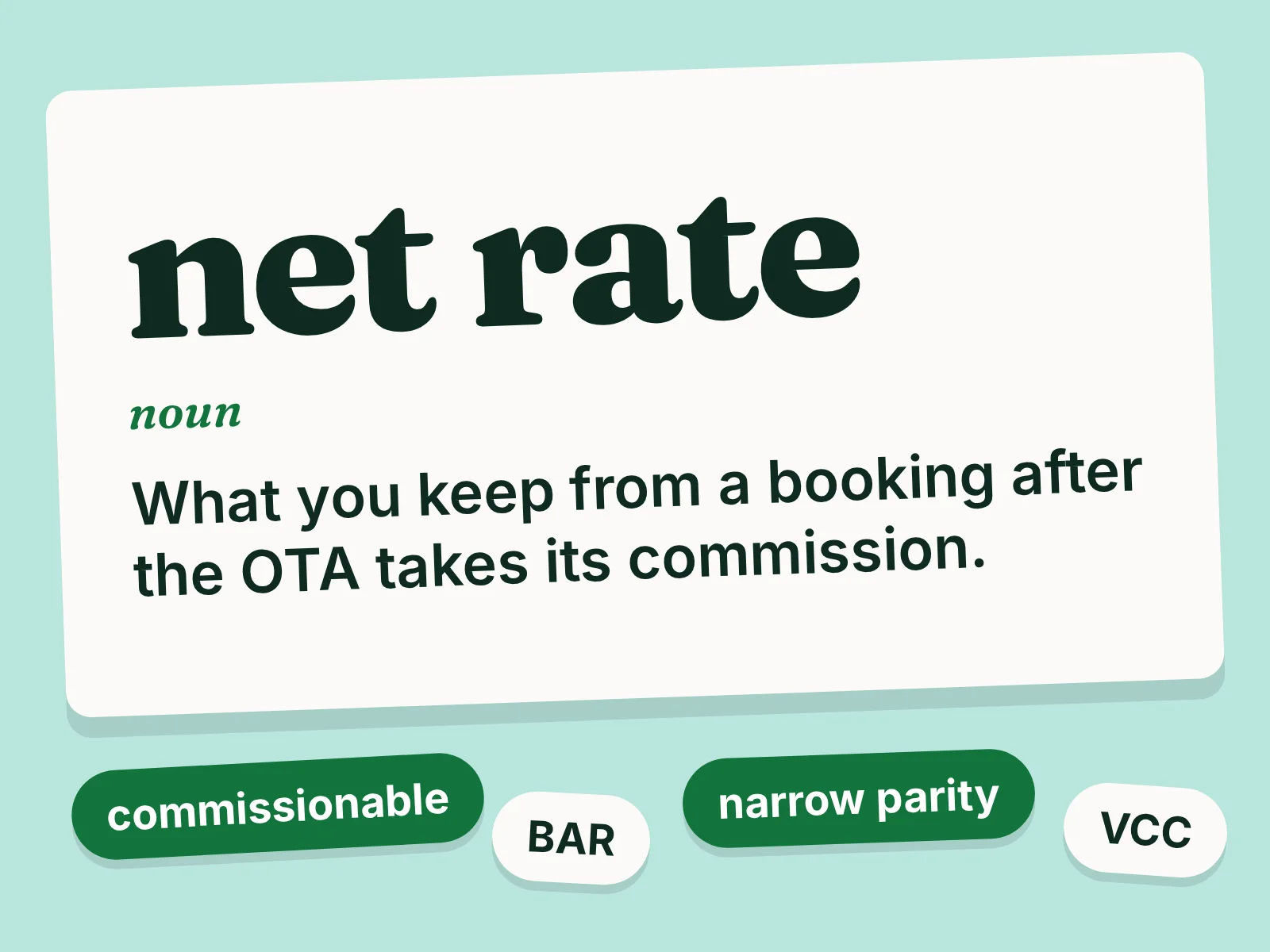
OTA terms explained: a plain-language glossary for independent hotels
Commissionable rate, net rate, merchant model, narrow parity. The words in your OTA contract, explained in plain language, with what each one means for your money.
 Tribii
Booking.com Genius and Preferred Partner: what they really cost a small hotel
Genius and Preferred Partner are sold as growth tools. Both are also a price. Here is what each one costs an independent hotel, how to test whether it pays, and what to decide before 2027.
Tribii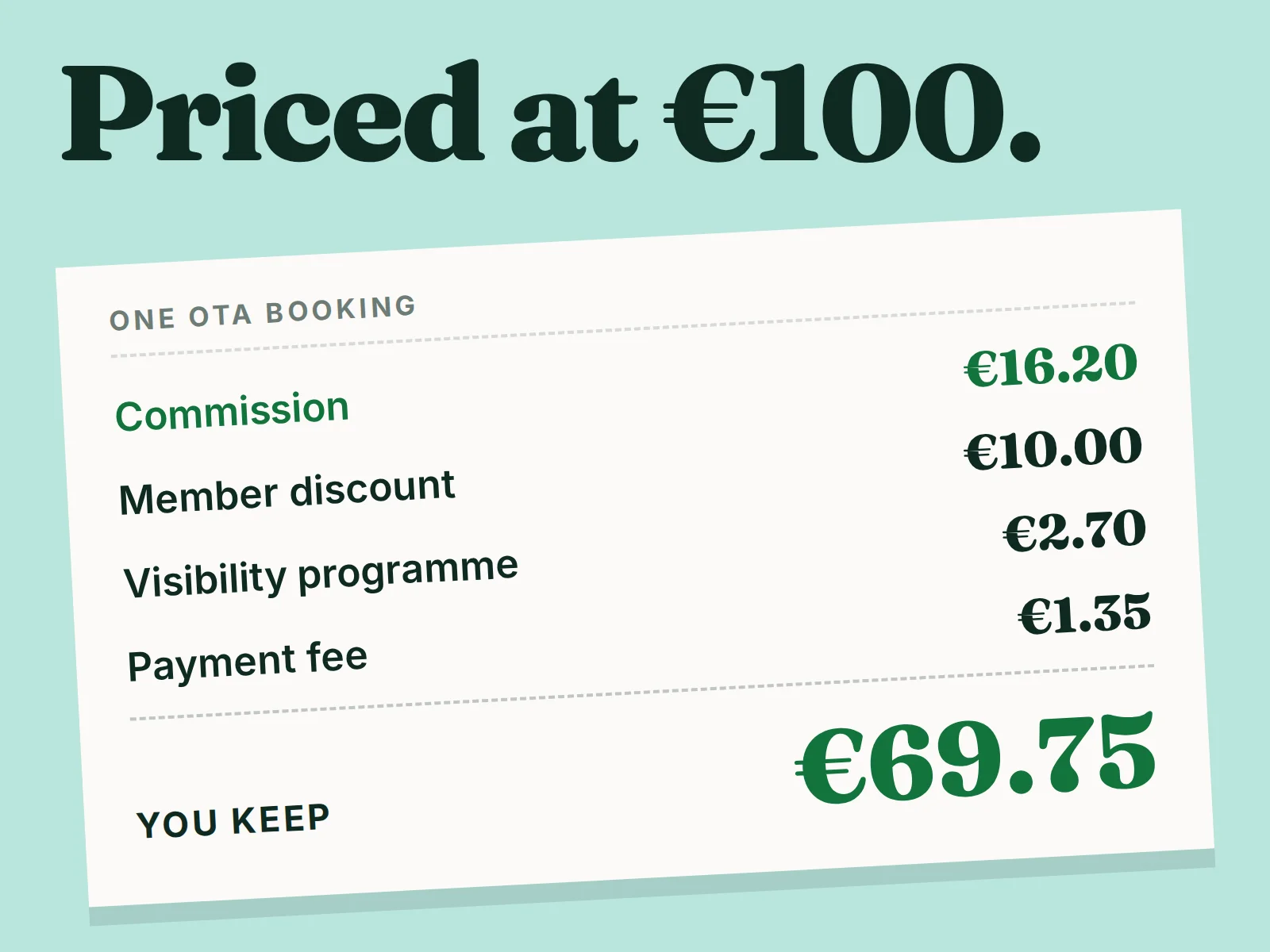
The real cost of an OTA booking: commission is only the first line
Most hoteliers know their commission rate. Few know their effective rate. Here are the other lines on every OTA booking, and how to work out what a room really costs you to sell in 2027.
Tribii