Do small hotels need a channel manager?
The honest answer is sometimes. Here is how to work out which sometimes you are in, using your own numbers rather than a vendor's.
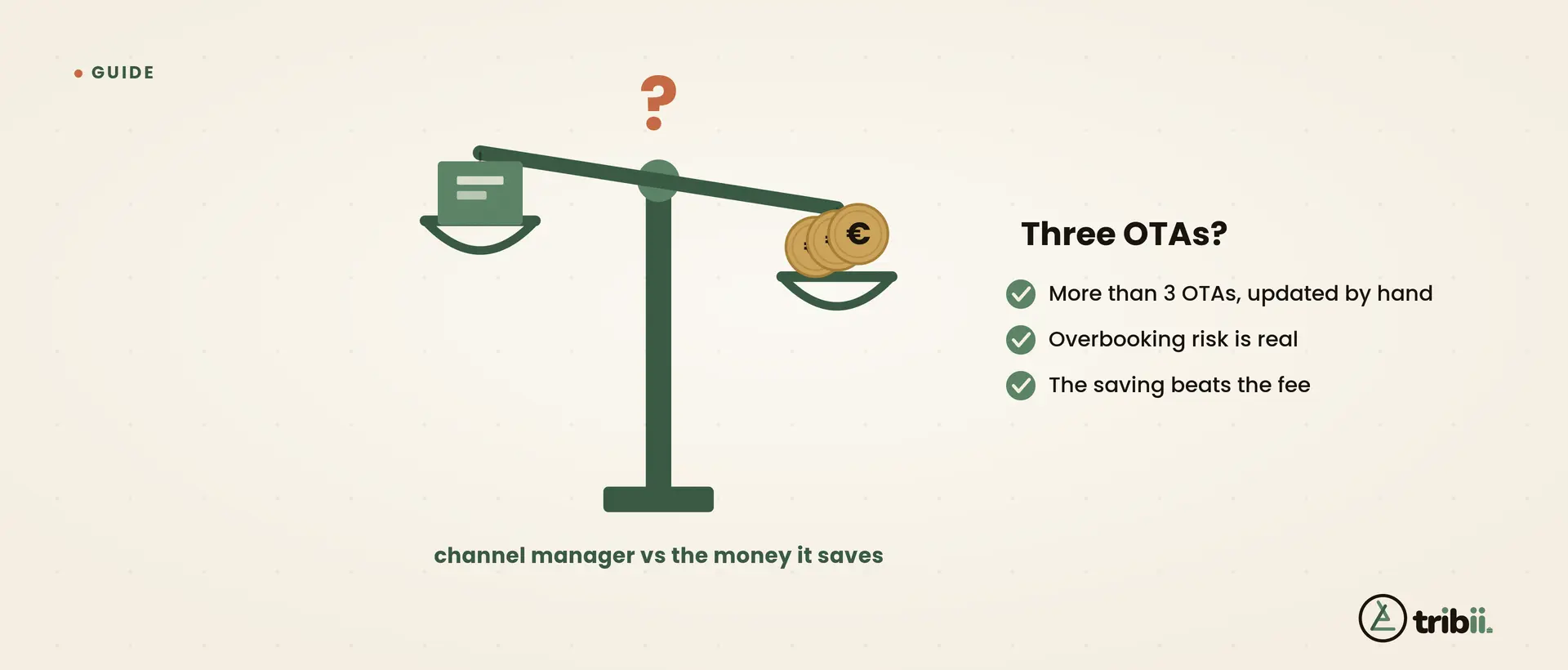
Every channel manager vendor will tell you that you need a channel manager. It is not a lie, exactly. It is an answer given before anyone asked about your property.
The real answer depends on two numbers: how many channels you sell on, and how much your time is worth. Both are knowable in about ten minutes.
What you are actually buying
A channel manager keeps availability synchronised between your property and the OTAs. Sell a room on Booking.com and it closes on Expedia. Close a date in your system and it closes everywhere.
It buys you two things and only two things:
- Time. No more logging into three extranets each morning.
- Protection from double bookings. The mistake that costs you a guest, a review, and sometimes a relocation.
It buys you nothing else. It does not reduce commission. It does not win bookings. Any vendor implying otherwise is selling the sync as if it were a marketing channel.
When you do not need one
If you sell on one OTA, you do not need a channel manager. You need to remember to update one extranet. That is a habit, not a software category.
Two OTAs, low occupancy, generous availability buffers: still probably not. You are updating twice, the risk of collision is low, and the discipline is manageable.
The trap here is the "just in case" purchase. Sixty euros a month for peace of mind sounds cheap until you notice you are paying €720 a year to avoid a task that takes four minutes a day, and that the same €720 could have bought a year of the direct channel actually working.
When you genuinely do
Three or more OTAs with manual updates. That is the line, and it is not arbitrary. With three channels, every rate change is three logins, and every booking creates a window in which two other channels are selling a room you no longer have.
The other reliable signals:
- You had a double booking in the last twelve months. Or you nearly did, and the near miss was luck.
- You hold rooms back out of fear. This is the expensive one. Allocating six of your twenty rooms to Booking.com because you cannot trust the sync means fourteen rooms are unavailable to your largest channel. You are paying for safety in occupancy.
- Somebody spends more than 30 minutes a day in extranets. At any reasonable valuation of that person's time, the software is now cheaper.
If any of those is true, buy the channel manager. It will pay for itself, and the second one will pay for it several times over.
The commission math on each extra OTA
Here is the calculation nobody runs before adding a channel.
Every OTA booking carries a commission, typically 15 to 25% of the reservation value. Booking.com's standard rate starts near 15% and commonly rises to 18 to 22% once you join visibility programmes; Expedia commonly runs 15 to 25%. So the question for each new channel is not "will this bring bookings" but "will this bring bookings that would not otherwise have happened".
Three outcomes are possible when you add a channel:
Incremental bookings. Guests who would never have found you. These are worth their commission, straightforwardly. Reach you could not buy for the price.
Cannibalised direct bookings. Guests who would have booked on your website, but found you on the OTA first because the OTA outranks you for your own name. You just paid 18% for a booking you already had. This is real and it is common.
Cannibalised OTA bookings. Guests who would have booked you on the other OTA. Net zero, minus the extra operational load.
Only the first category grows your business. A channel manager makes it easier to add channels, which makes it easier to add the second and third categories too. Efficiency at doing something unprofitable is not a strategy.
Before you add a channel, and definitely before you buy software to manage more of them, put your real numbers into our OTA commission calculator. It takes your yearly OTA revenue and your actual commission rate and shows what the channels keep versus what you would keep on direct bookings. Most operators are surprised by the annual figure. It is the number they have never seen written down in one place.
The order that makes the math better
Notice that both problems a channel manager solves are consequences of OTA dependence, and neither is reduced by it.
So before the channel manager, or alongside it:
Get bookable on your own site. A free booking engine means the guest who found you on Booking.com, then searched your name to see the real photos, can actually book with you at zero commission. That guest exists in meaningful numbers, and if your site has no booking button, you have paid a commission to be a brochure for someone else's checkout.
Get availability into one system. Most of the double-booking risk comes from availability living in three extranets and one head. A free hotel PMS with reservations, rooms, rates and restrictions in one place gives you a single number to trust. The extranets still need updating, but you are copying from a source of truth instead of reconstructing one.
Do those, then measure again. Plenty of two-channel properties discover the channel manager was never the bottleneck.
The decision, on one page
Answer honestly.
- Do you sell on three or more OTAs? If no, and nothing below is true, wait.
- Have you had, or nearly had, a double booking in twelve months? If yes, buy.
- Do you hold rooms back from channels out of distrust? If yes, buy, and then sell those rooms.
- Does anyone spend over half an hour a day in extranets? If yes, buy.
- Can guests book directly on your website today, at zero commission? If no, fix that first. It is worth more than the sync.
A channel manager is good software solving a real problem. It is simply not the first problem, and it is never the profitable one.
The honest summary
Channel managers earn their money at three channels and above, or the day after your first double booking. Below that they are insurance against a risk you can manage by hand.
The commission bill, meanwhile, is not insurance. It is the largest controllable cost in most small hotels, and no amount of synchronisation reduces it by a cent. Fix the channel you own first, then make the ones you rent easier to live with.
*Tribii's PMS essentials and booking engine are free for properties up to 20 rooms, with 0% commission on direct bookings because guests pay through your own Stripe account.*

Tribii
The free booking engine for independent hoteliers. Editorial notes.
More for the kitchen table.
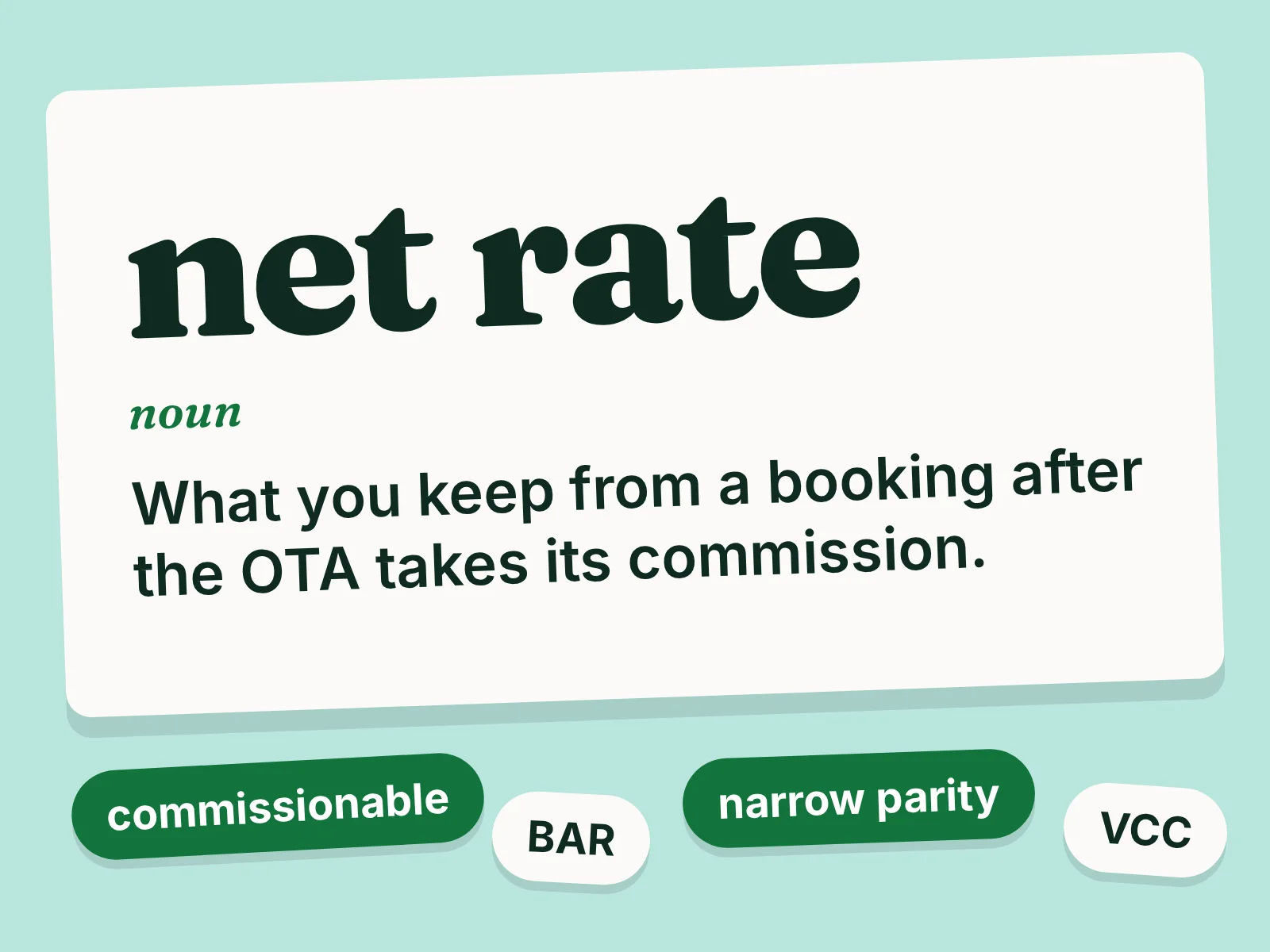
OTA terms explained: a plain-language glossary for independent hotels
Commissionable rate, net rate, merchant model, narrow parity. The words in your OTA contract, explained in plain language, with what each one means for your money.
 Tribii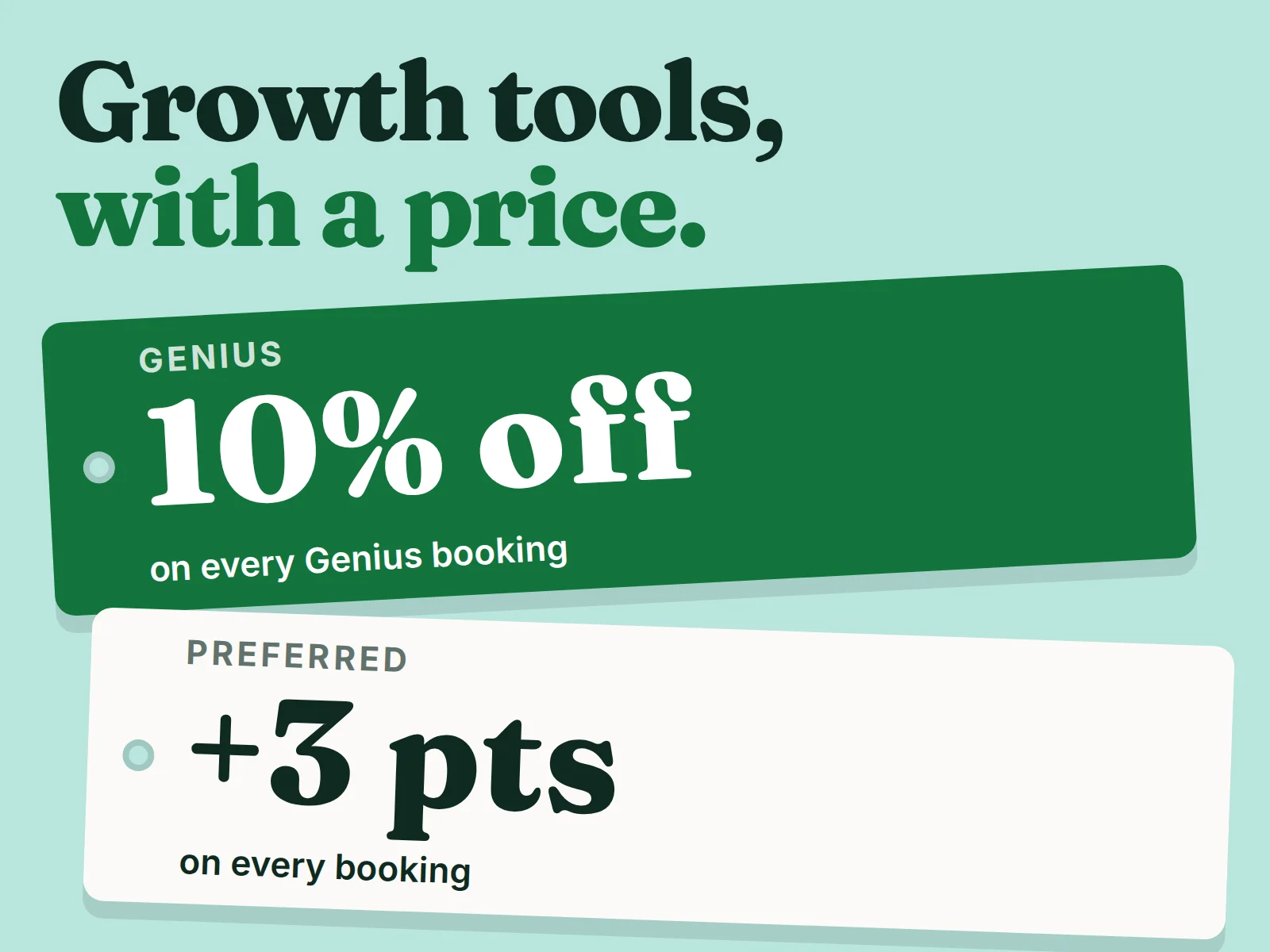
Booking.com Genius and Preferred Partner: what they really cost a small hotel
Genius and Preferred Partner are sold as growth tools. Both are also a price. Here is what each one costs an independent hotel, how to test whether it pays, and what to decide before 2027.
Tribii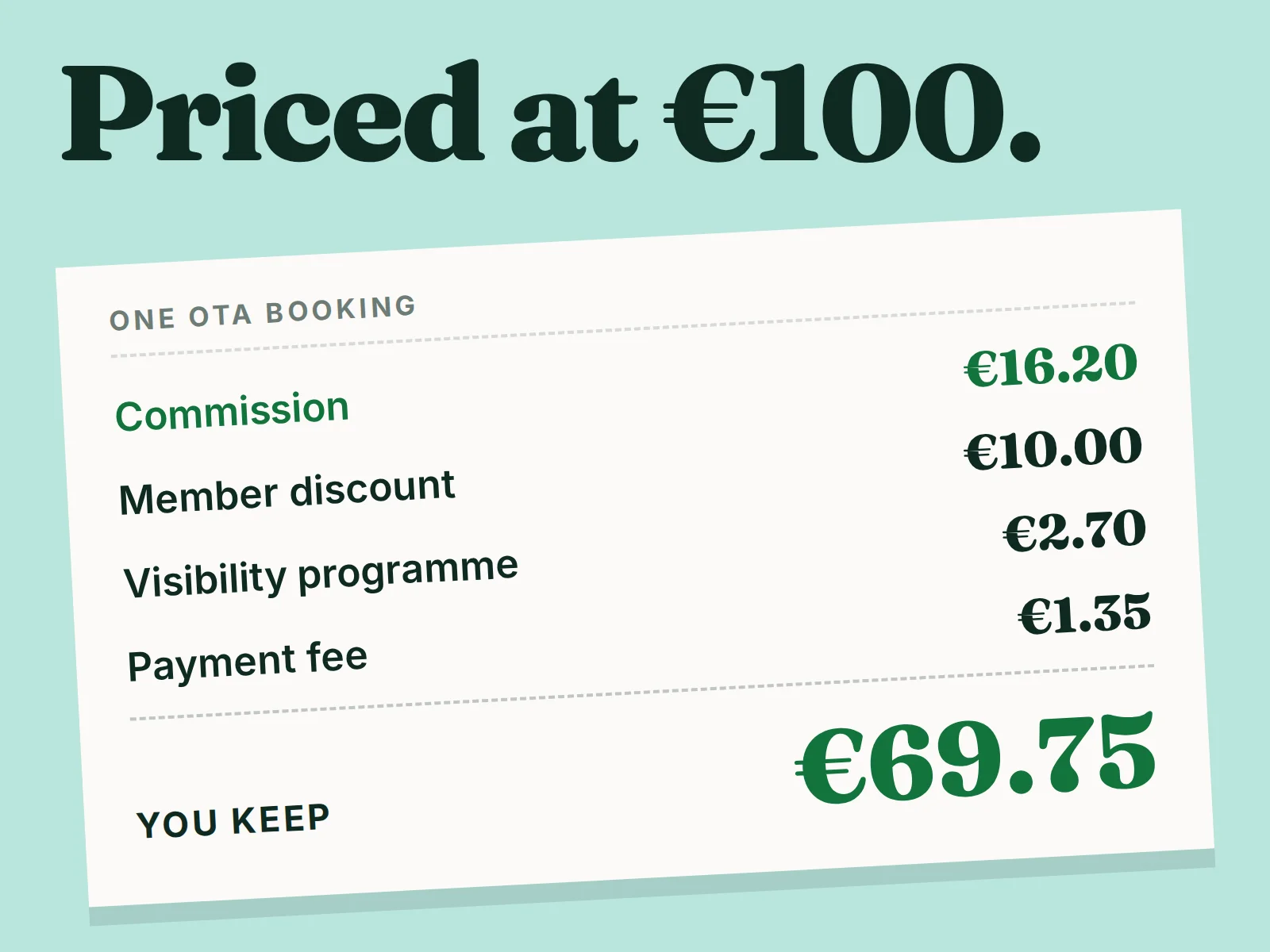
The real cost of an OTA booking: commission is only the first line
Most hoteliers know their commission rate. Few know their effective rate. Here are the other lines on every OTA booking, and how to work out what a room really costs you to sell in 2027.
Tribii