How to add a booking engine to your existing website
You do not need a new website. You need the page where a guest can finish. Here are the three ways to get one, and what to test before you launch.
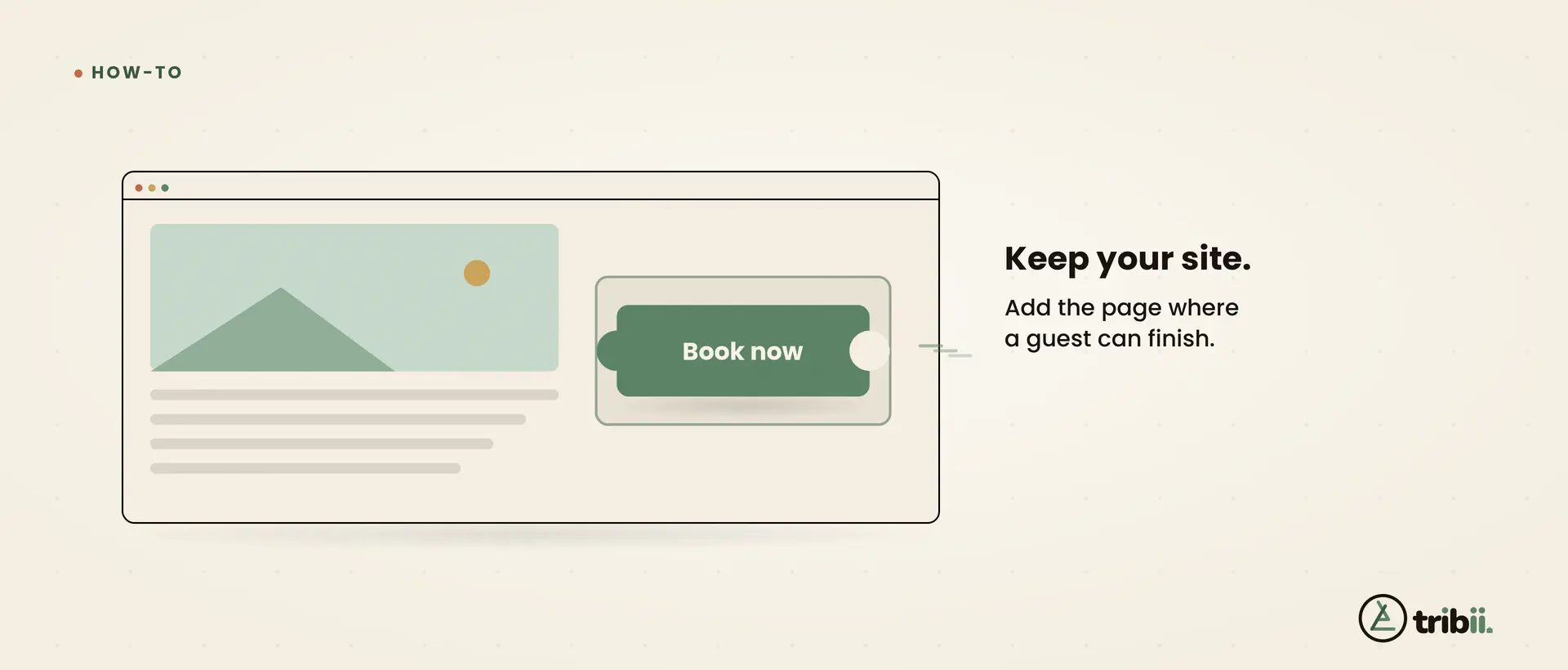
The most expensive page on a hotel website is the one that says "call us to book". It looks helpful. It is a door that only opens during office hours, in one language, for guests willing to pick up a phone.
The good news is that making an existing site bookable almost never requires rebuilding it. Whatever your site runs on, WordPress, Wix, Squarespace, or something a nephew built in 2016, there are three integration patterns, and one of them fits.
Pattern one: embed the widget
You paste a small snippet of code into your site, and a booking widget appears in place. Guests pick dates, see live availability, choose a room and pay, without leaving your page.
Best when your website works, looks like your property, and simply lacks a checkout.
How it goes on:
- WordPress: a Custom HTML block in the page editor, or a widget area in the theme. No plugin required if the vendor gives you plain embed code. Avoid plugins where you can; every plugin is a future update that breaks something.
- Wix: add an Embed element, choose "Embed a widget", paste the code.
- Squarespace: a Code Block on any page or section.
- Anything else: if you can edit the HTML of a page, you can do this.
Watch out for: themes with aggressive CSS that squash the widget, and page builders that strip script tags. Test on a phone before you announce it.
Pattern two: link to a hosted booking page
The vendor hosts a booking page for your property, styled with your name and photos, at a URL you link to. Your "Book now" button points at it.
Best when your site is on a platform that will not let you embed code, or you want the fastest possible route to being bookable. This is often a fifteen-minute job.
The trade: the guest leaves your domain. In practice this matters far less than people fear, because guests are used to it and the page still carries your identity. It matters slightly for analytics and slightly for trust, and not at all compared with having no booking button.
Do this properly: put the link on the main navigation as a visually distinct button, not in a paragraph of text. Repeat it at the bottom of every room page. The most common failure is a booking link that exists in one place, below the fold, on the contact page.
Pattern three: rebuild the site around booking
The site itself is generated by the same system that takes the reservations. Booking is built in, not attached.
Best when the current site is slow, not mobile-friendly, single-language, or you are maintaining a WordPress install and its plugin updates out of duty rather than affection.
This sounds like the big option. For a small property it is often the smallest, because a modern builder gives you a multilingual, fast, bookable site in an afternoon and removes an entire category of maintenance from your life. Tribii's free website builder does exactly this, with the booking engine already inside it and AI translation of your own content into every language you publish.
The reason to hesitate is if your existing site carries real SEO equity: years of content, backlinks, rankings you do not want to gamble. In that case, embed the widget and leave the site alone. Which is precisely why pattern one exists.
What to check before you launch
A booking button that works badly is worse than none, because it converts your best traffic into frustration. Test all six.
Mobile. More than half your guests are on a phone. Open the booking flow on an actual phone, not a resized browser window. Can you tap the date fields without zooming? Does the keyboard cover the confirm button?
Speed. If the page takes four seconds to show a room, a share of guests leave before it does. Embedded widgets should load asynchronously, meaning they must never block your page from rendering while they fetch. If your site got slower after you added the widget, the widget is wrong.
Languages. If your guests arrive from three countries, a booking flow in one language loses the other two, quietly, with no error message you will ever see.
The payment step. Complete a real booking with a real card, then refund yourself. Do it once on a phone and once on a laptop. This is the step nobody tests and the step where money is lost.
Availability truth. Close a date in your system and confirm the widget stops selling it within seconds. Then reopen it. If your calendar and your website ever disagree, you will meet the disagreement at the front desk.
The path from your name. Search your property in Google. From every result that appears, count the clicks to your booking button. If any path is longer than two, fix it.
If you want a second opinion on the whole site rather than the widget, our free website audit is read-only, needs no account, and checks discovery, speed, whether rooms can actually be booked, multilingual reach, trust signals and price clarity. It works on any hotel website regardless of who built it.
The three sentences that decide conversion
Wherever the booking button lives, the copy around it does more work than the design.
Say the price is the best available. If your direct rate is the best rate you are permitted to offer, say so beside the button. Guests are running an implicit comparison with the OTA tab they have open.
Say what free means. Free cancellation until a stated date, in plain words. Ambiguity here sends guests back to the OTA, which is very clear about its cancellation terms.
Say who you are. "Booked directly with us, the family who run the place" beats any trust badge ever designed.
What it costs
Not much, and possibly nothing. A booking engine can be free, a per-booking percentage, a flat subscription, or a quote. The one thing to establish before you embed anything is whether the guest pays into your own payment account or the vendor's, because that determines whether "0% commission" is a property of the architecture or a sentence in a brochure.
Tribii's booking engine is free forever for properties up to 20 rooms, embeds on any existing site, and takes payment straight into your own Stripe account, so no reservation fee is possible by design.
The honest summary
You do not need a new website. You need a live availability check, a working payment step, and a button that a guest on a phone at 11pm can find and press.
Embed the widget if your site is fine. Link the hosted page if your platform is stubborn. Rebuild only if the site is holding you back for reasons that predate this conversation.
Then test it on a phone, pay yourself, and refund it.

Tribii
The free booking engine for independent hoteliers. Editorial notes.
More for the kitchen table.
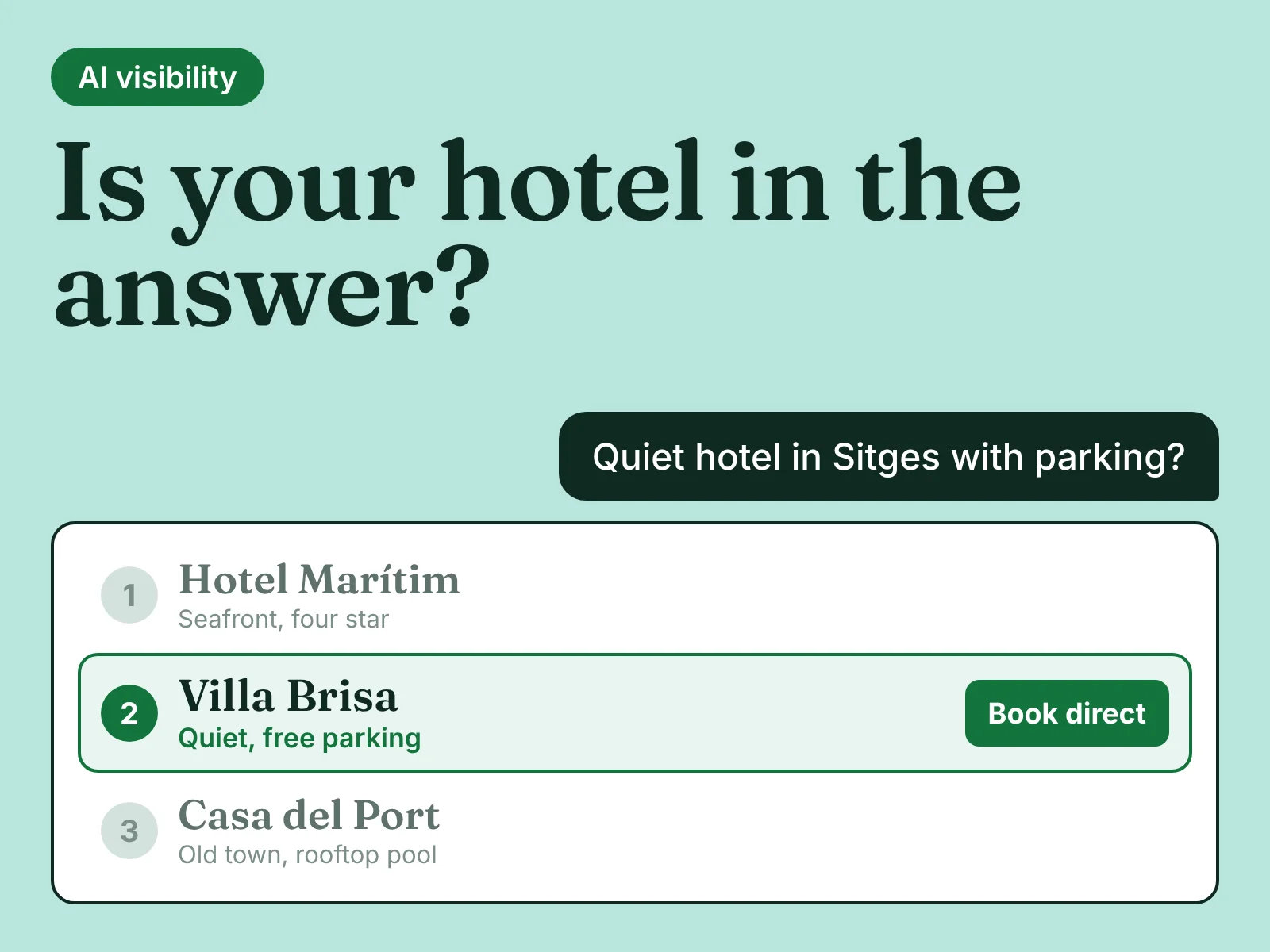
AI visibility for hotels: how to get your property recommended by ChatGPT, Gemini and Google
More guests now ask ChatGPT, Gemini or Google's AI Mode where to stay, and get a handful of names back. Most independent hotels are never one of them. Here is how AI picks hotels, and eight steps to get yours named and booked direct.
 Tribii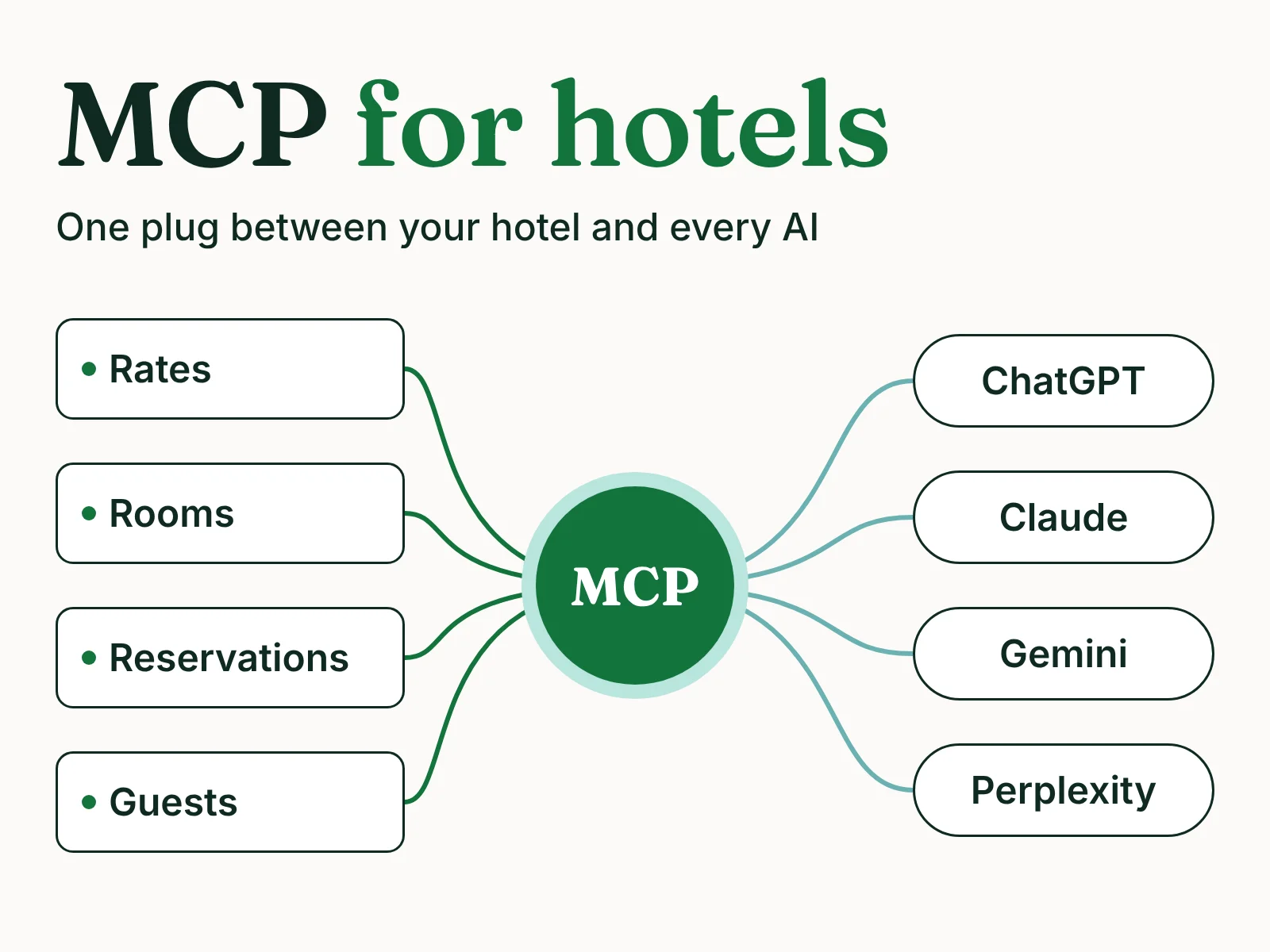
MCP for hotels: how AI assistants will find, sell and help run your property
ChatGPT, Claude and Google can now read live hotel prices, and some can take a booking. The standard behind it is called MCP. Here is what it is, what it changes for a small hotel's visibility and daily work, and what to do about it now.
Tribii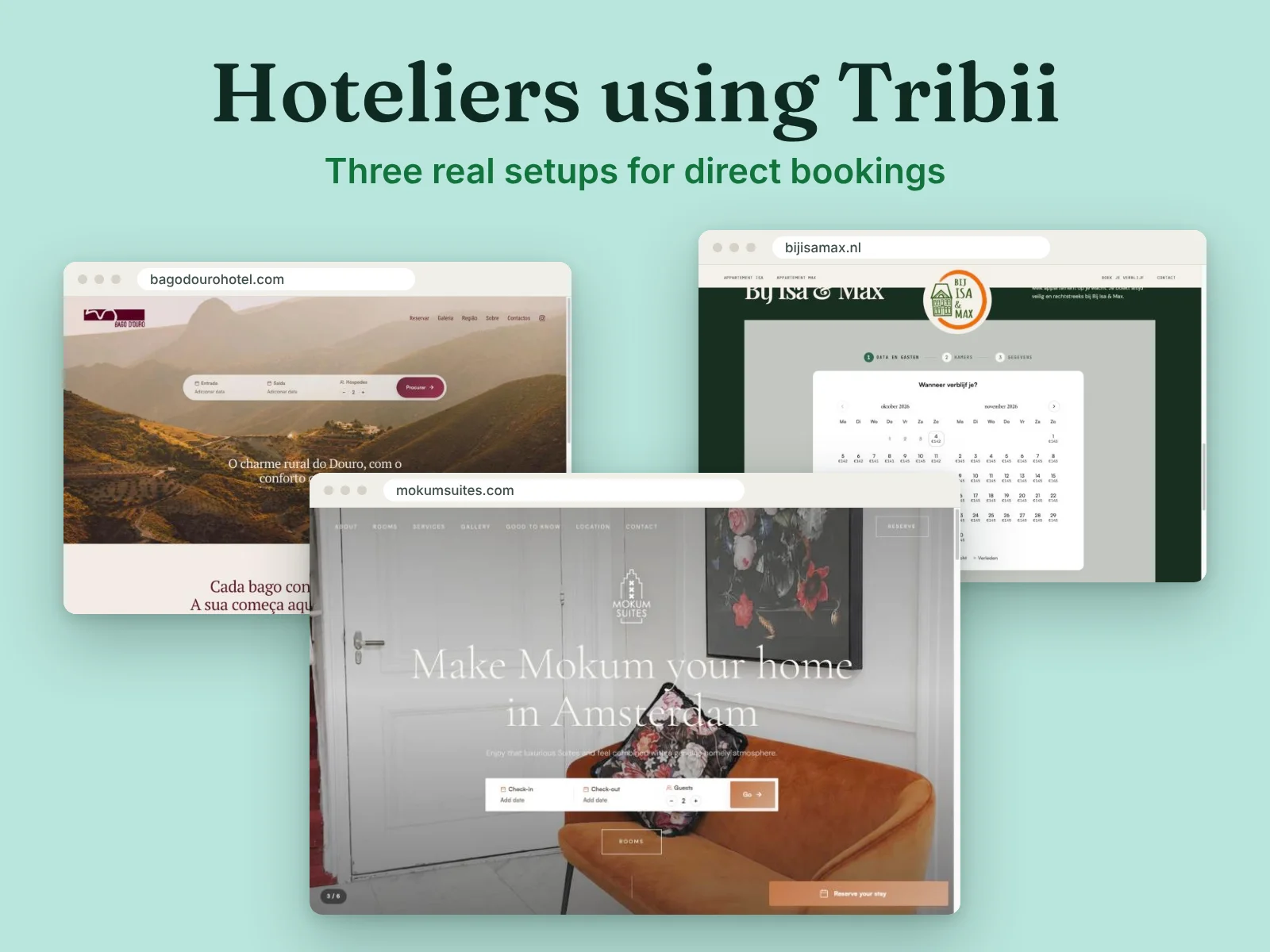
Hotels using Tribii: three real setups for direct bookings
A canal house in Amsterdam, a village guest house in the Douro and two apartments in Kampen all take commission-free bookings with Tribii. Each one set it up differently. Here is what they did, and how to choose the setup that fits your property.
Tribii