Low season without more commission: how to fill winter rooms directly
Switching on more OTA deals in winter usually means a discount and a commission on the same booking. Here is the arithmetic, and a practical playbook to fill quiet rooms directly, starting with the guests you already know.
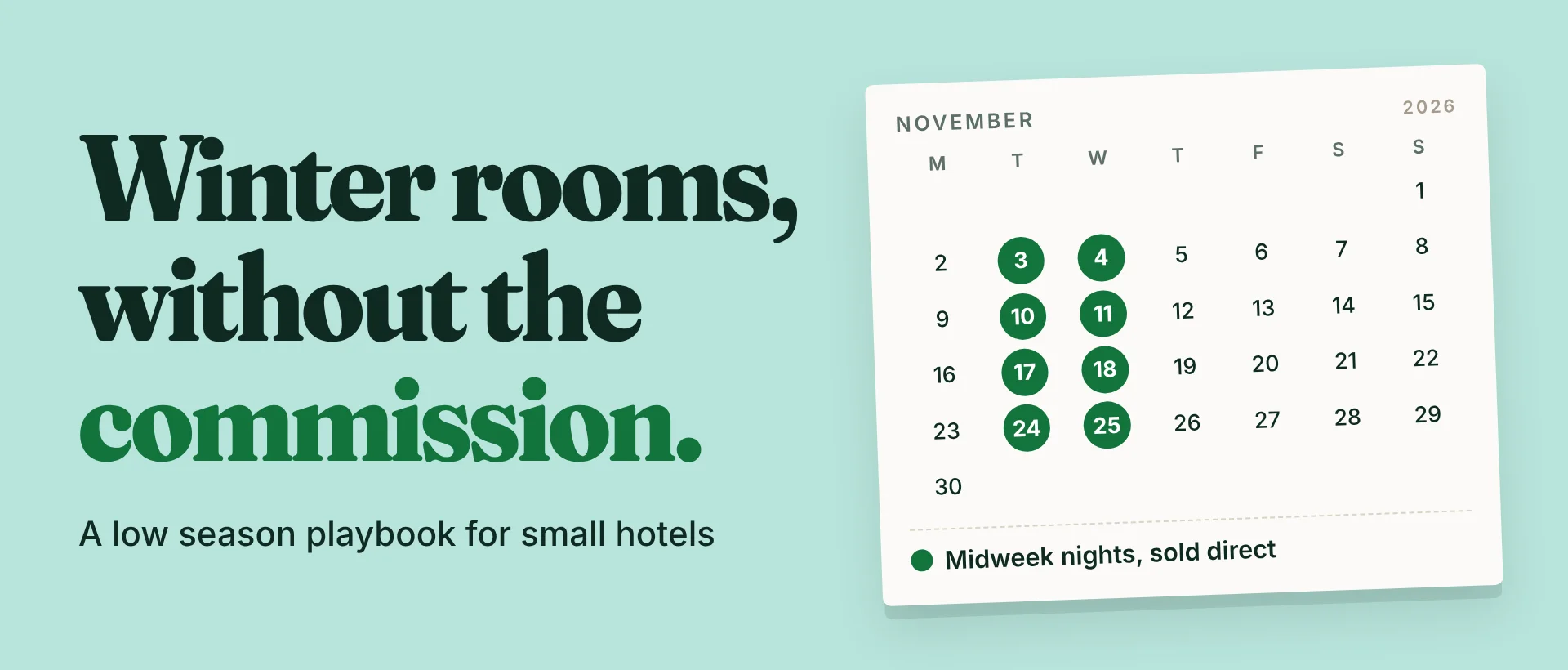
Somewhere in the second week of November, the booking calendar of a small European property starts to look like a crossword with most of the answers missing. Weekends still sell. Midweek nights can sit empty for weeks.
The reflex is to open the extranet and switch things on. A seasonal deal, a deeper Genius level, a mobile rate, a country rate, perhaps a visibility programme to push the listing up. Each one feels like action, and each one works the same way: you lower the price, then pay commission on what is left.
There is a cheaper way to fill rooms in the off season, and most of it starts with people who already know you. This is the playbook, with the arithmetic first.
The short answer
Fill low season from the guests you already have before you pay to find new ones. Email past guests early with one simple offer for midweek or longer stays, give returning guests a member rate on your own website, package the stay with local partners, and go after nearby demand: weekend breaks from cities within driving distance, business travellers, small groups and local events.
Keep OTAs for reach, but use their deals on purpose and on specific dates, because a winter deal on an OTA often means a discount and a commission on the same booking. Hold a price floor so guests do not learn to wait for your sale, and use the quiet weeks to fix your website, photos and reviews.
What low season looks like in Europe
Eurostat's figures for 2025 show the scale. Tourist accommodation across the EU recorded about 501 million nights in August and 139 million in January, so the busiest month was 3.6 times the quietest. July and August alone took 31% of the year's nights.
The mix of travellers changes too. In 2024, November was the month in which EU residents spent the fewest nights away, and business trips made up 16% of their trips that month, against 5% in July and August. Most travel is domestic: EU residents made 850 million trips inside their own country in 2024, against 343 million abroad.
Then look at how Europe books. The HOTREC European Hotel Distribution Study 2026, which covered 2,713 hotels in 28 countries, found that 51.3% of room nights in 2025 were booked direct, against 29.9% through OTAs. Phone and email alone brought in 27.6% of nights. The study adds that small independent hotels have the strongest direct performance and that repeat guests still matter to them.
So the guests you need in winter are often reachable without a platform in between. The question is whether you reach them before you reach for the deals tab.
The arithmetic of a winter OTA deal
Here is one November night, with illustrative figures. Your standard rate is €100. You join a seasonal deal at 15% off, and the guest is a Genius member who gets 10% on top.
Booking.com's developer documentation says discounts can be applied one after another when stacking is enabled, so the guest pays €76.50. At an 18% commission you pay €13.77, a card fee of about 1.5% takes €1.15, and you keep €61.58.
Now take the same night for a guest who stayed last winter and books on your website at a 10% member rate. They pay €90, the same card fee takes €1.35, and you keep €88.65. That is €27.07 more for the same room on the same night, or €81.21 over three midweek nights.
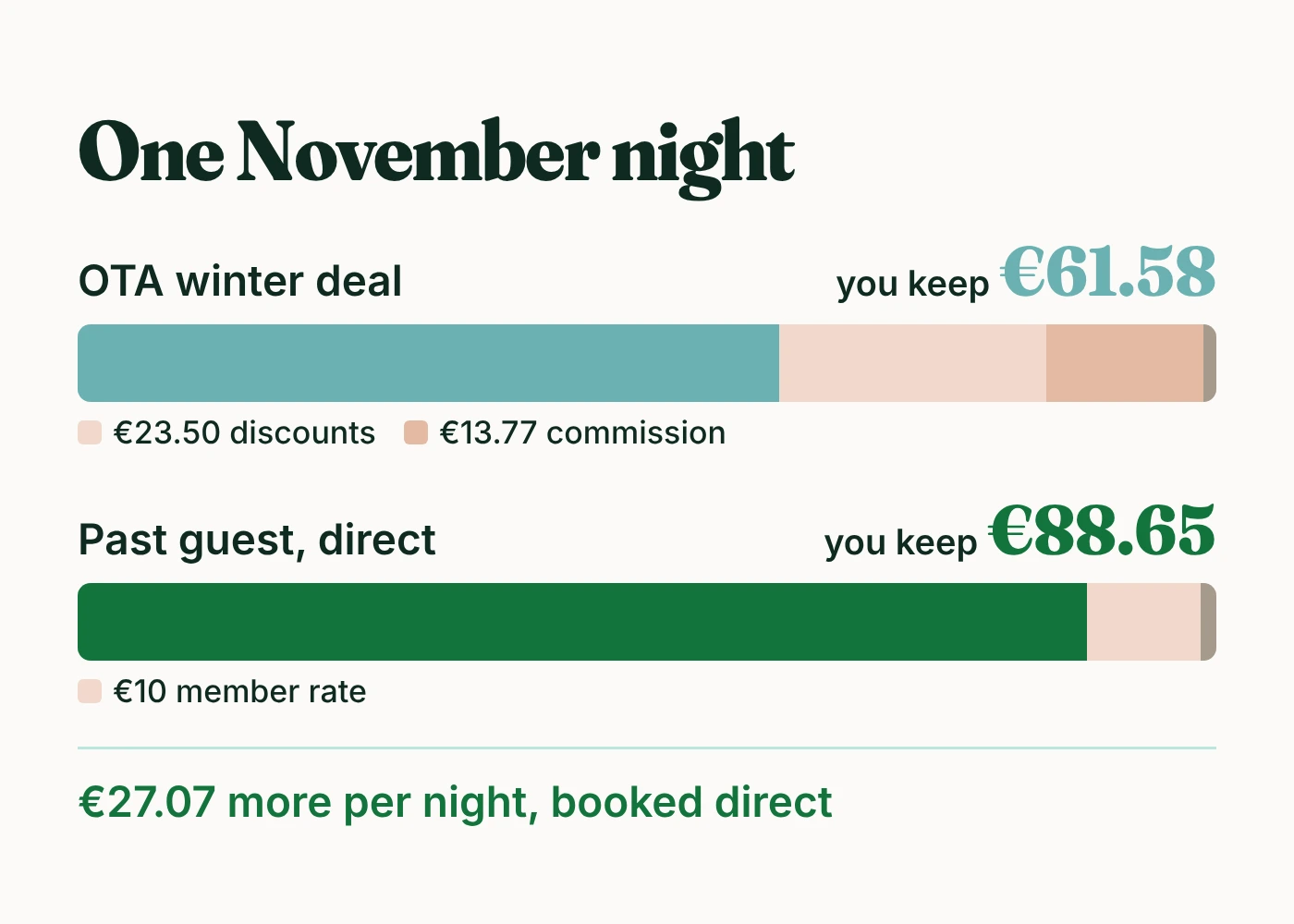
The same €100 room on a November night, sold two ways. Illustrative figures.
Visibility programmes widen the gap. Preferred Partner commonly adds around 3 points of commission on every Booking.com booking while you are in it, and a Visibility Booster raises commission on the dates you pick, as we explained in what Genius and Preferred Partner cost a small hotel.
Two further costs never appear on the invoice. A guest who found you through a winter deal on the platform may well book the next stay there too, and you pay commission again. And hotels in the HOTREC study reported an average cancellation rate of 19.0% on Booking.com, against 9.1% on their own websites.
None of this makes OTA deals always wrong. Booking.com says partners in Genius see on average 18% more bookings and 17% more revenue, based on its own data, and in a quiet month a guest who would never have found you is worth something. The point is to choose: a deal on specific weak dates, for markets you cannot reach yourself, switched off when those dates fill. Not a blanket discount from November to March.
Here is the plan, starting with what costs least.
Start with the guests you already know.
Start with the guests you already know
Your past guests already trust you, already know the room and cost almost nothing to reach. They are the cheapest winter bookings you will get.
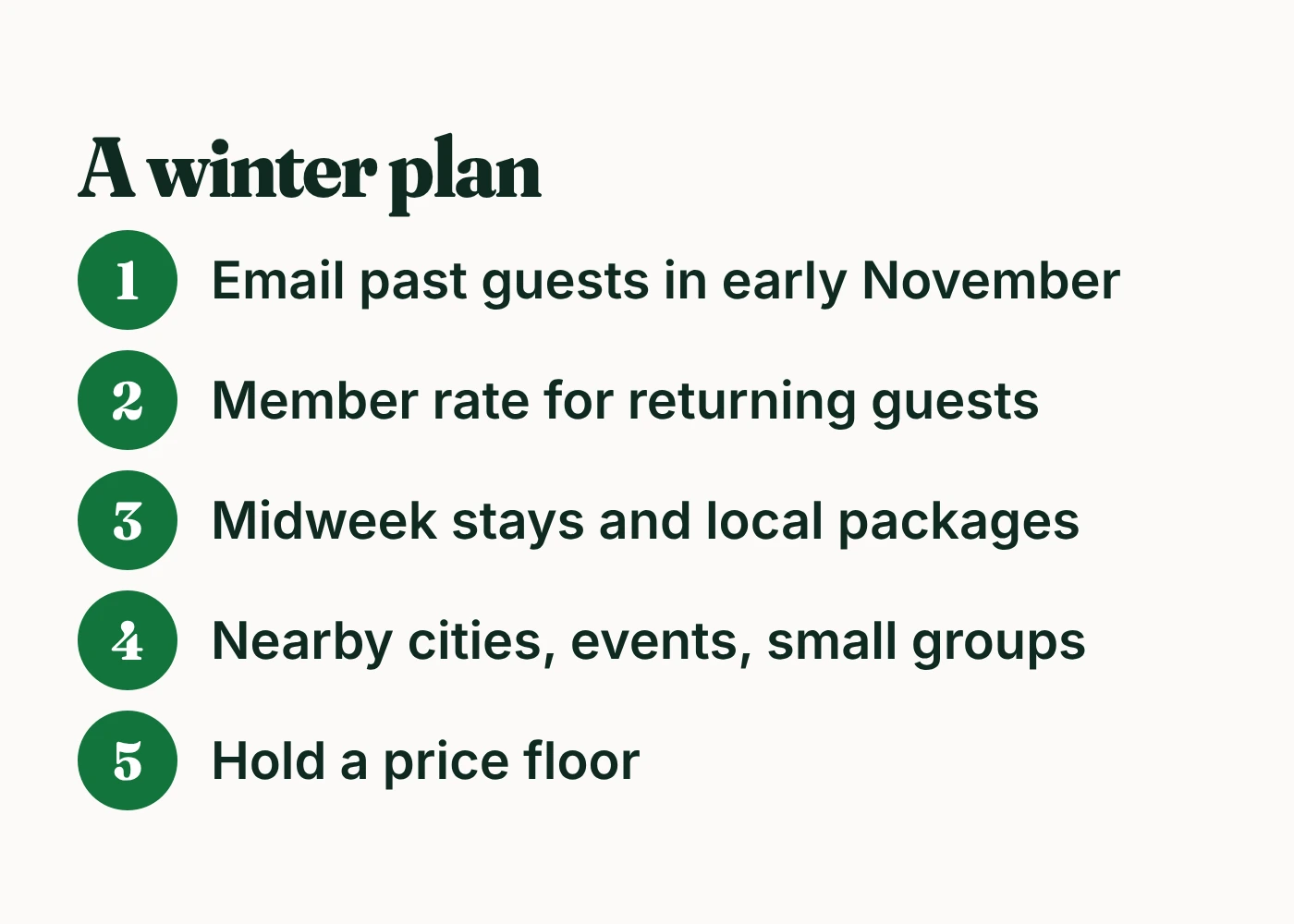
1. Email past guests first. Pull a list of everyone who stayed in the last two or three years and either agreed to hear from you or gave you their address when booking directly. Under the EU ePrivacy Directive, a business may email its own customers about similar services, provided they had a free and easy way to say no when the address was collected and in every message since. National rules apply this differently, so check yours.
2. Keep the email short and the offer simple. Send the first one in early November for December and January dates, and a second in early January for February and March. A line about what winter is like at your place, one offer, the dates it covers and a button to your booking page. One clear offer is easier to act on than a menu.
3. Give returning guests a member rate. Rate parity clauses are gone from Booking.com contracts in the EEA, so you can charge less on your own website, as explained in how to price your direct rate. A returning guest rate of 5 to 10% below your public price, or a perk such as breakfast or a late checkout, rewards the people who come back and still costs you less than commission.
4. Collect real email addresses all winter. OTA guests often reach you through a masked forwarding address that stops working some time after they leave. Revinate's 2025 benchmark, based on 2024 data from hotels worldwide, found that 21% of guest records held a masked OTA address, and that hotels earned $9.85 for every correctly captured email.
Ask every guest for a personal email and their consent at arrival, in plain words. This is the habit behind owning your guests rather than renting them.
Give people a reason to come midweek
Weekends usually look after themselves. The work in low season is giving someone a reason to travel on a Tuesday.
Midweek and longer stays. Build offers for the nights that do not sell: three midweek nights with dinner on the first evening, or a weekly rate for people working remotely or visiting family. Value travels better than a discount, so try breakfast, a late checkout or a bottle of local wine before you cut the rate.
Packages with local partners. A winter stay is easier to sell with a reason attached. Talk to the restaurant down the street, the spa, a walking guide or a cooking class, and build two or three simple packages. Agree prices and settlement with each partner on your own terms. We wrote about the neighbourhood as part of the stay in the street outside is part of your hotel.
Events and local demand. Go through the winter calendar for your town and region: trade fairs, conferences, concerts, Christmas markets, sports fixtures, graduations. Mark the dates now, price them properly and mention them in your emails and on your website.
The local and regional market. Most European travel is domestic, as the Eurostat figures show. Think about people within two or three hours by car or train who want a weekend away without a flight. Regional newsletters, the tourist office, local press and your own social channels reach them for less than a commission.
Business travellers and small groups. Business trips are a bigger share of travel in November. Write to local companies, universities, hospitals and event venues with a simple corporate rate, and offer small groups such as choirs, sports teams, wedding parties or company retreats a price for the whole house on quiet dates.
Protect your price while you fill
Discounts are easy to give and hard to take back. If your public rate drops every November, your regular guests learn to wait for it.
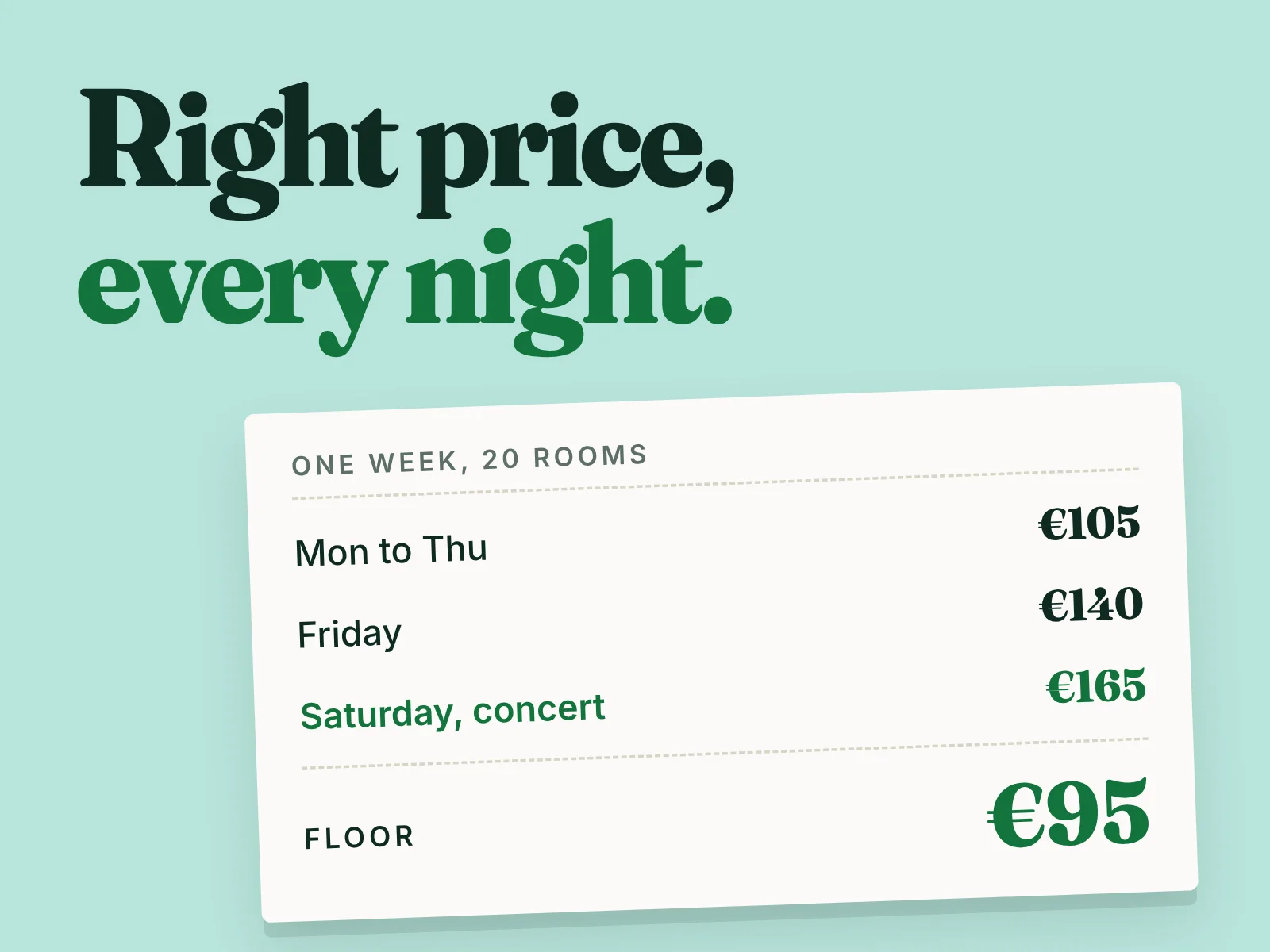
Set a price floor. Before the season starts, decide the lowest rate you will accept for each room type, based on what an occupied night costs you in cleaning, laundry, energy and commission. Below that floor, a booking can cost more than the empty room.
Use minimum stays with care. A minimum stay of two nights on Saturdays protects weekends from short bookings that block a longer stay. On quiet midweek dates, lift the restriction so a single night can still sell.
Choose your sale moments. Late November is sale season. Booking.com's Black Friday campaign in 2021, for example, advertised discounts starting at 30% at participating properties. If you join a campaign like that, choose the dates. If you run your own, keep it short, tie it to dates you need to fill and let it end.
Gift vouchers in December. If your property suits it, December is when people buy stays as presents. A voucher brings in money in a quiet month and the stay comes later, booked directly. Set a clear validity period and blocked dates, and check how your country treats vouchers for VAT and expiry.
Use the quiet weeks to fix the shop window
Low season is also the one time of year you have room to work on the business rather than in it.
Your website. Book your own site on your phone, from the homepage to payment, and note every moment you hesitate. Make the direct rate visible and put the booking button on every page.
Your photos. Winter light is soft and the rooms are empty. Photograph the rooms, the breakfast and the street in the season you are trying to sell.
Your reviews and Google. Reply to the year's reviews, including the bad ones, and ask winter guests for one at checkout. Then search for your property by name and check that your own rate shows up, not only the OTAs, as covered in our guide to Google hotel search.
The tech switch. If you have been meaning to change your booking engine or PMS, do it now. Fewer arrivals means more time to test, and everything is ready before spring bookings open.
Where Tribii fits
Any decent setup can run this playbook: a list of past guests you are allowed to email, a way to send them a short message, a booking engine that takes no commission, and rates you control. You can build it from a spreadsheet and a newsletter tool if you prefer.
Tribii's version is ours. On the Free plan, every reservation builds a guest profile in the guest CRM, and you can filter by stay dates, origin, channel or repeat status to build your winter list, then export it or reach out. Free includes 50 marketing emails a month (scheduled guest emails, such as a note two days after checkout, count towards them), local experiences you curate in the community tool, and a booking engine with 0% commission, paid through your own Stripe account. It covers 20 rooms, then €5 a month per extra room.
Fifty emails suits a small, personal list. For a larger winter campaign, Pro at €55 a month (40 rooms included) gives you 500 a month and adds the Direct Booking Booster: member rates and perks for returning guests, repeat stay offers, and abandoned booking recovery, which follows up at 24 and 72 hours and never offers a discount. Pro also adds advanced revenue (forecast, alerts, market benchmark and price recommendations), which helps you spot the winter dates that are filling slowly. Max, at €95 a month, raises the allowance to 1,000 emails and adds the channel manager.
Common questions
How do I increase occupancy in low season without discounting?
Start with past guests, then add value rather than cutting the rate: midweek offers, longer stays, breakfast or a late checkout, and packages with local partners. Target nearby markets, business travellers and events, and keep a price floor.
Should I switch off OTA deals in winter?
Not necessarily. Use them on specific weak dates and for markets you cannot reach yourself, and switch them off when those dates fill. Avoid running stacked deals across the whole season, because you pay commission on top of every discount.
Can I email guests who stayed with me before?
Usually yes, if you collected their address yourself and gave them a free, easy way to unsubscribe, or if they agreed to hear from you. Masked OTA addresses are a different matter, so ask OTA guests for their own email at arrival. Check your national rules.
Can I offer returning guests a lower price than on Booking.com?
In the EEA, Booking.com has removed rate parity clauses from its contracts, so you can charge less on your own website. Other platforms and countries outside the EEA can differ, so check each contract.
When should I send my winter email?
Early November works well for December and January stays, with a second email in early January for February and March. Send it once with a clear offer rather than several times with small discounts.
The honest summary
Low season is real, and OTAs can help you through it. But a winter deal on a platform usually stacks a discount and a commission on the same booking, and the guest you win stays theirs. The cheapest winter bookings are the direct ones from your past guests.
Email them early, give them a reason to come midweek, package the stay with your neighbours, and hold your price floor. Then use the quiet weeks to fix the website, so next winter starts with a longer list.
Figures reviewed October 2026 from Eurostat, the HOTREC European Hotel Distribution Study 2026, Booking.com partner and developer pages, and Revinate's 2025 Hospitality Benchmark Report. The worked example is illustrative; OTA programmes, commissions and deals vary by country and contract. This is not legal or tax advice: rules on marketing emails and gift vouchers differ by country, so check yours or ask your hotel association.

Tribii
The free booking engine for independent hoteliers. Editorial notes.
More for the kitchen table.
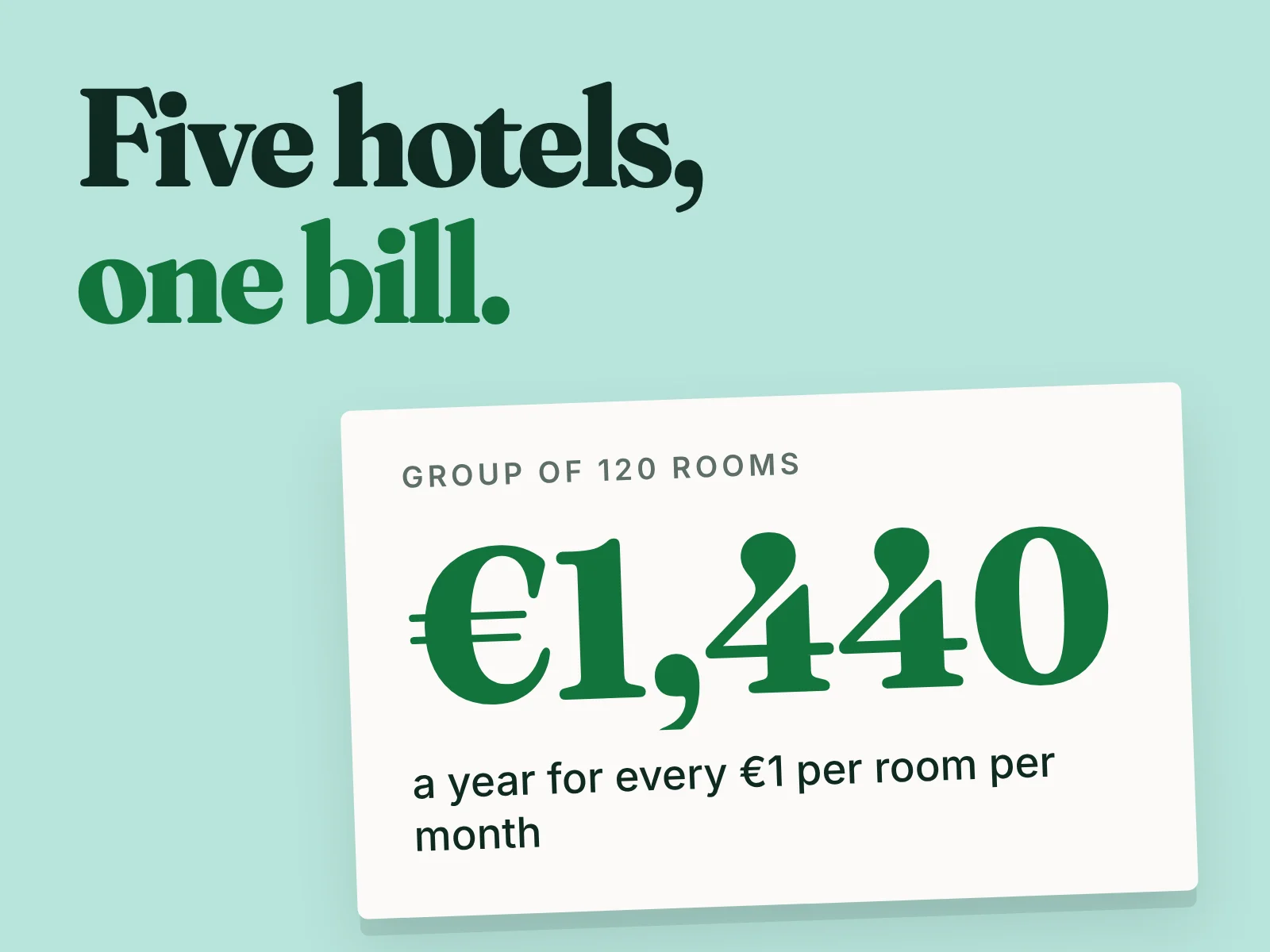
What a small hotel group really pays for its software
Group software is billed per room, per property, per module and per payment, and the subscription is often not the biggest line. What Mews, Cloudbeds, Apaleo and SiteMinder publish, a worked model and what to ask.
 Tribii
Revenue management for small hotels: what the software does, what it costs and when you need it
Revenue management means the right price for every night and channel. Here is what the software does, what it costs in 2026, and a weekly routine for small hotels that are not ready for it yet.
Tribii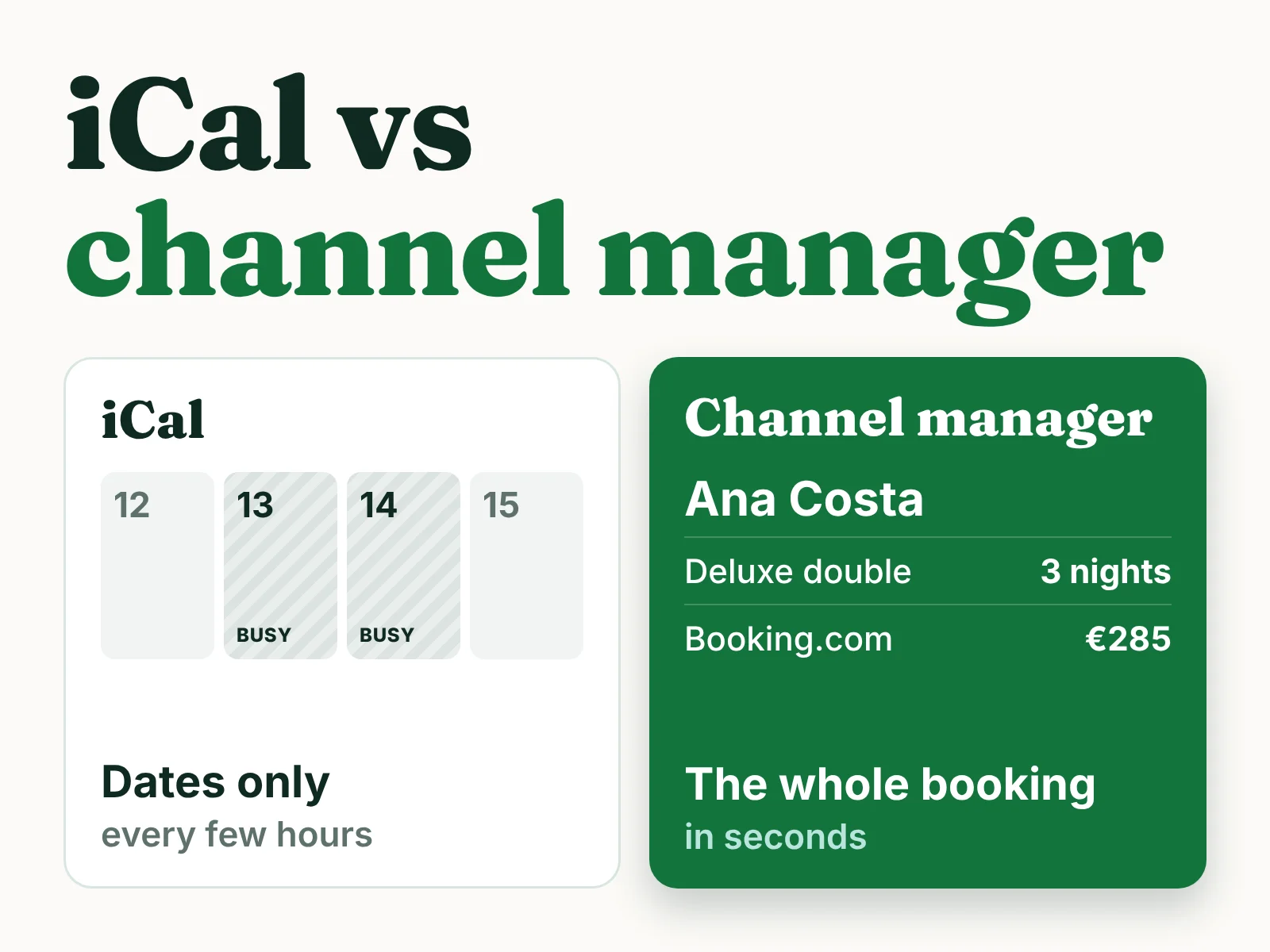
iCal vs channel manager: what really syncs, and when to switch
Both promise to keep your Airbnb, Booking.com and Vrbo calendars in step. Only one of them moves prices, rules and the booking itself. Here is what iCal really does, where it stops, and when a channel manager starts paying for itself.
Tribii