AI tools for hotels: a practical guide to less admin and more bookings
Almost every hotel now uses AI somewhere, and more and more guests ask an assistant where to stay. Here is where AI really saves time at an independent property, where it brings in bookings, and where a person should stay in charge.
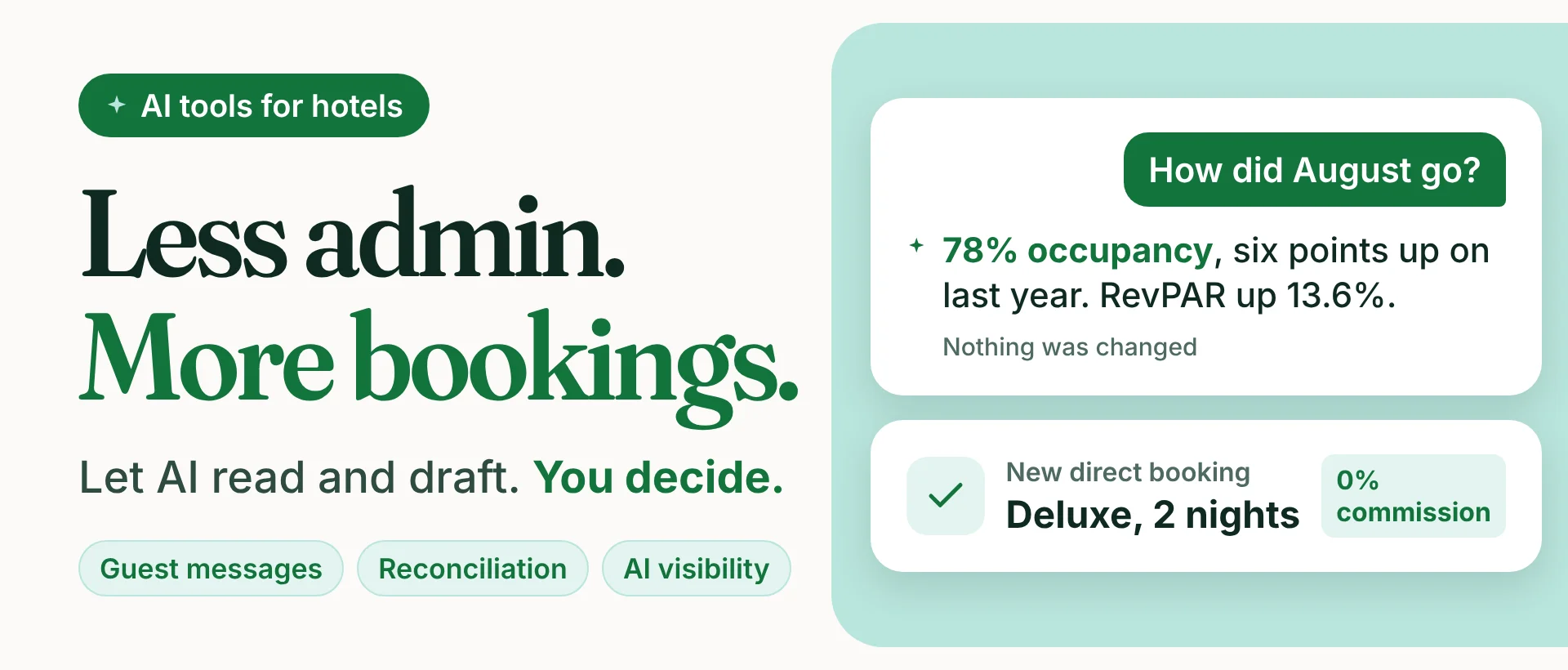
It is half past ten at night. The last guest has checked in, and there are still eleven emails to answer, a Booking.com statement that does not match your bookings, and a website that only speaks one language. None of it is hospitality. All of it has to be done.
This is the work AI is actually good at. Not the robot butler from the trade fair stand, but the quiet admin that eats the evenings of anyone running an independent property. And on the other side of the desk, your next guests are already asking ChatGPT and Gemini where to stay.
This guide covers both sides: the AI tools that give an independent hotel its time back, the ones that bring in bookings, and the places where a person should stay firmly in charge. It is written for hotels, B&Bs, hostels, guest houses and rentals of any size, whatever software you use today.
The short answer
AI helps an independent property in two ways. It takes repetitive admin off your hands: answering routine questions, moving data between systems, matching payments, translating, turning notes into tasks. And it helps you get found and booked, by making your property readable to the AI assistants guests now use, fixing what Google reads, pricing with evidence and winning back bookings you nearly lost.
The rule that makes it work is simple. Let AI read, sort and draft. Keep a person on decisions about money and on the moments guests remember.
Where hotels and guests stand with AI
The hotel industry has moved past the experiment stage. In a Mews survey of more than 500 properties, run between December 2025 and March 2026, 98% of hoteliers said they had used AI in their operations in the previous six months, and AI was involved in 11 of the 19 most common hotel tasks. A separate Canary Technologies study of over 400 hotel technology buyers found 51% piloting or already using AI, and 82% expecting their use to grow within a year.
Independent properties trail the chains, but the ones that have started are mostly glad they did. In a TakeUp survey of about 200 independent owners and managers already using AI, 74.5% reported positive results, and saving time was the most common reason they had started.
Guests are moving faster. In a survey of 4,000 travellers in the United States, the United Kingdom and Australia, commissioned by Aven Hospitality and published in September 2026, 67% said they had used tools such as ChatGPT, Claude, Copilot or Gemini to search for travel. Adobe's data shows visits from AI assistants to US travel sites more than doubled in the year to July 2026, and those visitors now book almost as often as visitors from anywhere else: their conversion rate was just 1% lower, against 47% lower a year earlier.
Two findings from that traveller survey matter for every hotelier. Only 14% would trust an AI to book a hotel stay on its own: people use it to research and choose, then book themselves. And 51% said the travel problems they had faced came down to inaccurate information while planning and booking. The assistants are only as good as what they can read about you.
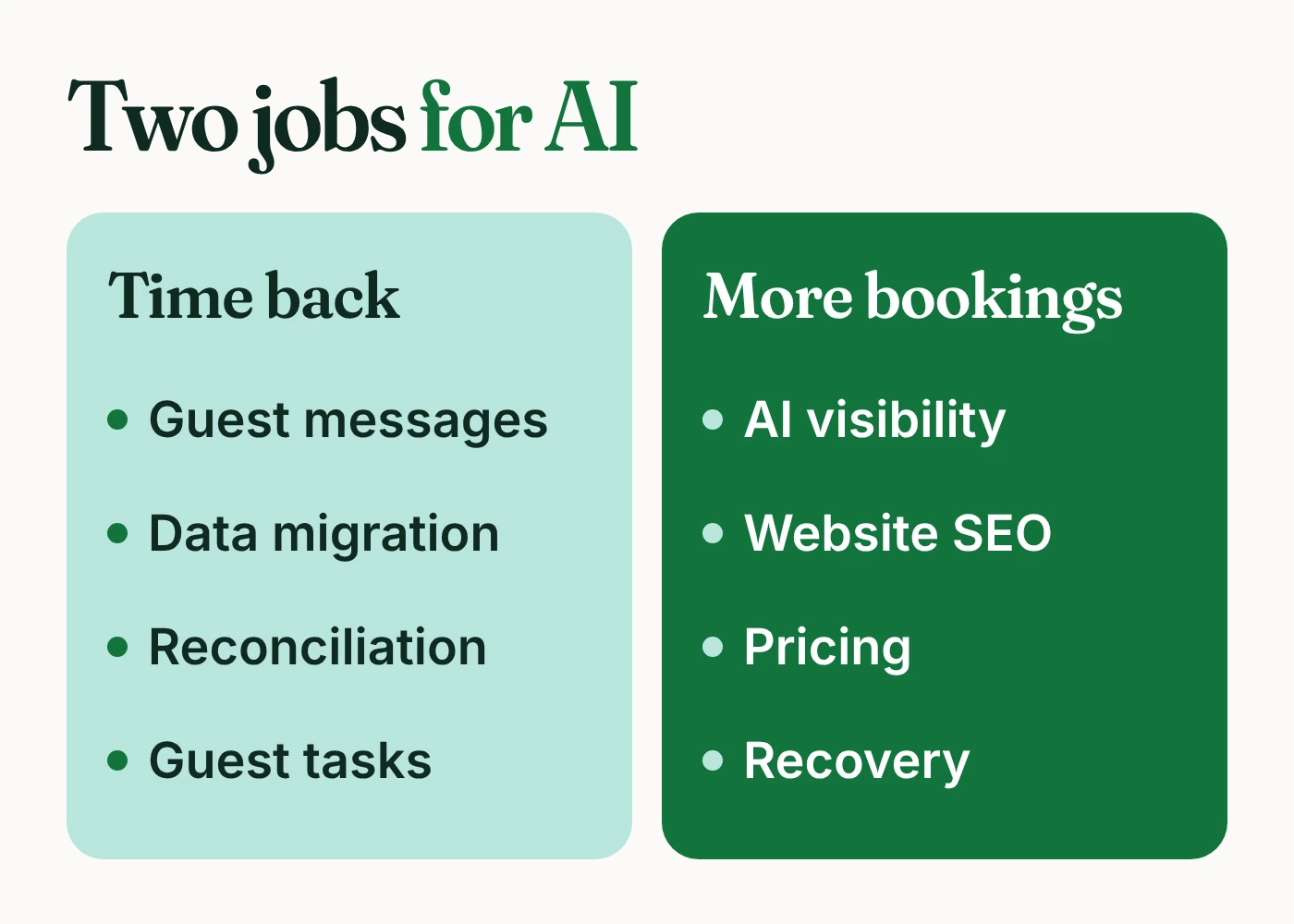
AI earns its place in two ways: hours back and more bookings.
Part one: AI that gives you time back
Start where the hours go. For most independent properties, that is the same handful of jobs every week.
1. Answering the questions you answer every day
What time is check-in? Is there parking? Can we bring the dog? Most guest messages are routine, and AI can answer them in seconds, at any hour, in the guest's own language. The better tools pass anything unusual to a person, with the conversation attached.
Two things decide whether this helps or hurts. First, the AI is only as accurate as the facts you give it, so write a single property fact sheet (rooms, policies, parking, pets, breakfast times, directions) before you switch anything on. Second, keep the moments guests remember human. In the Mews survey, 59% of hoteliers said the welcome and check-in should stay with a person, and that view was strongest among those using AI the most.
Even without AI, scheduled messages do much of the work: the directions, the parking tips and the thank you after checkout, written once and sent automatically for every stay.
2. Moving your data when you change systems
Many properties stay on software they dislike because switching means retyping years of bookings. AI import tools now read an export from your old system or a spreadsheet, work out what each column means, and bring reservations, guests and payments across, with a preview before anything is saved. If migration is what holds you back, ask any new vendor whether they do this. Our guide on moving your small hotel off spreadsheets covers the rest of the switch.
3. Matching what the channels actually paid you
Reconciling an OTA statement against your own bookings is slow, fiddly and easy to skip. AI reconciliation reads the statement, matches each line to a booking even when a name is spelled differently, and shows what does not add up: the payment that never arrived, the commission charged on a cancelled stay. Small gaps add up over a year, and our breakdown of the real cost of an OTA booking shows how many lines there are to check.
4. Turning guest notes into tasks
"Baby cot please, and he is allergic to feathers." Requests like this hide in booking comments and get missed at the busiest moment. AI can read the comments, skip the standard booking text and create the right task for housekeeping, the front desk or maintenance.
5. Asking your own numbers in plain words
How did August go against last year? Which channel earns the most after commission? How much is still unpaid for this week's arrivals? An AI assistant connected to your own data can answer in a sentence, instead of you building a report. The useful ones show their working and never change anything while they answer. This works best when your data lives in one place, which is the case we make in One system, not twenty.
6. Translating your website and messages
A guest who can read your website in their own language has one less reason to go back to an OTA that speaks it. AI translation turns a multilingual website into a job of minutes rather than weeks. Read the result in any language you know, and ask a native speaker to check your booking terms and policies.
7. Drafting replies to reviews
AI writes a good first draft of a review reply, and in March 2026 Google began testing its own AI reply suggestions in Business Profile, in a few countries outside Europe. Use it to get started, never to publish unread. A generic reply to an angry review does more harm than no reply, and your reviews and replies are part of what AI assistants read about you.
Part two: AI that brings in bookings
Saving time is the first win. The bigger one is revenue, and here AI works on two fronts: being found by guests who ask an assistant, and turning more of your own visitors into bookings.
1. Make sure AI assistants know you exist
When a guest asks for "a quiet hotel near the old town with parking", the assistant builds its answer from what it can read: your website, your Google Business Profile, your OTA listings and your reviews. If your parking policy sits in a PDF, or your room names differ on every channel, you are harder to recommend.
Ask the assistants yourself. Open ChatGPT, Claude, Gemini and Perplexity, ask the way a guest would, then ask about your property by name. Write down what is missing or wrong and fix it at the source. Behind the scenes, two new standards are making hotel data directly readable by assistants: MCP, the Model Context Protocol, and UCP, the Universal Commerce Protocol, which lets an assistant book a room inside a conversation.
2. Fix what Google reads
AI assistants and Google read many of the same signals on your website: clear page titles, descriptions, text on your photos and answers to the questions guests ask. AI can audit your pages and rewrite all of these in minutes, leaving you to approve each change. Our free website audit grades your hotel website in seconds, so you know where to start.
3. Price with evidence, inside limits you set
Revenue tools look at your booking pace, your history and the market to suggest when to raise or hold a price. For an independent property, the sensible setup is a tool that suggests while you approve, or that changes prices automatically only inside a floor and a ceiling you choose. Be wary of big promises: a tool that cannot show why it suggests a price is a tool you cannot learn from. If you want your direct rate below the OTAs, our note on rate parity in Europe explains what the rules now allow.
4. Win back the bookings you nearly lost
Guests start bookings and leave: a distraction, a second tab, a closed laptop. Automatic recovery emails bring them back to the booking they started. Speed matters for questions too. A guest asking about a room at midnight often books wherever answers first, which is exactly what AI messaging is built for, and, at larger properties with busy phone lines, AI voice agents too.
5. Offer the right extra at the right moment
AI makes it easier to match an offer to a guest: breakfast for the couple arriving late, a late checkout for the Sunday departure, the kayak tour for the family with teenagers. Send offers before arrival and during online check-in, keep them friendly, and remember that OTA rules forbid upselling to the guests who booked through them.
6. Check what the OTAs are selling for you
Listings drift. A room that sleeps two can end up sold for three on one channel, or a policy can differ from your own. AI can compare what each channel is set up to sell with what your property actually offers, and explain the mismatches in plain words before they turn into cancellations or bad reviews.
Where to keep a person in charge
AI is a good assistant and a poor owner. A few lines are worth drawing before you start:
- Prices. Let AI suggest. If it applies changes on its own, give it a floor and a ceiling.
- Complaints, refunds and difficult moments. These belong to a person who can apologise and decide.
- Facts. Anything an AI tells a guest should come from your own data, not from what a model guesses.
- Guest data. Check where personal data goes, sign a data processing agreement with every vendor, and prefer tools that only read what each job needs. GDPR applies to AI tools like any other software.
- Disclosure. Since 2 August 2026, the EU AI Act requires that people are told when they are talking to an AI system, unless it is obvious. The Digital Omnibus delayed other parts of the Act, but not this one. If a chatbot answers your guests, say so.
- A written policy. In the Mews survey, 41% of hoteliers had no formal AI policy. Those with one reported far higher trust in their tools: 92%, against 49% for those with no guidelines at all. A single page on what AI may do, what it may not, and who checks it is enough for most properties.
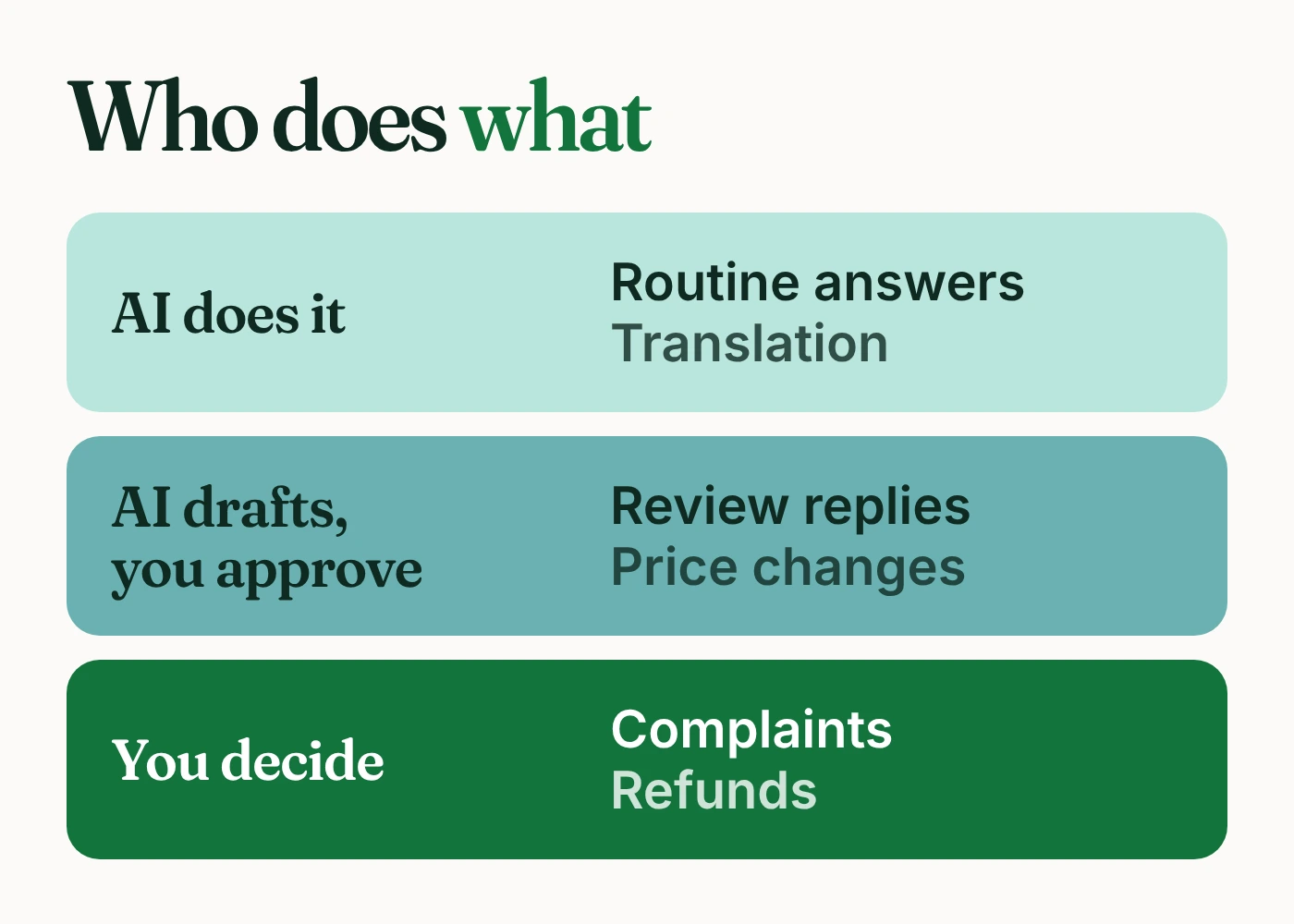
Let AI read and draft. Keep the decisions that matter.
Your first 30 days with AI
You do not need a strategy deck. You need one month and a notebook.
Week 1: find the hours. List the jobs you repeat every week and roughly how long each takes. Write your property fact sheet.
Week 2: ask about yourself. Ask four AI assistants about your property and your area, the way a guest would. Fix every gap at the source: your website, your Google Business Profile, your OTA listings.
Week 3: switch on one tool that saves time. Guest messages, translation, reconciliation or migration. Pick the one that eats the most hours.
Week 4: switch on one tool that earns. Abandoned booking recovery, an SEO audit or pricing suggestions. In Google Analytics, start tracking visits from chatgpt.com, perplexity.ai, gemini.google.com and claude.ai.
At the end of the month, keep what saved time or earned money, and drop the rest. Before you buy anything, ask the vendor four questions. Does it only read, or can it act on its own? Where does guest data go? What does each use cost? Can I see what it will change before it saves?
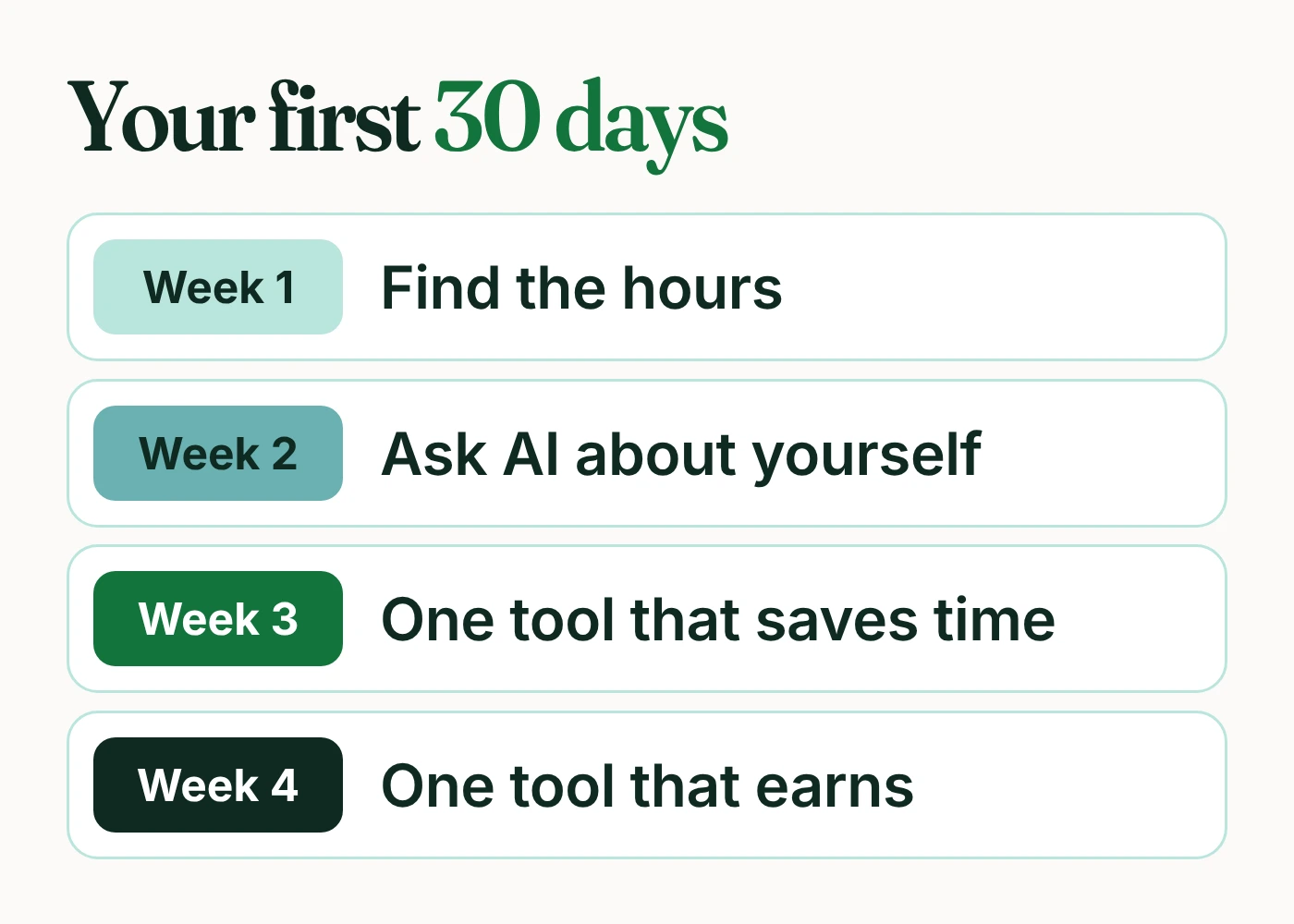
One month, one tool at a time.
Where Tribii fits
Tribii's AI tools are built into the same account as the free booking engine, and you can see all of them in one place at tribii.ai. They follow one rule: the AI reads your data and drafts the answer, and you decide. None of the AI tools can book a room or move a price on its own, and nothing they change in your setup is saved until you have seen a preview and said yes.
Free on every plan. A setup assistant that builds your rooms and rates from a description in plain words, AI migration that imports reservations, guests and payments from your old system or a spreadsheet, and website translation into every language you publish. The Free plan includes five AI credits in your first month, and 25 a month while a free Pro trial runs.
On Pro, €55 a month. The Direct Booking Booster scores how readable your property is for AI assistants and checks whether ChatGPT, Claude, Gemini and Perplexity recognise you, with a fix for every gap, alongside abandoned booking recovery. Pro also adds an AI SEO audit that rewrites what Google reads, even if your website was not built with Tribii; your own MCP server, which lets the AI assistant you already use read your Tribii data but never change it; and forecasts with price recommendations. Pro includes 25 AI credits a month.
On Max, €95 a month. A property assistant that answers questions about revenue, occupancy, arrivals, housekeeping or payments from your own numbers, with a specialist for each department. It works from totals, not from individual guest records. Max also adds AI reconciliation of OTA statements, a check in plain words of what your channels are selling, and tasks created from guest comments. Max includes 50 AI credits a month.
The full list, with the plan each tool sits on, is on our AI for hotels page.
Common questions
What are the best AI tools for a small hotel?
The ones that remove a job you already do every week. For most small properties that means guest messaging, data migration when switching systems, reconciling OTA payments and checking how AI assistants describe you. Start with the job that costs you the most hours.
Will AI replace hotel staff?
Not at an independent property. It takes over repetitive admin so the people you have can spend more time with guests. Most hoteliers in the Mews survey want the welcome and check-in to stay human.
How much do AI tools for hotels cost?
Anything from free features inside the software you already use to standalone tools billed monthly per property. Many charge per use, through credits. Before you buy a separate tool, check what your PMS or booking engine already includes.
Is it legal to use an AI chatbot with guests in the EU?
Yes, with conditions. Since 2 August 2026 the EU AI Act requires that guests are told they are talking to an AI unless it is obvious, and GDPR applies to any guest data the tool handles. This is not legal advice, so check with an adviser for your own situation.
Can AI get me more direct bookings?
Yes, mostly indirectly. It makes your property easier for assistants and search engines to find and recommend, answers guests faster, and brings back guests who left a booking half finished. The booking itself still needs a fast, clear direct booking page, and our twelve ways to get more direct bookings cover the basics.
Is guest data safe with AI tools?
It depends on the tool. Ask where data is processed, whether it is used to train models, and whether the vendor signs a data processing agreement. Prefer tools that read only what each job needs.
The honest summary
AI will not run your hotel, and it should not. What it does well is the work that keeps you at the desk after the last guest has gone to bed: routine answers, data entry, reconciliation, translation, reports. Hand those over and you get hours back every week.
On the sales side, guests already ask assistants where to stay, and those assistants recommend what they can read and trust. Make your property easy to read, answer fast, price with evidence, and keep the decisions that matter for yourself. The properties that do this calmly now, one tool at a time, will be the ones the assistants recommend later.
Facts reviewed in October 2026 from surveys by Mews, Canary Technologies, TakeUp, and Aven Hospitality with Talker Research, from Adobe Digital Insights, and from reporting on the EU AI Act and Google Business Profile. AI features and their availability change quickly and vary by country. This is not legal advice.

Tribii
The free booking engine for independent hoteliers. Editorial notes.
More for the kitchen table.
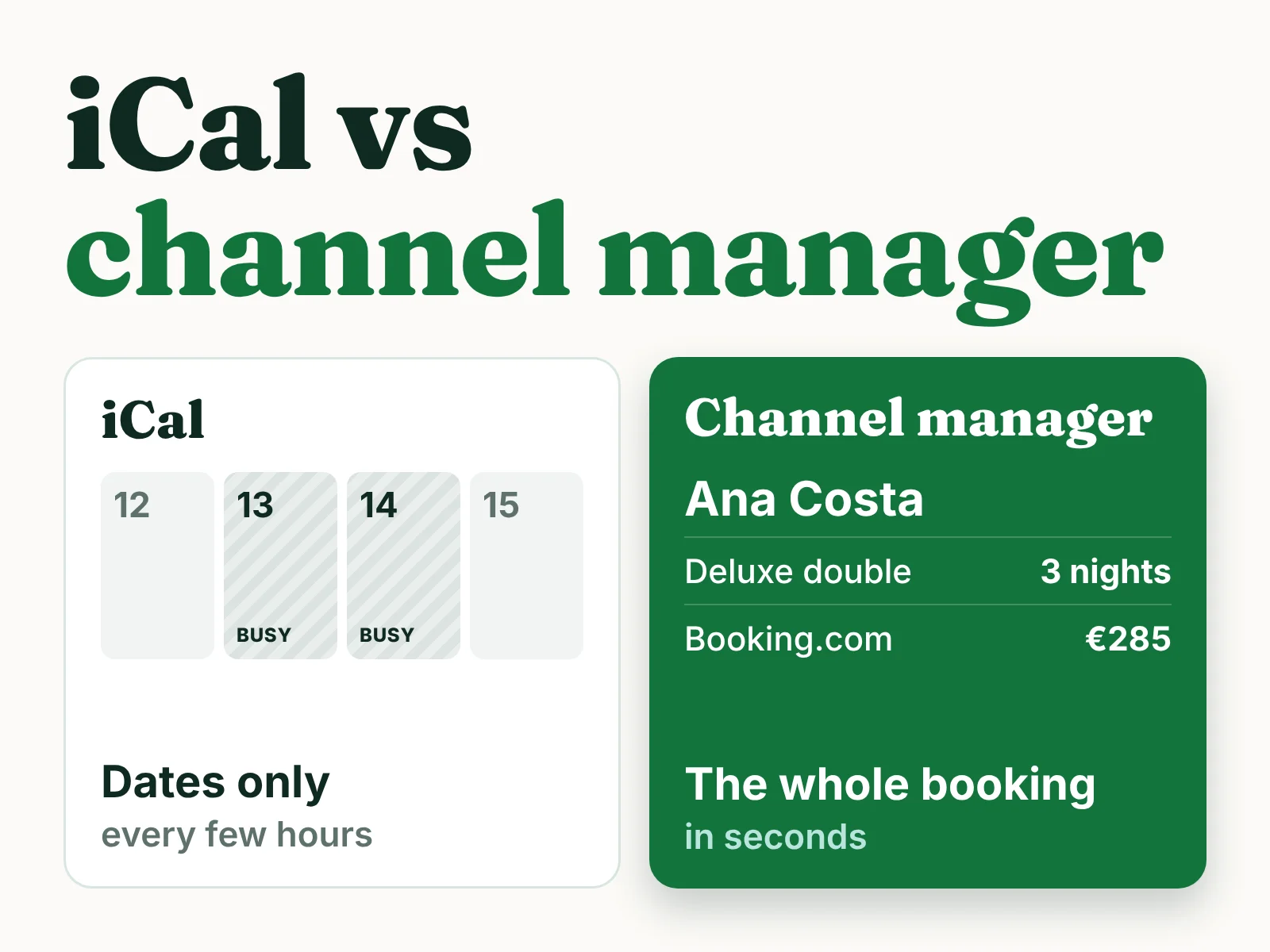
iCal vs channel manager: what really syncs, and when to switch
Both promise to keep your Airbnb, Booking.com and Vrbo calendars in step. Only one of them moves prices, rules and the booking itself. Here is what iCal really does, where it stops, and when a channel manager starts paying for itself.
 Tribii
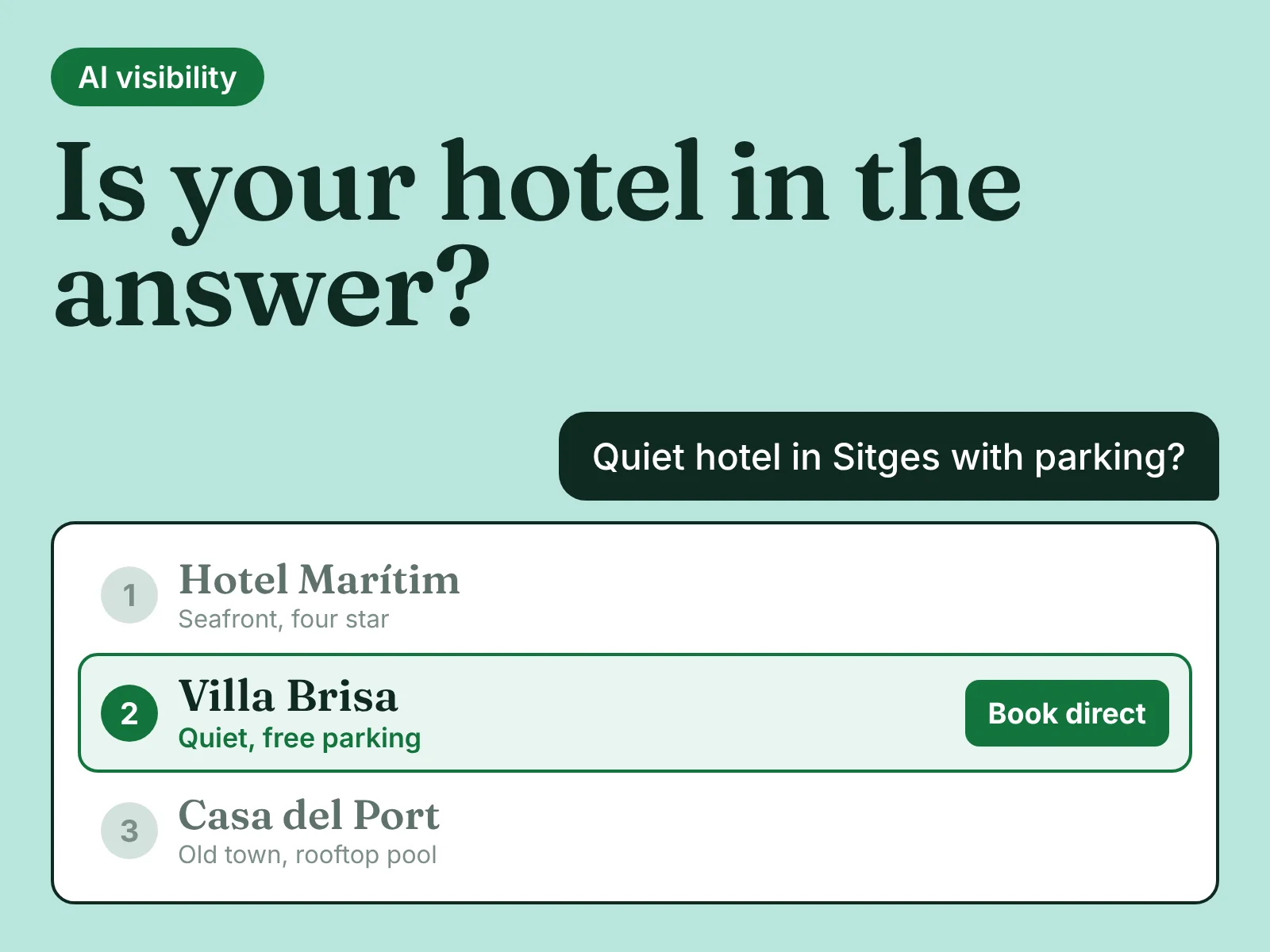
AI visibility for hotels: how to get your property recommended by ChatGPT, Gemini and Google
More guests now ask ChatGPT, Gemini or Google's AI Mode where to stay, and get a handful of names back. Most independent hotels are never one of them. Here is how AI picks hotels, and eight steps to get yours named and booked direct.
Tribii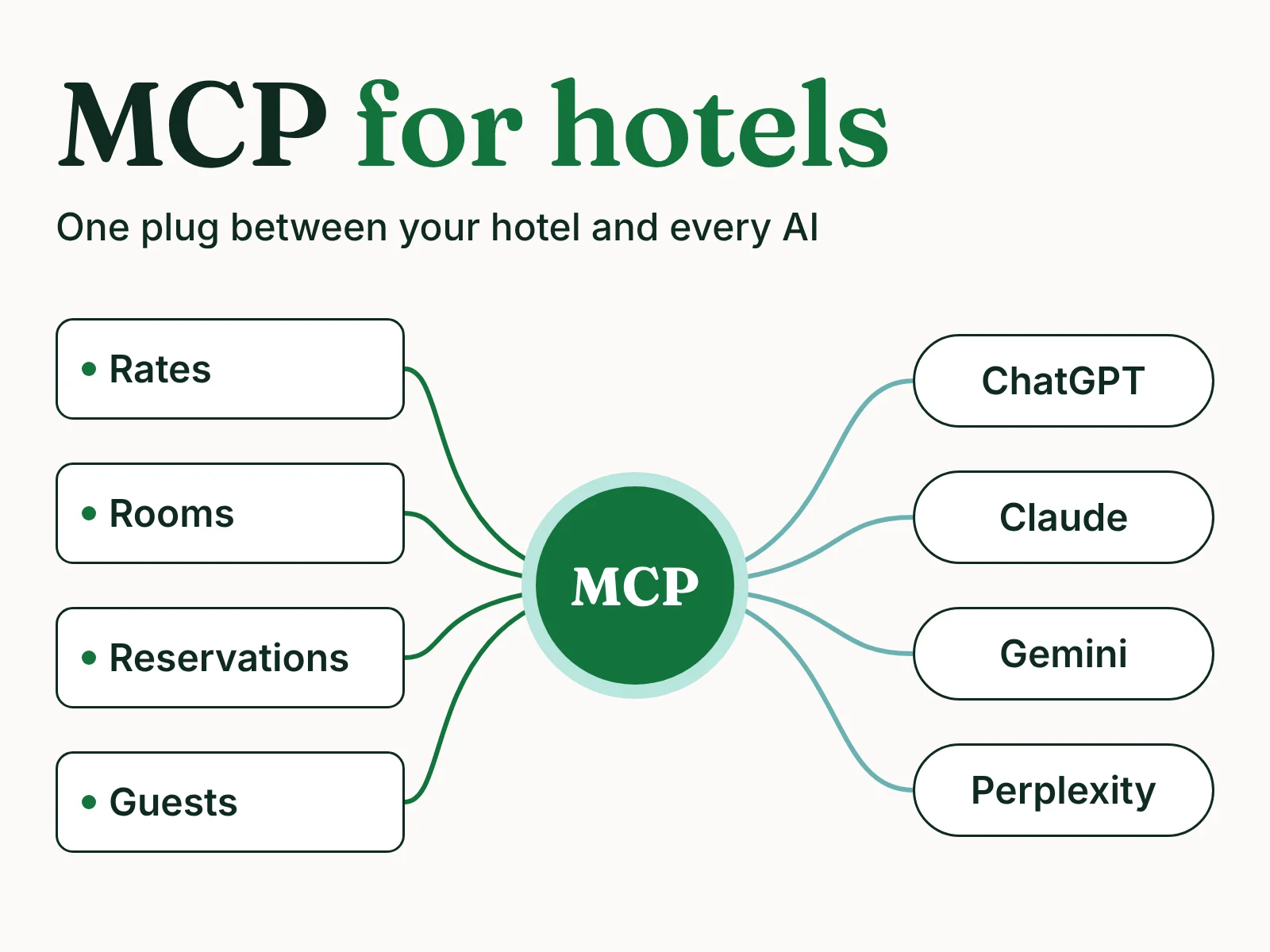
MCP for hotels: how AI assistants will find, sell and help run your property
ChatGPT, Claude and Google can now read live hotel prices, and some can take a booking. The standard behind it is called MCP. Here is what it is, what it changes for a small hotel's visibility and daily work, and what to do about it now.
Tribii