How to move your small hotel off spreadsheets
The spreadsheet got you here, and it is not stupid. But there are four specific places it fails, and each one costs you money quietly.
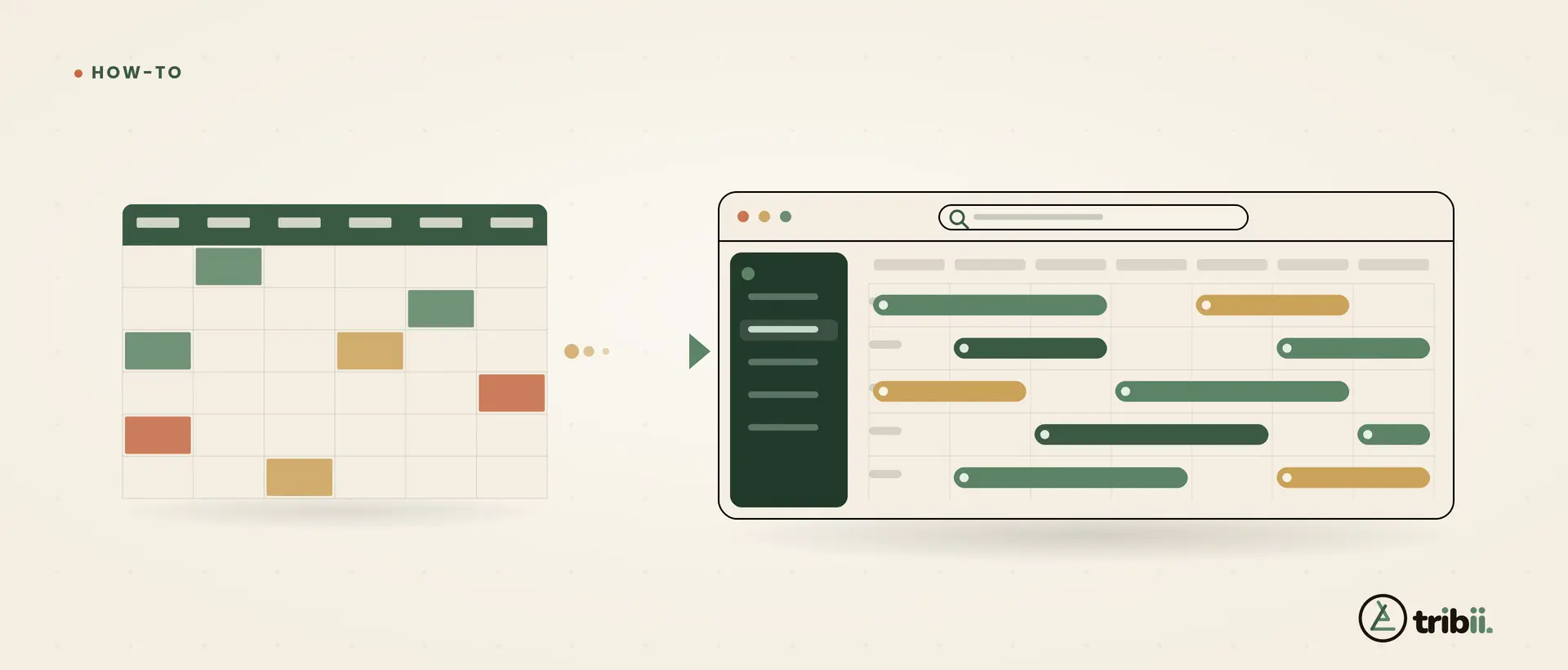
There is a spreadsheet. It has a tab per month, colour-coded cells, and a formula in column J that only one person understands. It has run the property for years, and every consultant who has walked through the door has told you to replace it.
Before we join them, credit where it is due. A spreadsheet is instant, free, infinitely flexible, works offline, and does exactly what you told it to. Most hotel software is worse at all five of those. If your spreadsheet is working, the honest advice is not "you must modernise". It is "here is precisely where this breaks, and you will know when you get there".
Where the spreadsheet actually fails
One. Two people, one file. The moment a second person takes bookings, you have a concurrency problem. Someone has the file open. Someone else takes a phone reservation. One of those bookings is now a rumour. Cloud spreadsheets soften this but do not solve it, because two people editing the same cell is still a coin toss.
Two. Availability lives in your head. The sheet knows what is booked. It does not know what is available, not really, because availability is booked rooms subtracted from sellable rooms with restrictions applied, and that subtraction happens in your head every time the phone rings. This is where double bookings come from. Not from carelessness, from arithmetic performed under pressure.
Three. It cannot be read by anything else. Your website cannot ask the spreadsheet whether room 4 is free on the 12th. So your website cannot take bookings. So guests book on an OTA that charges you 15 to 25% to do the one thing your spreadsheet structurally cannot. This is the expensive failure and it is nearly invisible, because you never see the direct booking you did not receive.
Four. The money is somewhere else. Reservations in the sheet, invoices in a Word template, payments in the bank statement, city tax in a second sheet. At month end somebody reconciles all four by hand. When a guest disputes a charge from March, you go archaeology.
If you recognise one of these you have a nuisance. If you recognise three you are paying real money for the spreadsheet, you just are not paying it on an invoice.
What "move off it" actually means
It does not mean learning enterprise software. It means moving the four things above into one place that can do the arithmetic and answer the website's questions.
For a property under 20 rooms that is a small, specific list:
- One calendar every member of staff sees, live.
- Availability computed rather than remembered.
- Rooms, rates and restrictions defined once.
- Guest profiles that persist between stays.
- Invoices and the folio attached to the reservation rather than to a folder.
- An address the website can query so guests can book directly.
That is what a property management system is for. Everything else that gets sold under that name, and there is a lot of it, is depth you can add later. The free tier of Tribii's PMS covers exactly that list for up to 20 rooms, and the booking engine sits inside it rather than above it, which is what makes the third failure go away.
The migration, in six steps
The fear is not the software. The fear is losing a booking during the move. So do it in an order where nothing can be lost.
Step 1. Pick your cutover date. Choose a low-occupancy week, four to six weeks out. Not your quiet season, which is too far away and never arrives, and definitely not August.
Step 2. Clean the spreadsheet first. You are about to import it, and rubbish in is rubbish forever. Standardise the date format. Split "Mr and Mrs Andersen, 2 nights, paid cash" into fields. Delete the 2019 tabs. This is the tedious step and skipping it is the single most common reason migrations feel like failures.
Step 3. Set up the property before you touch the bookings. Room types, room numbers, rates by day, minimum stays, tax rules. Get the shape of the property right in the new system while it is still empty. Most tools, ours included, will let AI onboarding read what you have and set most of it up for you, but check every rate line by hand afterwards. It is your money.
Step 4. Import the forward bookings only. Everything with a departure date after your cutover. History can come later or never; nobody has ever needed to know the exact folio of a guest from 2021 urgently. This makes the import small, checkable, and finishable in an afternoon.
Step 5. Run both for one week. Enter every new booking in both places. Yes, it is annoying. It is also the week where you discover that your Sunday rate never got entered, and you discover it with a safety net rather than with a guest at the desk. At the end of the week, compare the two. If they match, the new system is telling the truth.
Step 6. Stop updating the spreadsheet. Not "archive it", not "keep it just in case". Close the file. A property running two sources of truth is running none. Export it to PDF, put it in a folder called `old`, and let the new calendar be the calendar.
If you want to see the shape of that setup before you commit to it, our how it works page walks the five steps from empty property to taking direct bookings, and the whole thing is designed to fit inside an afternoon.
The part nobody warns you about
Two weeks in, something will be worse. It always is. A report you used to glance at is now three clicks away. A rate override you did in one cell now requires a dialogue box. This is real, and it is the price of a system that can be read by other systems.
What you get in exchange is the thing the spreadsheet could never do: your website can now answer the question "is room 4 free on the 12th" without you. That single capability is the difference between a brochure and a sales channel, and it is worth several tedious dialogue boxes.
Give it a month before you judge. Then look at how many bookings arrived through your own site in that month, and multiply by the commission you did not pay.
The honest summary
Spreadsheets do not fail because they are unprofessional. They fail because they cannot be queried, cannot be shared safely, and cannot sell a room while you sleep.
Move when the phone starts ringing while the file is open on somebody else's laptop. Clean the data before you import it. Run both for a week. Then close the file properly.
*Tribii's PMS essentials and booking engine are free for properties up to 20 rooms, and AI migration will read your existing spreadsheet and set up rooms, rates and guests for you. The paid tiers, and what is in them, are on our pricing page*

Tribii
The free booking engine for independent hoteliers. Editorial notes.
More for the kitchen table.
OTA terms explained: a plain-language glossary for independent hotels
Commissionable rate, net rate, merchant model, narrow parity. The words in your OTA contract, explained in plain language, with what each one means for your money.
 Tribii
Booking.com Genius and Preferred Partner: what they really cost a small hotel
Genius and Preferred Partner are sold as growth tools. Both are also a price. Here is what each one costs an independent hotel, how to test whether it pays, and what to decide before 2027.
Tribii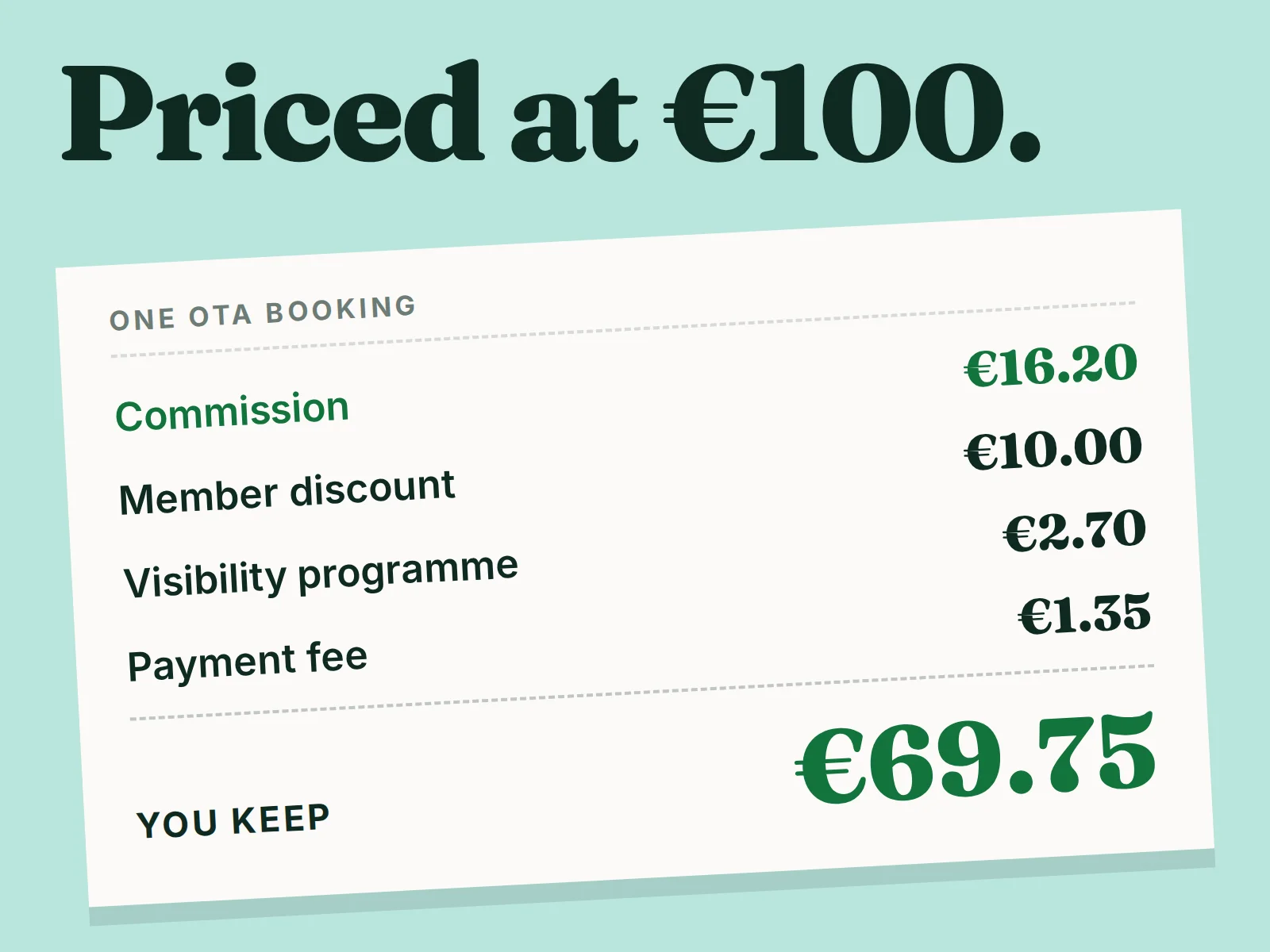
The real cost of an OTA booking: commission is only the first line
Most hoteliers know their commission rate. Few know their effective rate. Here are the other lines on every OTA booking, and how to work out what a room really costs you to sell in 2027.
Tribii