Is there a truly free hotel PMS? What "free" covers in 2026
Three different things get called free hotel software, and only one of them is free in the way you mean. Here is how to tell them apart.
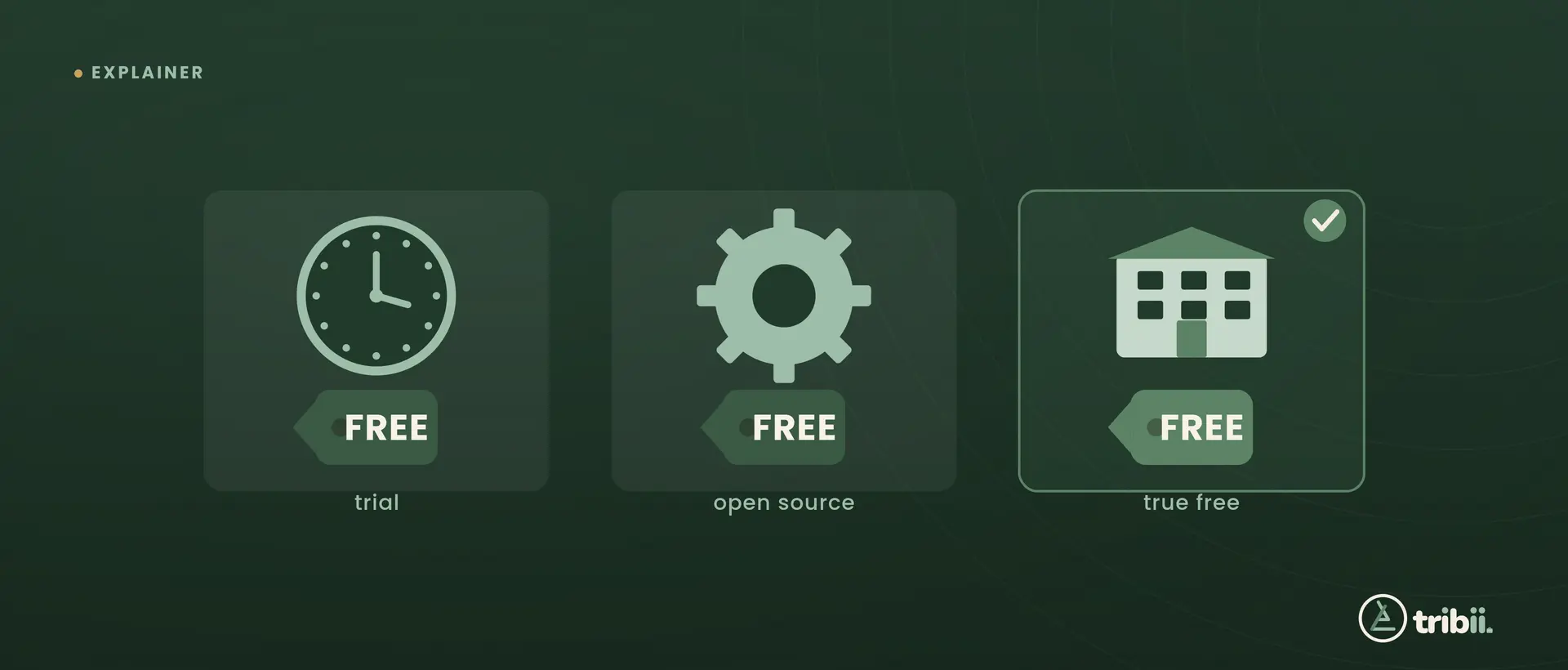
Search for a free hotel PMS and you will find three completely different products wearing the same word. One is free until you need a second room. One is free if you are willing to become a part-time systems administrator. One is free for thirty days and then it is not.
None of them are lying, exactly. But "free" is doing a lot of work in each case, and the differences decide whether you end up with software or with a project.
The three kinds of free
Free tier. A permanently free plan with a stated limit, sitting under paid plans. The vendor's bet is that some fraction of free users grow into paying ones. This is the only version that is free in the ordinary sense of the word.
Open source. The licence costs nothing. You may download, run and modify it. The software is free; the server, the backups, the updates, the security patches and the person who fixes it at midnight are not.
Free trial. Not free. A payment plan with a delayed start. Nothing wrong with a trial, but if it appears under a "free PMS" heading it is there to catch the search, not to describe the product. SiteMinder runs 14 days. Little Hotelier runs 30. Then you are on the price list.
If you are evaluating options, sort them into these three buckets first. Half the confusion evaporates immediately.
What free tiers actually cost
A free tier costs nothing in money. It costs something in constraint, and the whole question is where the constraint sits.
The usual constraint is room count. This is where you find out whether a free plan was designed for you or for a screenshot. A one-room free tier, like the one Sirvoy publishes, is a demonstration. It is real software and you can genuinely use it, but no property with staff and a rate calendar is running on one room. The free plan exists to introduce the paid plans.
A limit set at 20 rooms is a different proposition, because the overwhelming majority of independent hotels, guesthouses and B&Bs in Europe sit under it. The plan is not a teaser, it is the product, and the paid tiers have to earn their money on operational depth instead of on the front door.
The second constraint is feature-shaped, and it is the one to inspect closely. Ask which of these are inside the free line:
- The booking engine, or is it the paid upgrade?
- The website, or a link to a hosted page?
- Invoicing and the guest folio, or "reporting" only?
- Payments, and if so, through whose account?
A free PMS that cannot take a booking is a filing cabinet. A free PMS that takes bookings but routes the money through the vendor has simply moved the fee somewhere you were not looking.
What open source actually costs
Open source hotel software is a genuine option, and for some properties it is the right one. It is also the option most often recommended by people who have never had to run it.
The licence is free. Then you pay for:
- Hosting. A server that stays up during your check-in rush.
- Setup. Installation, configuration, SSL, database, backups.
- Updates. Somebody has to apply them, and somebody has to notice when one breaks the rate calendar.
- Security. You are now storing guest data and card-adjacent information on infrastructure you own. Under GDPR that is your responsibility, not a vendor's.
- Integrations. Payment gateway, channel connections, whatever else. Usually a plugin, often a paid one, sometimes a contractor.
- The 2am problem. When it goes down, there is no support line. There is you, or the developer you keep on retainer.
Most open source hotel projects also sell hosted versions and support contracts, which is the honest business model behind the free licence. Once you buy hosting and support, you are paying for cloud software again, which is fine, but you should compare that total against the alternatives rather than against zero.
Open source suits you if you have technical capacity in-house, unusual requirements, or a strong reason to keep data on your own infrastructure. It does not suit you because it is cheaper, because it usually is not.
The questions to ask before you trust a free plan
Whichever kind you are looking at, these six questions separate a real free plan from a marketing device.
- Where is the limit, and can I actually operate under it? Rooms, reservations per month, users, or all three.
- Is the booking engine included, or is it the thing the free plan exists to sell me?
- Who holds the money? Guests paying into your own payment account means the vendor structurally cannot take a per-booking cut. Payments flowing through the vendor means read the processing rate carefully.
- What happens at room 26? Find the price of the next tier before you migrate, not after.
- How do I get my data out? Ask for the export format. If the answer is vague, that is the answer.
- What is the business model? Every free plan is paid for by something. If you cannot see what, you are probably it.
That last question is the one worth sitting with. Free software is funded by paid tiers, by advertising, by data, by a per-booking cut, or by a venture round that ends. Only the first of those is stable and aligned with you.
Where we sit, plainly
Tribii's PMS is a free tier, not open source and not a trial. The essentials are free forever for properties up to 20 rooms: reservations and calendar, rooms and rates, guest profiles, room inventory and restrictions. The booking engine and website builder are in the free plan rather than above it, and guests pay through your own Stripe account, so we never touch a reservation's money.
We are equally plain about what is not free. Full front-desk operations, housekeeping, self check-in, the reservation hub and night audit sit on the Max plan. The room rack, advanced reports and per-department stock sit on Pro. Those tiers are how the free plan is funded, and we would rather you read that on our pricing page than discover it at room 26.
The honest summary
Yes, a truly free hotel PMS exists, in the specific sense of a free tier with an honest limit and the booking engine inside it rather than behind it.
Free trials are not free. Open source is free as in licence, not free as in Friday night. And any free plan whose business model you cannot identify in sixty seconds deserves more suspicion than it is getting.
*Vendor plans and limits reviewed July 2026 from each company's public pricing page. Our comparison pages carry the dated detail for each.*

Tribii
The free booking engine for independent hoteliers. Editorial notes.
More for the kitchen table.
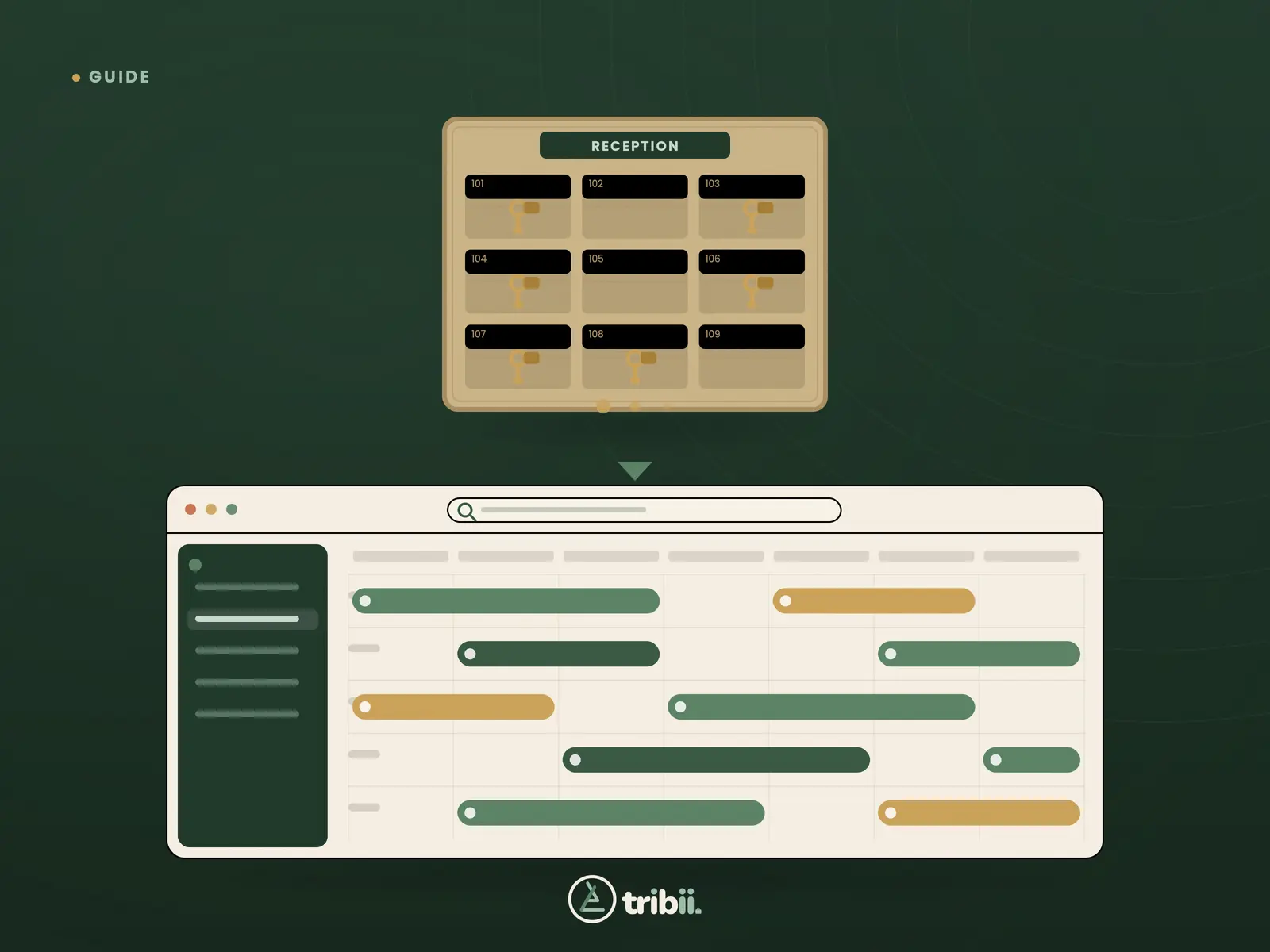
What is a hotel PMS? A plain-language guide for independent hoteliers
Not a definition from a brochure. What the software actually does between 7am and midnight at a twenty-room property, and which words mean what.
 Tribii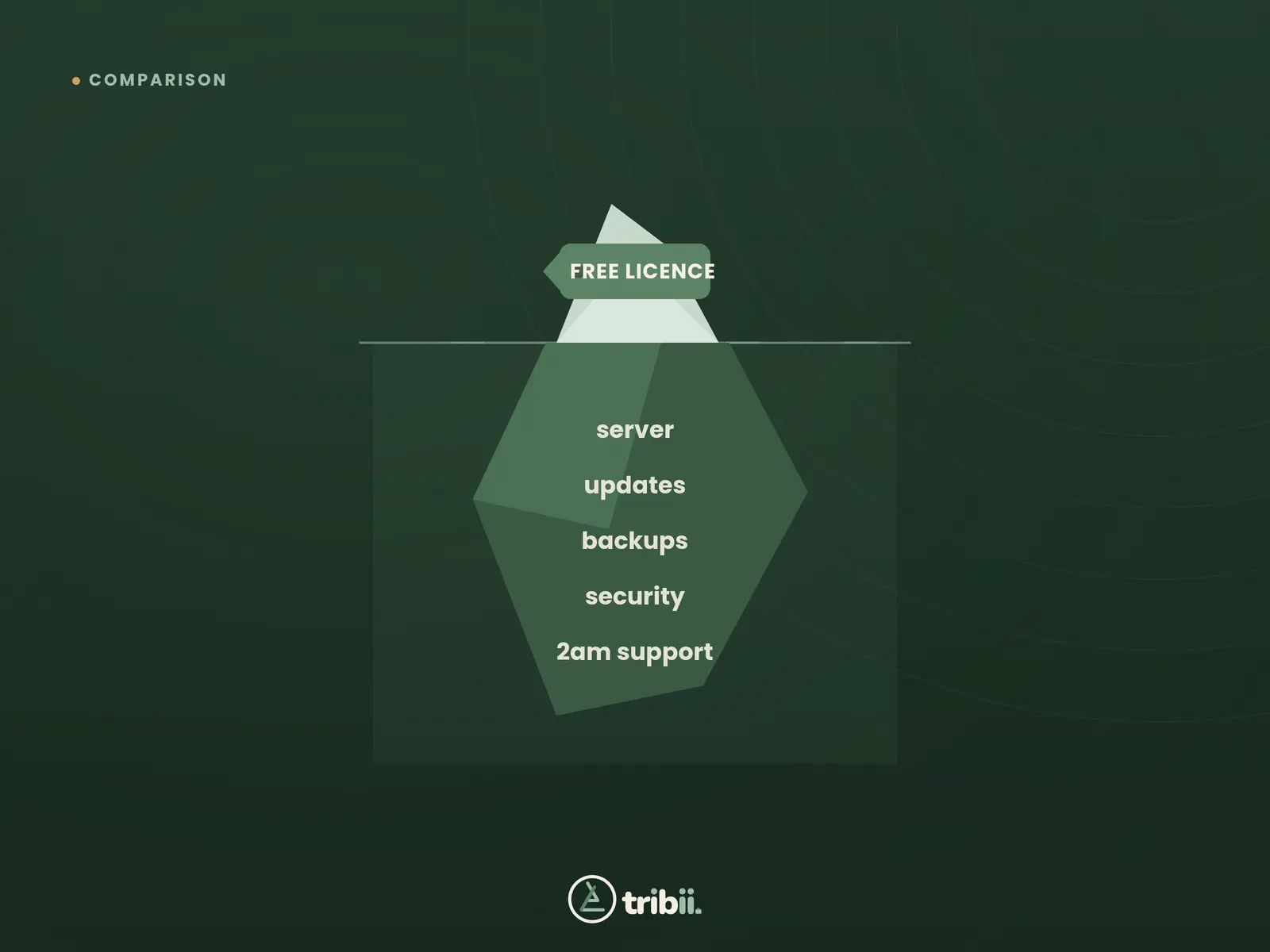
Open-source hotel software vs free SaaS: the real cost of self-hosting
The licence costs nothing. The server, the updates, the backups and the person who fixes it during check-in are not included.
Tribii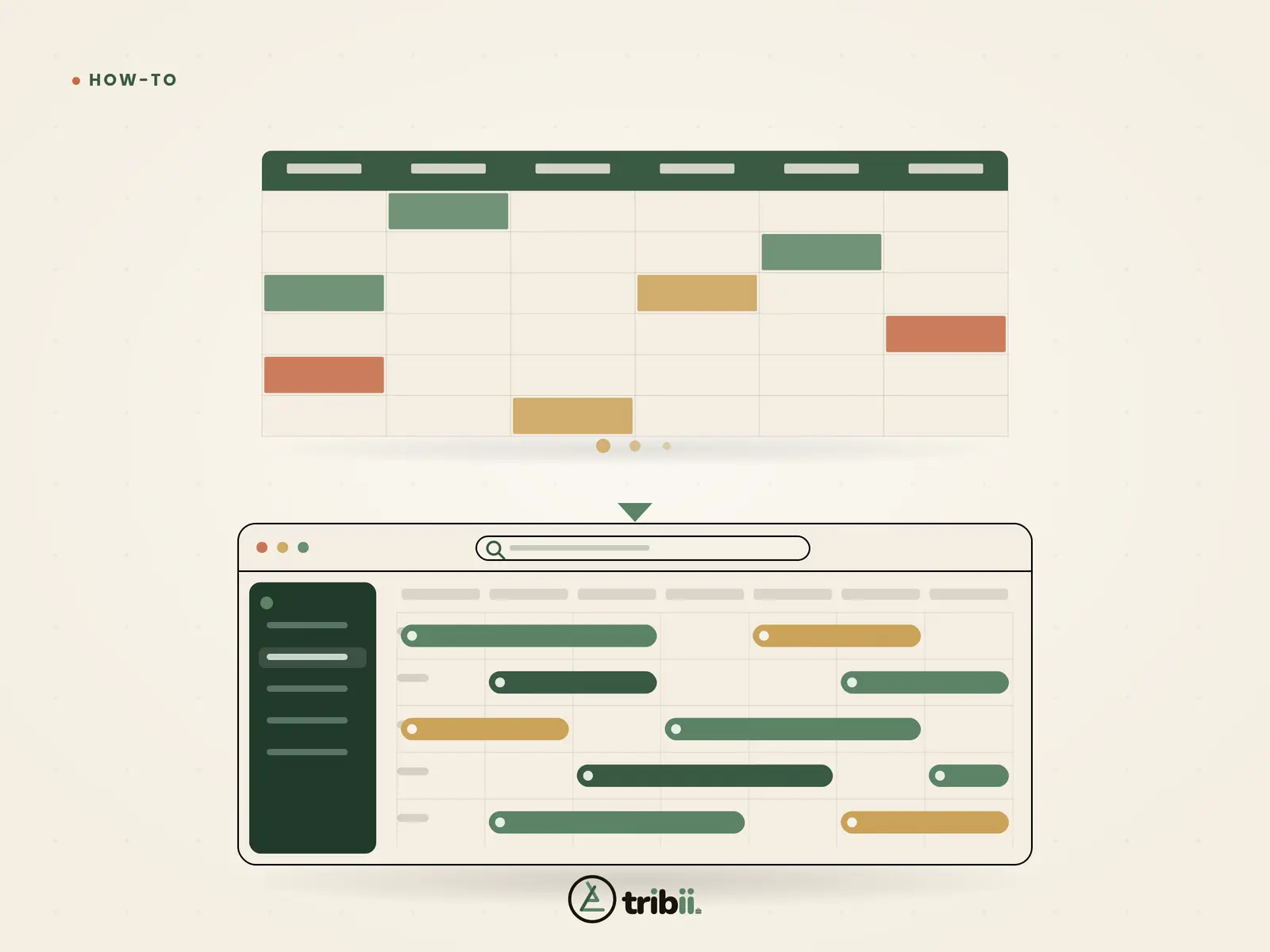
How to move your small hotel off spreadsheets
The spreadsheet got you here, and it is not stupid. But there are four specific places it fails, and each one costs you money quietly.
Tribii